

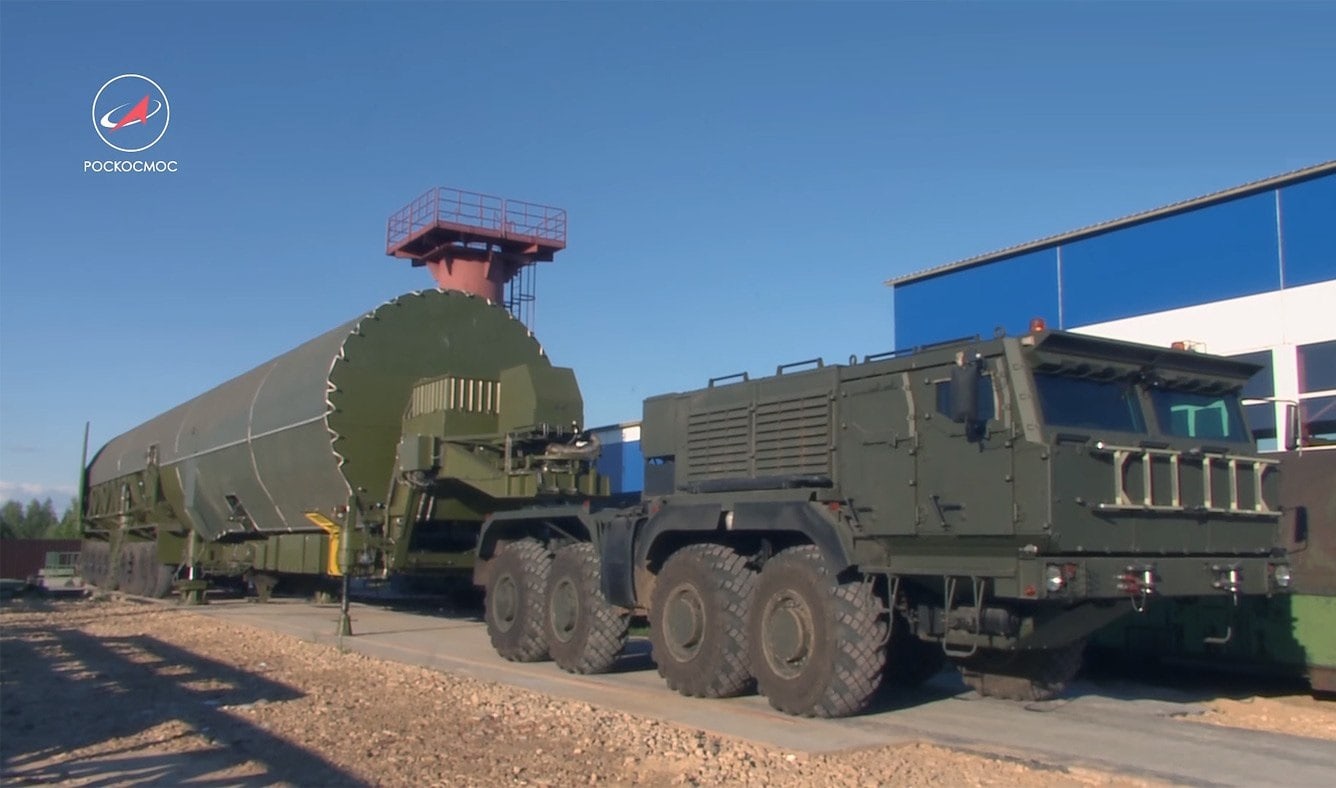
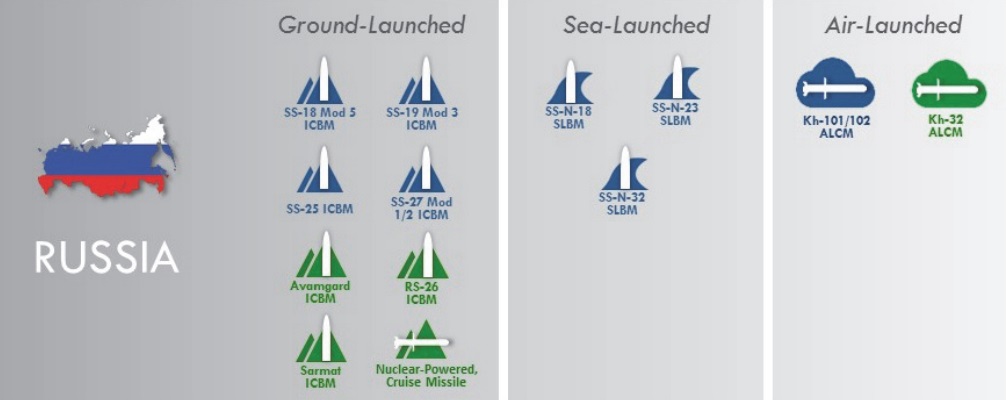
The Trump administration on 17 January unveiled itsMissile Defense Review (MDR), which said Russia is expanding and modernizing its strategic offensive missile systems, including the development of advanced technologies.
According to the review, Russia is enhancing existing offensive missile systems and developing advanced sea- and air-launched cruise missiles as well as hypersonic capabilities.
Russia considers the United States and the North Atlantic Treaty Organization (NATO) to be the principal threat to its contemporary revisionist geopolitical ambitions and routinely conducts exercises involving simulated nuclear strikes against the U.S. homeland.
Russian strategy and doctrine emphasize the coercive and potential military uses of nuclear weapons, particularly including nuclear-armed, offensive missiles, and has sought to enable this strategy through a comprehensive modernization of its strategic and theater missile arsenals.
As counted under the 2010 New START Treaty, Russia is permitted a total of 700 deployed ICBMs, sea-launched ballistic missiles (SLBM), and heavy bombers, and 1,550 deployed strategic nuclear warheads. Russian leaders also claim that Russia possesses a new class of missile, the hypersonic glide vehicles (HGV), which maneuver and typically travel at velocities greater than Mach 5 in or just above the atmosphere.
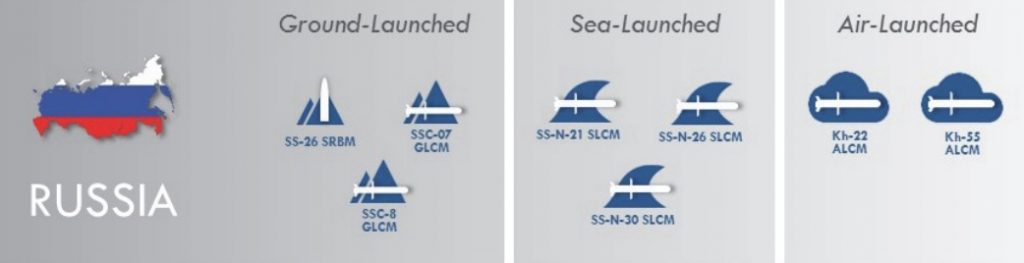
Moscow is fielding an increasingly advanced and diverse range of nuclear-capable regional offensive missile systems, including missiles with unprecedented characteristics of altitude, speed, propulsion type, and range.
These missile systems are a critical enabler of Russia’s coercive escalation strategy and nuclear threats to U.S. allies and partners. It is developing a new generation of advanced regional ballistic and cruise missiles that support its anti-access/area denial (A2/AD) strategy intended to defeat
Since 2015, Russia has demonstrated its advanced cruise missile capability by repeatedly conducting long-range precision strikes into Syria, and has fielded a ground-launched, intermediate-range cruise missile, the SSC-8, in violation of the Intermediate-Range Nuclear Forces (INF) Treaty.
These highly effective land attack cruise missiles (LACM) fly at low altitudes below a radar’s line-of-sight, which presents a potentially major threat to U.S. regional military operations and deterrence goals. While the majority of LACMs presently fly at subsonic speeds, in the future it appears that some will be able to reach hypersonic speeds.
Russia also has long made substantial investments in its own missile defense systems.
Russia and China are also developing Adversary Missile Defense and Antisatellite (ASAT) capabilities that could threaten U.S. space-based assets.
For example, Russia maintains and modernizes its longstanding strategic missile defense system deployed around Moscow, including 68 nuclear-armed interceptors, and has fielded multiple types of shorter-range, mobile missile defense systems throughout Russia.
In addition, Russia is developing a diverse suite of ground-launched and directed-energy ASAT