U.S. Army uses remotely-controlled mine clearance vehicle to keep soldiers safe

The U.S. Army has reported that it uses modern technology at the battlefield to keep soldiers safe, included new remote-controlled mine clearance vehicles.

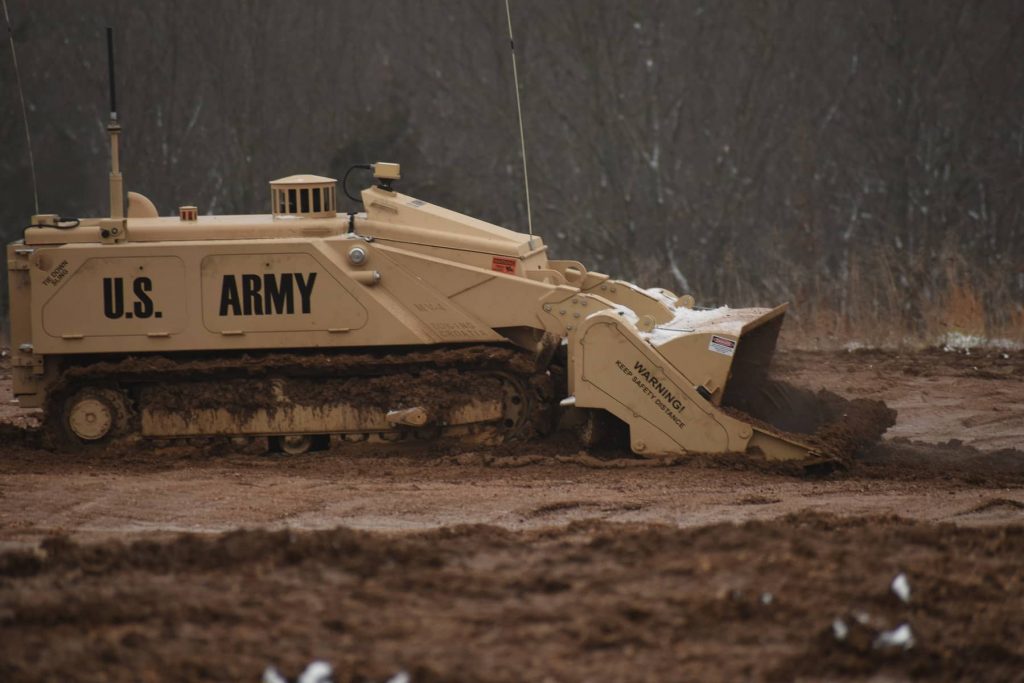
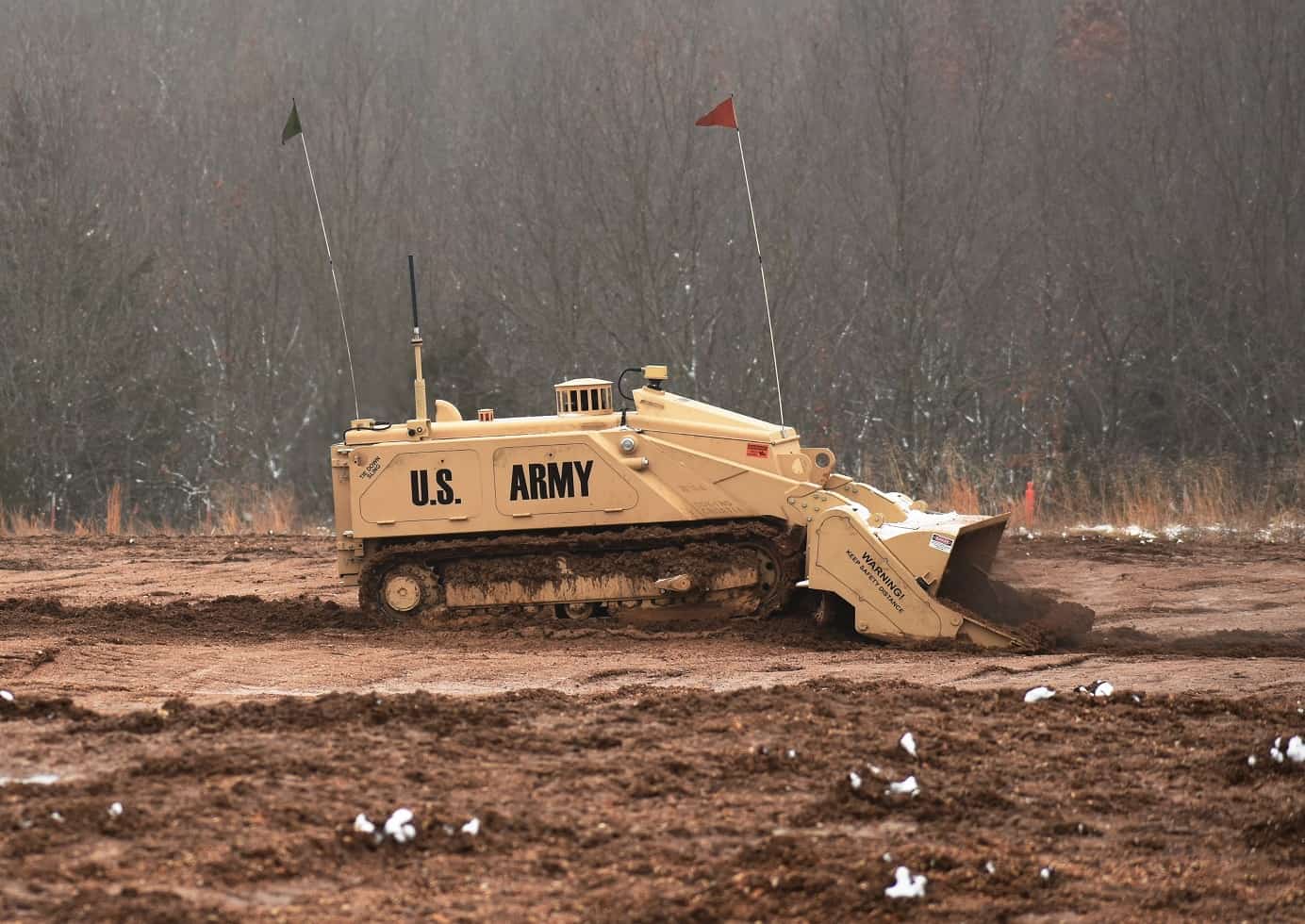
The machine is a M160, also called the MV4 DO-KING, a remote-controlled, tracked mine clearance system designed for the destruction of anti-personnel mines and unexploded ordnance.

The M160 Robotic Mine Flail is designed to clear areas of anti-personnel mines to keep ground forces safe. Using line of sight remote control, soldiers remain a safe distance away from any potential detonations and tripwires.

- ADVERTISEMENT - CONTINUE READING BELOW -

“It takes the soldiers away from the killzone, that way they can fight instead of getting blown up,” explained Sgt. Patrick Couchran of the 469th Engineer Platoon out of Betonville Arkansas.

The M160 churns up the ground using a drum with chains and small hammers, digging into the ground several inches, detonating any hazards in its path. The vehicle is armored to protect it from blasts that would otherwise injure or kill a soldier.

“There’s been some tests done with it and it actually holds up very well in an IED explosion and anti-personnel mines. It’s very durable,” said Ssg. Gary Allen.

“It can be used from a vehicle or on foot…if you’re inside a vehicle, which would be the preferred method, you’re safer because you don’t have the risk of someone taking pot shots at you while you’re trying to operate it,” said Pfc. Forrest Green.

Other attachments are available with the M160, such as a blade or roller, for other earth-moving missions.

“We can quickly clear an area so we can set up faster. We have a blade which can be used to set up hasty fighting positions,” said Couchran.

Although not entirely new to the Army’s arsenal, the M160 is another tool the Army Reserve engineers bring to the fight, and another way to keep soldiers safe.

It should be noted that similar machines, called Uran-6, are used and the Russian army.
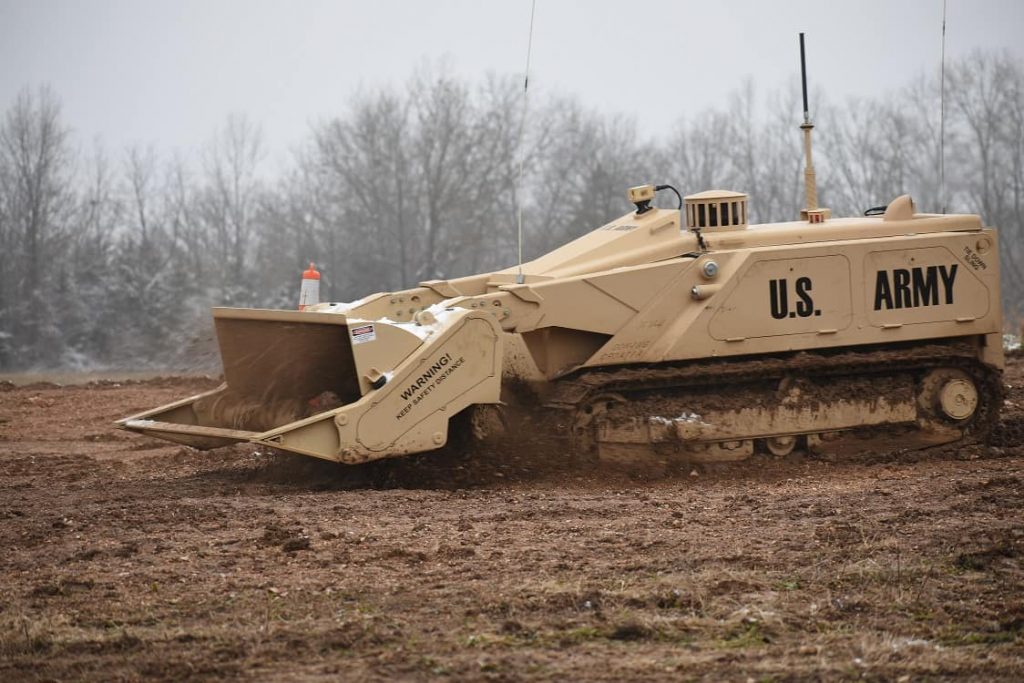
Photo by Maj. Dan Marchik

Readers who wish to follow our weekly coverage can subscribe to the Weekly Defense Roundup.

If you wish to report a grammatical or factual error in this article, please let us know by using the online form.

Executive Editor
  • In this story
  • USA

Support The Defence Blog

Independent reporting takes resources. Join us on Patreon.

Become a patron

More Like This

U.S. Navy orders six stealth recon boats designed by Australian veterans

The U.S. Navy bought six specialized reconnaissance boats designed by former Australian Navy frogmen, built in North Carolina, and validated through two years of...

Northrop wins $61M to upgrade Growler’s jamming receivers

Before any American strike package enters defended enemy airspace, an EA-18G Growler goes in first to blind the radars, jam the communications, and break...

U.S. Navy pays $100M for missiles that simulate China and Russia’s threat

Every warship in the U.S. Navy practices shooting down the kind of supersonic cruise missiles that China and Russia have spent decades perfecting, and...

Lockheed opens Alabama factory to build America’s next missile shield

Lockheed Martin opened a purpose-built missile production facility in Courtland, Alabama on Monday dedicated entirely to manufacturing the Next Generation Interceptor, the missile that...

Northrop Grumman’s Jackal missile passes key flight test

Northrop Grumman completed a successful flight test of its Jackal precision strike missile on June 1, demonstrating the core systems that will define how...