

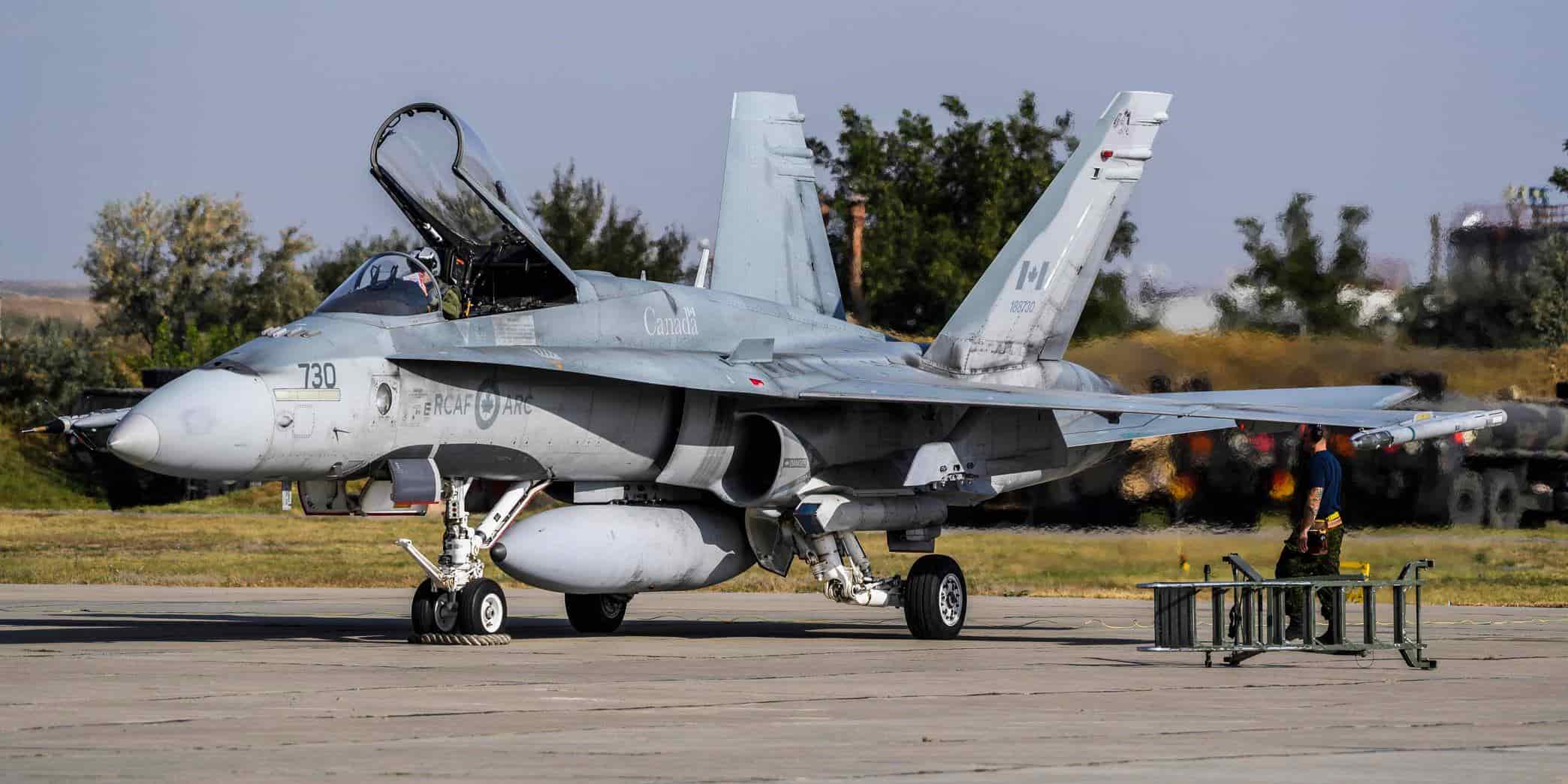
The Royal Canadian Air Force (RCAF) has decided to not conduct Maple Flag advanced aerial combat training exercise in 2019.
According to a statement, the RCAF will use the opportunity to re-focus its resources to update the exercise’s mandate and to modernize the infrastructure used during the exercise.
The RCAF will thereby ensure that Maple Flag remains focused and relevant to fighter operations in a dynamic and fluid battlespace, now and into the future.
The exercise is primarily conducted in the Cold Lake Air Weapons Range (CLAWR), a vast, restricted training area of more than a million hectares, located about 70 kilometres north of 4 Wing Cold Lake, Alberta. The Maple Flag pause will also allow the RCAF to upgrade and modernize infrastructure in the training area to ensure the exercise experience remains modern, safe and relevant.
“With the many technological advancements in military aviation over the decades, there has emerged a need for training methods and infrastructure to advance as well,” continued Lieutenant-General Meinzinger. “Our adversaries are innovating, and so must we and our Allies.”
Furthermore, the goal of Maple Flag has always been to prepare national and international participants for conducting operations. As the conduct of operations in a classified environment have become the norm internationally, Maple Flag must adapt to these new requirements to better replicate real-world operational situations. Therefore, the exercise will be adapted to make it a more realistic training environment for everyone involved.
Maple Flag is normally held each year over one or two, two-week periods from late May until late June. 4 Wing has hosted the international training event since 1978, when the primary purpose of the exercise was to re-create the first ten aerial combat missions a fighter pilot could expect to encounter during a conflict. It has evolved to include aircraft such as bombers, intelligence, surveillance and reconnaissance aircraft and Airborne Warning and Control Systems (AWACS) aircraft as well as fighters. It now also integrates Air Force elements such as tactical airlift, tactical helicopters and electronic warfare assets as well as Army elements. Since 1987, the exercise has been cancelled on four occasions, all due to RCAF operational commitments.
The RCAF remains committed to conducting Maple Flag in the future. It is a core activity for the RCAF fighter force and provides personnel with an outstanding opportunity to train on Canadian territory alongside their partners and allies to develop and practice common tactics, techniques and procedures.
“It’s too early to say exactly what changes will take place or what our timeline will be,” said Lieutenant-General Meinzinger. “Our first step is to identify how Maple Flag should look in the future and then develop the processes to make those changes happen.
“The landscape of warfare has evolved, and Maple Flag must also evolve to ensure it remains operationally relevant for ourselves and our joint and combined partners, both now and into the future.”