

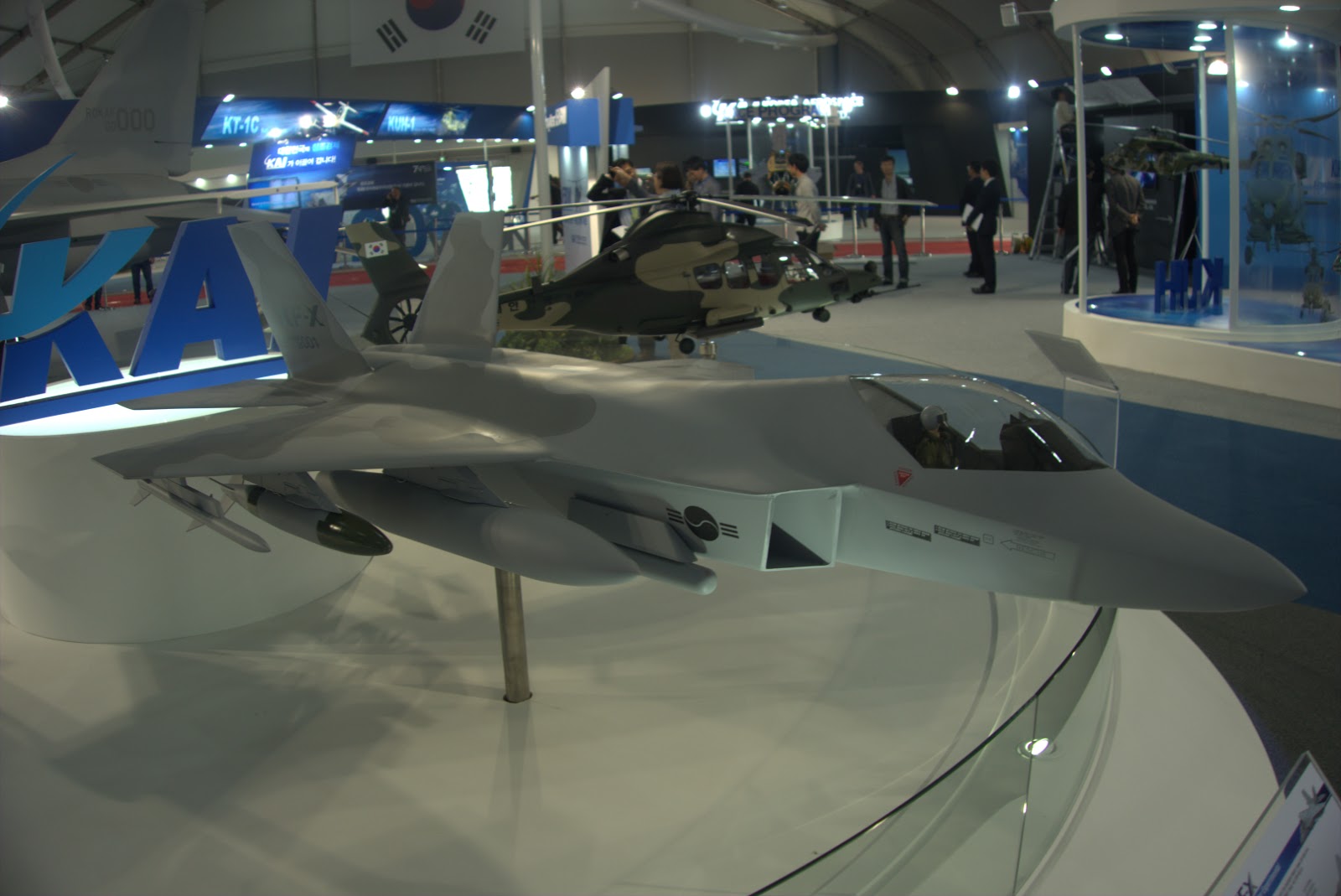
S. Korea, RI aerospace firms sign KFX cooperation deal
South Korea and Indonesia are set to elevate their strategic partnership by signing a strategic cooperation agreement on the joint development and production of KFX/IFX jet fighters.
The agreement was signed on Friday by Korea Aerospace Industries Ltd. president and CEO Ha Sung-yong and his counterpart PT Dirgantara Indonesia (PT DI) president director Budi Santoso.
Witnessed by Indonesian Defense Minister Ryamizard Ryacudu and South Korean Ambassador to Jakarta Cho Tai-young at the Defense Ministry, the agreement represents the second phase of the KFX/IFX program, the Engineering and Manufacturing Development (EMD) phase.
Ryamizard said that aircraft technology was not a simple process but was something that needed support and commitment from all parties including the sharing of expertise, knowledge and technology.
“The agreement is a strategic early step for bot defense industries, especially PT DI, to develop production and technology capabilities, especially jet fighters,” he said, expecting the jet fighter to become Indonesia’s leading product.
Ryamizard revealed that the agreement would lead to production, maintenance or sustenance, modification and upgrade of the jet fighter.
Meanwhile, Cho said South Korea wanted to demonstrate that both countries were strategic partners.
He said the there were more than 2,000 Korean companies operating in Indonesia and that defense cooperation was also significant.
“We have bought from and sold to Indonesia a number of weapon systems,” he said.
“We want to upgrade the relations into a collaboration, such as KFX/IFX.”
South Korea has sold a squadron of T/A-50 advanced jet trainers and three submarines to Indonesia while buying transport and maritime patrol CN-235 aircraft from Indonesia.
Three Minor Differences between KFX and IFX
He added that there would be minor differences between the KFX and IFX.
“The IFX will have a greater range as required by the Indonesian Air Force ,” he said.
“For air refueling, the IFX will use a probe system while the KFX will use a boom system.
“The third difference will be the data link. South Korea will use the US-made Link 16 and probably develop their own while we will also develop our own.”
Budi said Indonesia needed its own data link to allow communications with the Russian-made Sukhoi Su-27/30 Flankers heavy jet fighters.