


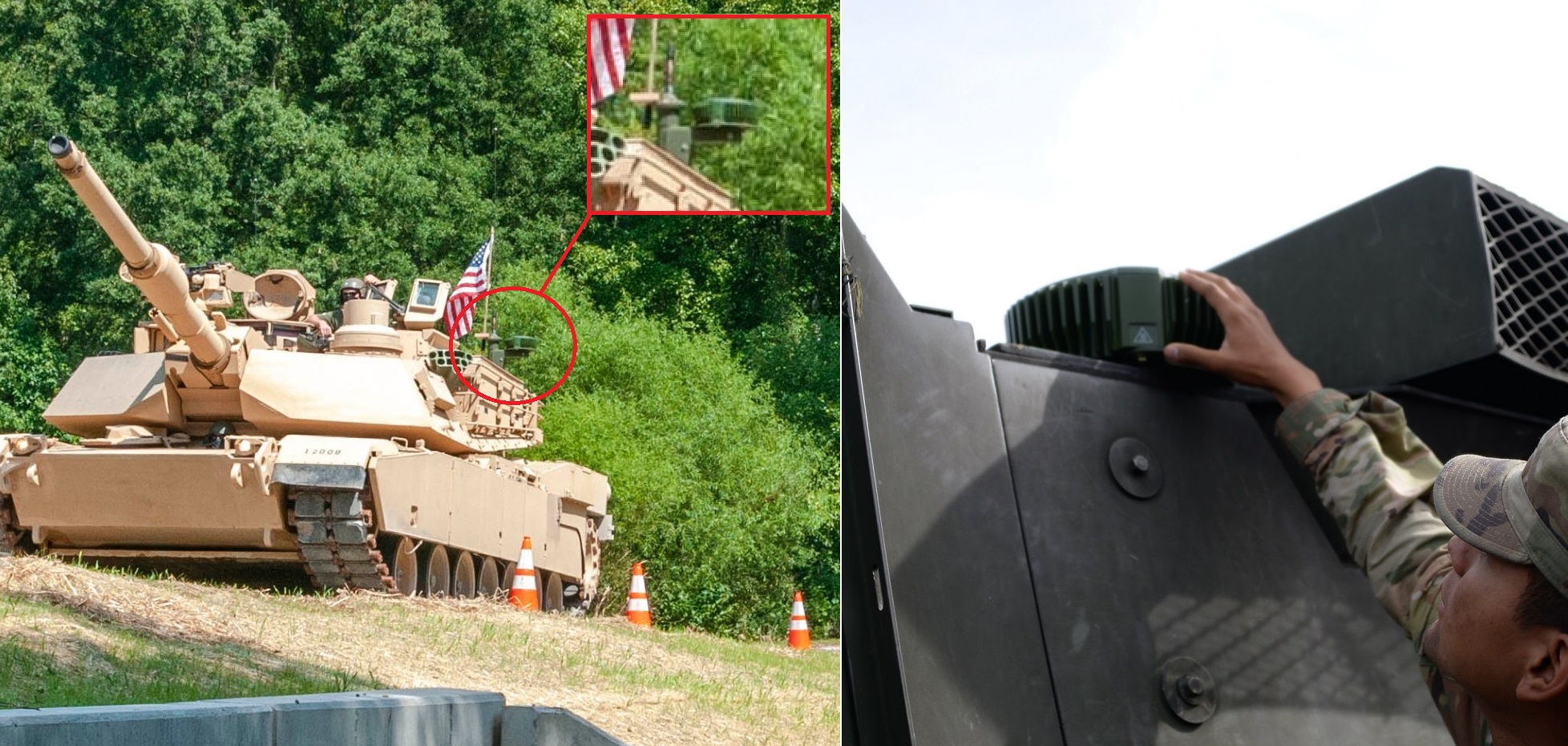
The U.S. Army has began outfitted its M1A1 Abrams tanks with Mounted Assured Precision Navigation & Timing System (MAPS) anti-jam GPS devices that allow U.S. combat vehicles to operate in an environment when GPS signals are degraded or denied.
MAPS is a military technology designed to be installed on vehicles, providing soldiers with accurate position, navigation and timing data even when the GPS signal is denied, degraded or spoofed.
MAPS will be able to fuse PNT data from multiple sources, including timing sensors, barometer measurements and inertial navigation units, creating an alternative that can validate, or even replace, GPS data.
The new jam-resistant GPS device replaces the Defense Advanced GPS receivers (DAGR) that are currently installed on American armoured vehicles.
In addition, earlier in November 2019, General Dynamics Mission Systems, part of U.S. aerospace and defense company General Dynamics Corp, announced that it has installed similar devices onto U.S. military vehicles in Germany.
The new electronic technology comes amid the Army’s vision for 2028, to best prepare Soldiers for possible warfare with near-peer competitors, who have used electronic warfare to disrupt communications vital to Western forces in recent years.
Currently, GPS jamming threat is one of Army priorities, because jamming and interference can seriously degrade GPS position, navigation and time availability – even to the point of total solution denial. Jammers create excessive noise, overpowering the low power GPS signals and saturating the electronics in a GPS receiver front end.
According to the latest analysis reports, GPS jamming and spoofing threats are increased after the Russian military intervention in Ukraine and Syria.
Russian-linked electronic warfare equipment has been used thousands of times – including outside of the country’s own territories.
GPS Source’ Generation 1 Mounted Assured Positioning, Navigation and Timing System (MAPS) was mounted on the Army’s M1A2 SEPv3 tank, which can ensure soldiers know where they are and where they’re going even if the enemy is jamming GPS. pic.twitter.com/0btgWzmxPg
— Ronkainen (@ronkainen7k15) May 13, 2021