

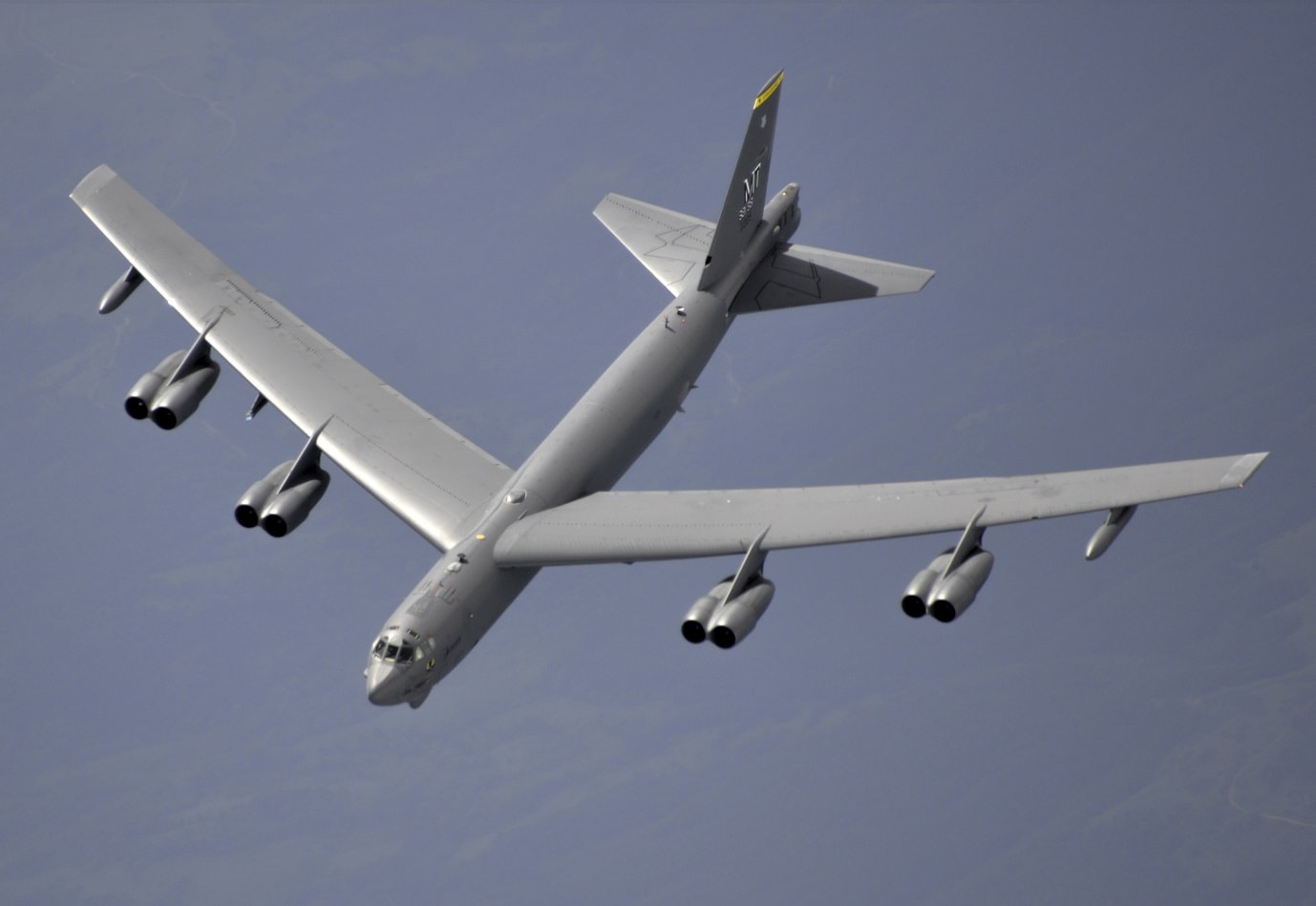
U.S. aerospace giant Boeing selects Tomahawk missile maker Raytheon Co to provide faster and smarter radar capabilities for the B-52 bomber fleet.
Raytheon was selected by the Boeing Company as radar supplier for the B-52 bomber radar modernization program, according to a news release put out on Thursday.
Under the contract, Raytheon will design, develop, produce and sustain active electronically scanned array radar systems for the entire U.S. Air Force B-52 fleet. The advanced radar upgrade will ensure the aircraft remains mission ready through 2050 and beyond. Low rate initial production is scheduled to begin in 2024.
With an AESA radar on board, the B-52 will gain improved navigation reliability to support nuclear and conventional missions. Raytheon’s B-52 radar is based on AESA technologies developed from the APG-79/APG-82 radar family.
“When it comes to years spent flying in support of our nation’s defense,” said Eric Ditmars, vice president of Raytheon Secure Sensor Solutions. “Our new AESA radars give aircrews the eyes they need to achieve their mission for the duration of the B-52’s service life.”
The B-52 will also benefit from improved mapping and detection range and an increase in the number of targets it can simultaneously engage. Along with improved capabilities that help crews see further and more accurately, Raytheon’s AESA radar offers greater reliability than the current system because it has no moving parts and uses modern operating software.
Developed in the 1950s, the B-52 heavy bomber has been the mainstay of the United States Air Force for 64 years. Venerable B-52 bomber saw service in Vietnam, Desert Storm, and the War on Terror in both Afghanistan, Iraq, Syria. And of course, he was a cornerstone of American Cold War nuclear deterrence for decades.
Even at his age, B-52 Stratofortress is capable of dropping or launching the widest array of weapons in the U.S. inventory, includes gravity bombs, cluster bombs, precision guided missiles, and joint direct attack munitions. The basic B-52 design evolved from an aircraft capable of dropping their bombs from 30,000 feet to the real Stratofortress that can launch long-range cruise missiles.