

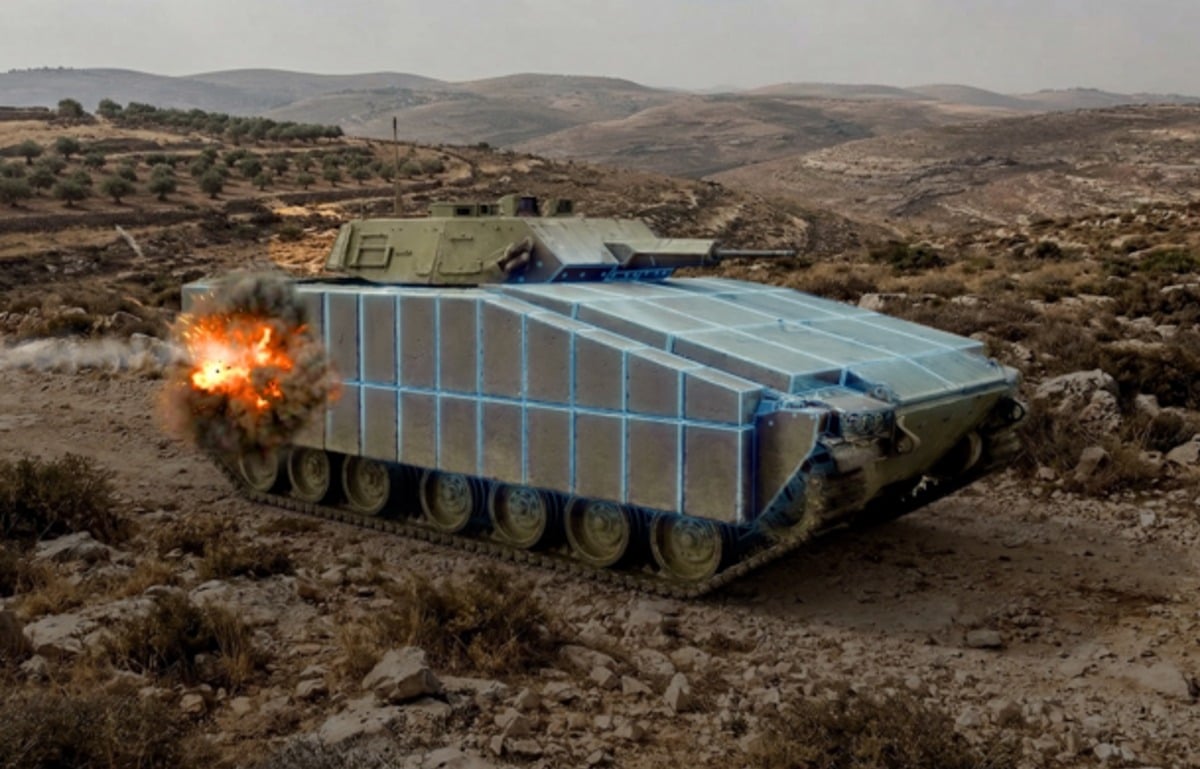
- Plasan announced three new vehicle survivability systems, LAPS, ATHENA, and TAPS, on June 4, 2026, ahead of their Eurosatory debut June 15–19 in Paris.
- TAPS has been tested by multiple Western armies and approved for field deployment; LAPS and ATHENA address mine blast leg injury and shaped charge threats respectively.
An Israeli armor company is heading to Eurosatory later this month with three new vehicle protection systems, each targeting a category of threat that has grown sharply more lethal on the modern battlefield: mines, top-attack munitions, and shaped charge warheads that conventional armor struggles to stop.
Plasan, the Kibbutz Sasa-based survivability specialist with more than four decades of experience supplying armor to military forces worldwide, announced the systems on June 4, 2026, ahead of their public debut at the Eurosatory defense exhibition in Paris from June 15 to 19. The three products, LAPS, ATHENA, and TAPS, each address a distinct vulnerability in armored vehicle protection, and together they reflect how the threat landscape facing armored crews has expanded and diversified since the wars in Ukraine and Gaza brought vehicle survivability back to the center of military procurement debates.
The most technically distinctive of the three is LAPS, the Leg Active Protection System, which approaches mine blast survivability from an angle that passive armor cannot address on its own. When a vehicle hits a mine or an improvised explosive device, the blast wave travels upward through the floor in milliseconds. Passive floor armor can absorb some of that energy, but the legs and feet of seated crew members remain highly vulnerable to the residual impulse that passes through even well-protected floors. Lower limb injuries, including fractures, amputations, and severe soft tissue damage, have consistently been among the most common and debilitating wounds in mine blast incidents across conflicts from Afghanistan to Ukraine.
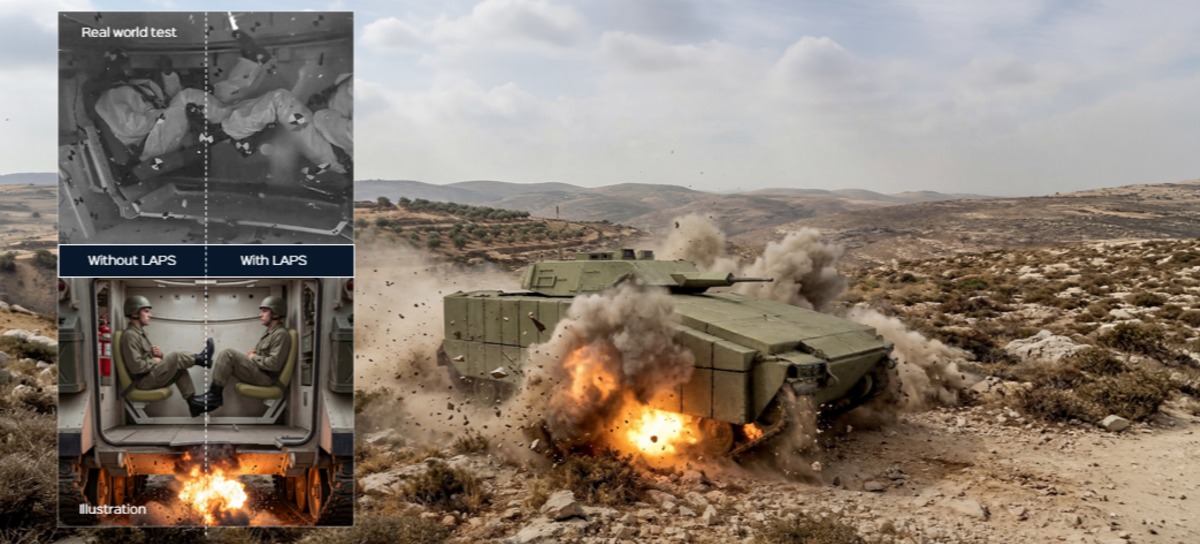
LAPS addresses that specific injury mechanism by integrating an active detection system into the vehicle’s Energy Attenuating Seat structure. When the system detects a mine blast event, it triggers within milliseconds, lifting the occupant’s legs before the floor impact wave arrives. Plasan says the system achieves this without adding weight to the vehicle or consuming additional space, both of which matter enormously to military vehicle designers already managing tight weight budgets and crew ergonomics. The company says LAPS is designed to support lighter, lower, and more efficient vehicle designs while improving overall protection.
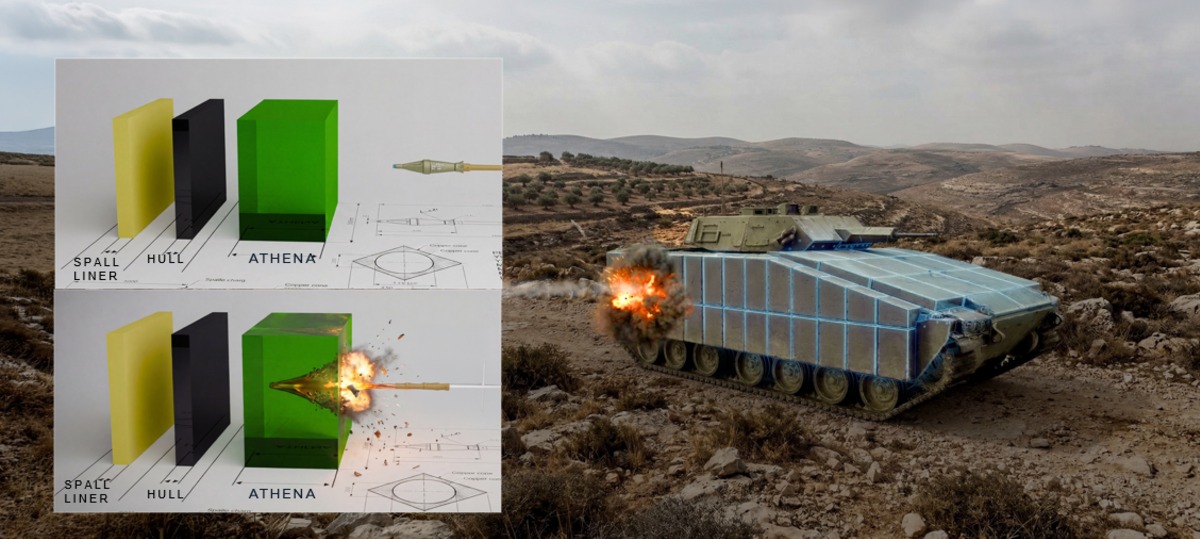
ATHENA, the Advanced Thickening Energetic Armour, takes on a broader and older problem: the shaped charge warhead, which has been the primary armor-defeating mechanism in rocket-propelled grenades, anti-tank guided missiles, and explosively formed penetrators for decades. Shaped charge weapons work by focusing explosive energy into a high-velocity jet of molten metal that punches through steel by sheer velocity rather than brute force, which is why even very thick conventional steel armor can be defeated by a relatively small warhead. Reactive armor, which responds to an incoming warhead by exploding outward and disrupting the jet, has been a standard countermeasure since Soviet forces first fielded Kontakt-1 in the 1980s. The drawback of explosive reactive armor is that the outward blast poses a risk to nearby infantry and can damage the vehicle’s own external systems. ATHENA avoids that problem entirely. Plasan describes it as a non-explosive reactive armor solution that combines composite armor with an expanding interlayer: when a shaped charge jet strikes the armor, the interlayer expands mechanically to disrupt the penetrator without generating an outward explosive event. The system is designed to counter shaped charge jets, RPGs, explosively formed penetrators, and kinetic penetrators while eliminating the secondary hazards that explosive reactive armor creates for dismounted troops operating alongside the vehicle.

The third system, TAPS, the Top Attack Protection System, responds to a threat that has become one of the defining tactical problems of the past three years. Top-attack munitions, including loitering munitions that dive onto the upper surfaces of vehicles, artillery-delivered submunitions, and drone-dropped grenades, strike the most thinly armored part of most fighting vehicles. The top surfaces of even heavy main battle tanks typically carry far less protection than the frontal arc, because traditional armor design prioritized the threats most likely to be encountered head-on. Loitering munitions and top-attack anti-tank missiles, which include systems like the Swedish-American NLAW and the American Javelin in its top-attack mode, exploit that disparity deliberately. Ukraine has made the vulnerability internationally visible: footage of drones dropping munitions onto vehicle engine decks and hatches has been among the most widely circulated combat imagery of the conflict. TAPS mounts above the vehicle’s top surfaces as an add-on system, providing additional shielding against kinetic threats and artillery fragments arriving from above. Plasan says TAPS has been successfully tested by multiple Western armies and approved for field deployment, though the company has not disclosed which nations or programs are involved.
“These new solutions reflect the evolving requirements of modern battlefield survivability and the need to address increasingly complex threats targeting combat platforms,” said Gilad Ariav, Vice President of Marketing at Plasan. “Our focus is on developing advanced survivability technologies that enhance protection while supporting operational flexibility and platform efficiency.”
Plasan supplies armor solutions to major OEM vehicle programs across multiple continents and has been expanding its manufacturing and industrial collaboration activities in Europe and North America, working with local industry partners on technology transfer and localized production.