


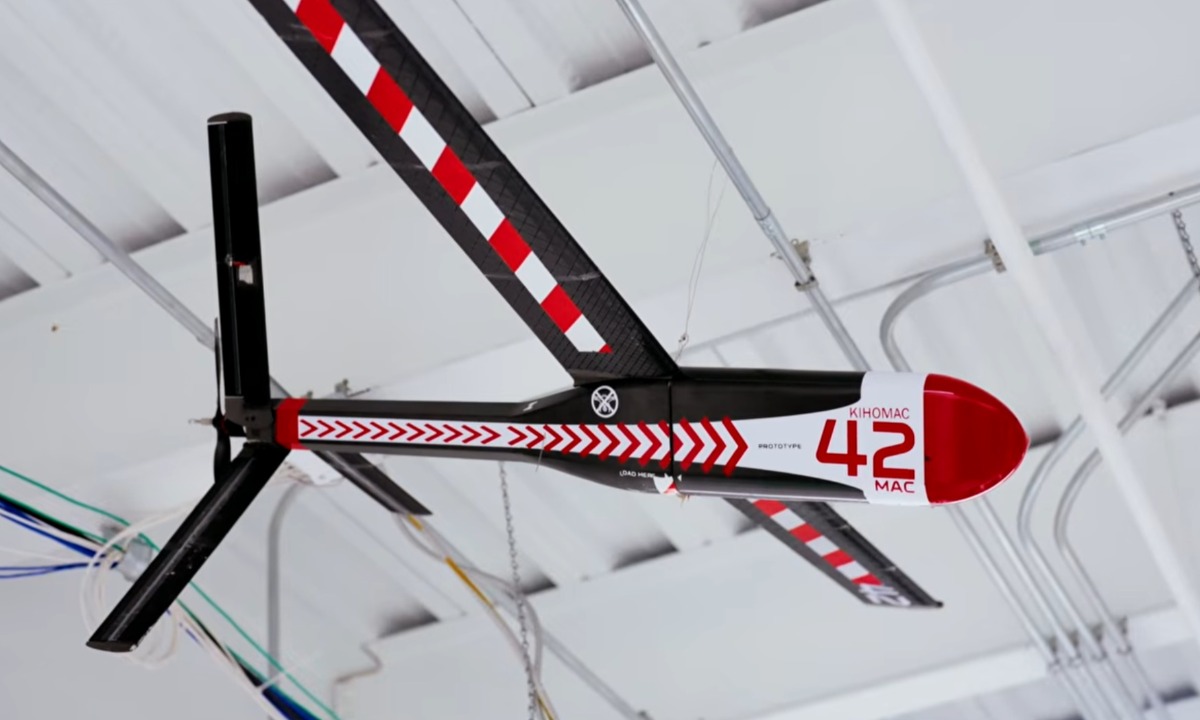
- KIHOMAC's Agami drone, a 20-pound fixed-wing UAV with 5-plus pounds of payload, can be manufactured in under one hour from carbon fiber materials per vehicle.
- Deloitte invested in KIHOMAC in November 2025 to expand drone manufacturing to Utah and scale mass production for U.S. government and defense customers.
KIHOMAC’s founder and CEO Ki Ho Kang took to social media on Friday to share flight test footage of Agami, the company’s fixed-wing drone developed under Project Liberty, a program specifically designed to demonstrate that military-grade UAVs can be produced at wartime scale without the bottlenecks that have plagued American drone manufacturing for years.
The Agami has a gross takeoff weight of 20 pounds (9kg), carries more than 5 pounds (2,2kg) of payload, and is built around an open system architecture that the company describes as Bring Your Own Payload — meaning operators can swap in whatever sensor, communications package, or effector the mission requires without redesigning the airframe. The fuselage and wings are carbon fiber, and here is where Project Liberty makes its most pointed argument: each vehicle can be manufactured in under one hour. That figure stands in sharp contrast to additively manufactured drones — 3D-printed platforms — which Kang noted can take upwards of 100 hours per vehicle to produce. At wartime consumption rates, that difference is not a footnote. It is the entire argument.
Endurance on a single battery pack runs to one hour with a flight distance of more than 60 miles. With two battery packs, KIHOMAC has flown Agami for nearly 90 minutes across approximately 90 miles — and Kang noted that this was achieved flying a “very turn intensive range,” meaning more time spent turning than flying straight. A normal flight path, he said, would likely push those numbers higher. The catapult launch system, captured in video shared alongside the post, eliminates the need for a runway, which matters considerably for forward-deployed units operating without established infrastructure.
Project Liberty’s core proposition reflects a lesson that the conflict in Ukraine has driven home with brutal clarity. Ukraine has consumed small fixed-wing and multi-rotor drones at a rate that no pre-war production forecast anticipated, and the countries and companies trying to resupply that demand have repeatedly discovered that manufacturing capacity, not design sophistication, is the binding constraint. Veteran-owned KIHOMAC is making an explicit bet that the next major conflict will face the same problem, and that a carbon fiber airframe manufacturable in an hour is worth more to a commander in a sustained fight than a more capable platform that takes days or weeks to replace.
That bet attracted significant institutional backing in November 2025, when Deloitte announced a direct investment in KIHOMAC to expand drone manufacturing capacity into Utah and begin mass production for U.S. government agencies, businesses, and organizations. The investment value was not disclosed, but the strategic intent was explicit. “Deloitte is investing directly in KIHOMAC to help build American production capacity for technologies that are critical to our national security and economic competitiveness,” said Oniel Cross, Deloitte’s Government and Public Services hybrid cloud and edge infrastructure leader, in the company’s announcement. “This approach creates a tangible impact in terms of creating manufacturing jobs for American workers and an expanded and secure supply chain for U.S. customers.”
The Deloitte partnership gives KIHOMAC something that most defense startups spend years trying to acquire: the manufacturing credibility and organizational reach of an established institutional partner willing to put capital directly into production capacity rather than simply advising on strategy. For a veteran-owned business trying to scale from prototype to mass production, that distinction matters. Ki Ho Kang framed it directly in the joint announcement. “Working with Deloitte empowers us to scale faster and deliver next-generation drone solutions for our customers, while strengthening the local economy through new jobs and production capacity,” he said.
The planned applications span infrastructure inspection, emergency response, and defense and security — a deliberately broad set of use cases that reflects the open architecture design philosophy at Agami’s core. A platform that accepts different payloads without structural modification can serve a pipeline inspection contractor in the morning and a defense customer in the afternoon. That flexibility is commercially sensible and militarily attractive, particularly for government buyers who need to justify procurement across multiple mission sets and budget lines.
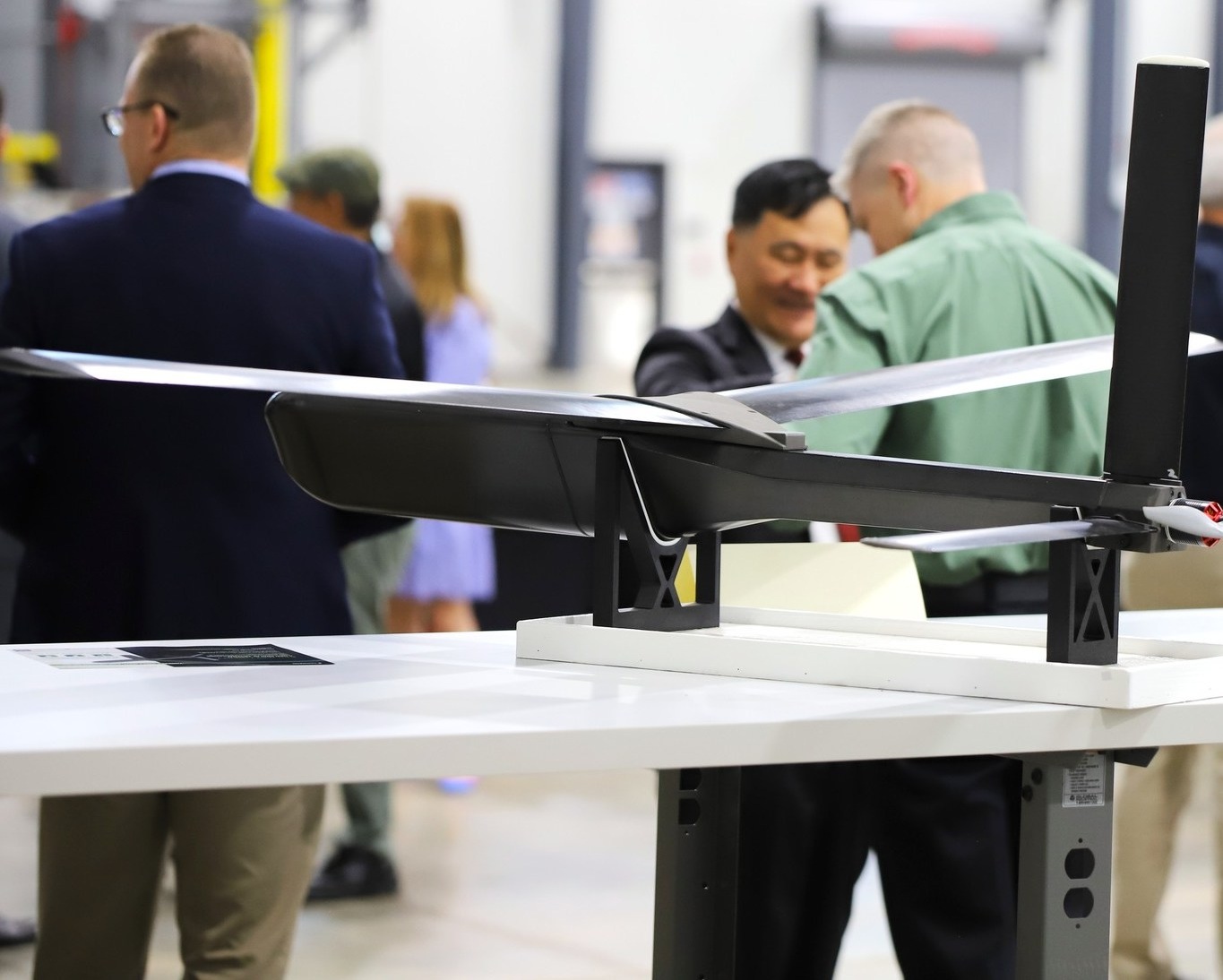
KIHOMAC’s positioning in the American drone manufacturing landscape is pointed. The United States has spent years grappling with its dependence on foreign-manufactured drone components, particularly from China, and the push for domestically produced, supply-chain-secure unmanned systems has become a legislative and procurement priority across multiple agencies. A veteran-owned company building carbon fiber airframes in under an hour, backed by Deloitte capital and expanding into Utah, is exactly the kind of domestic industrial story that defense and national security procurement offices have been trying to cultivate.