

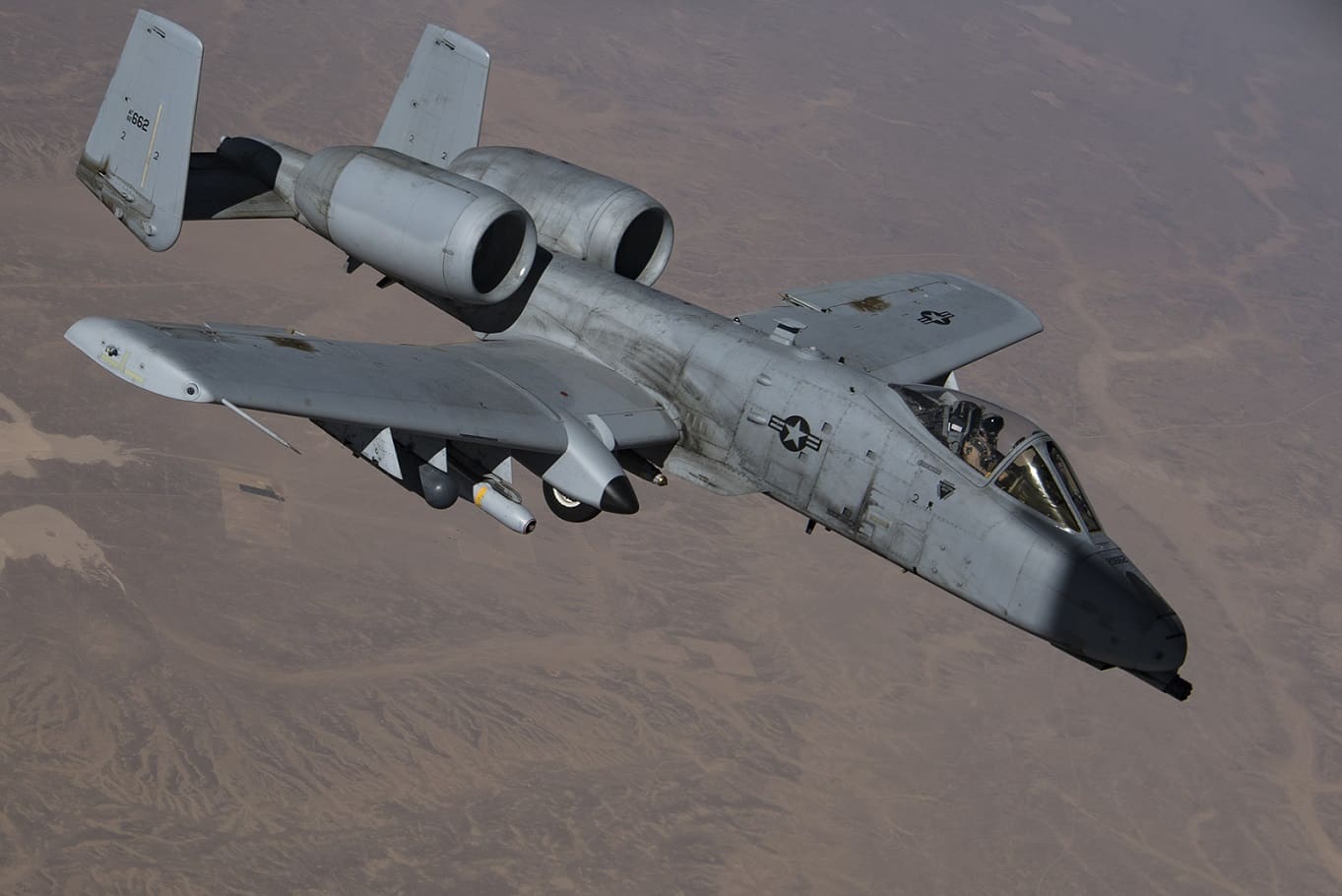
The U.S. Air Force A-10 Thunderbolt II attack aircraft will receive a modern 3D audio system to enhance the situational awareness of its pilots.
The U.S. Department of Defense reported on Wednesday that Terma North America won a $60 million contract for A-10 3D audio as part of an aircraft self-protection system.
Work will be performed by a subcontractor in the U.S. and Denmark as indicated in the contract award and is expected to be completed by Feb. 28, 2024.
Terma, a leading integrator of Self-Protection Systems for all types of aircraft, will deliver up to 328 3D audio systems for the A-10 Thunderbolt II attack aircraft as part of an effort to give Warthog pilots more situational awareness.
Terma is the only supplier of operational 3D audio and Active Noise Reduction (ANR) technology that reduces stress and enhances operational effectiveness through dynamic spatial audio cues that highlight the precise direction of attack. As a standalone product or part of an integrated Self-Protection Systems suite, the system is compatible with any type of aircraft and includes a range of tools for improving sound quality and intelligibility.
Such 3D audio systems already operational on Royal Danish Air Force Lockheed Martin F-16 Fighting Falcon combat aircraft. This equipment intuitively informing them where exactly the threat is coming from and enabling them to instinctively react to it.
“When on a mission, the workload is tremendous. The stakes are high, and the pilot needs to stay 100% alert; mitigating all unnecessary disturbances is key to successful flight performance,” early said Major H.P. Bagger, F-16 pilot, Royal Danish Air Force. “Over Libya, we had a small force but with a huge effect. Besides a pool of very skilled F-16 pilots, the achievement was partly due to the working environment of our F-16s and the 3D-Audio and Active Noise Reduction systems installed in these aircraft.”
3D audio system’s capability enables the pilot to get the dynamically updated warning tone/cue in the true direction of the threat and spatially separating radio communication for increased speech intelligibility.