

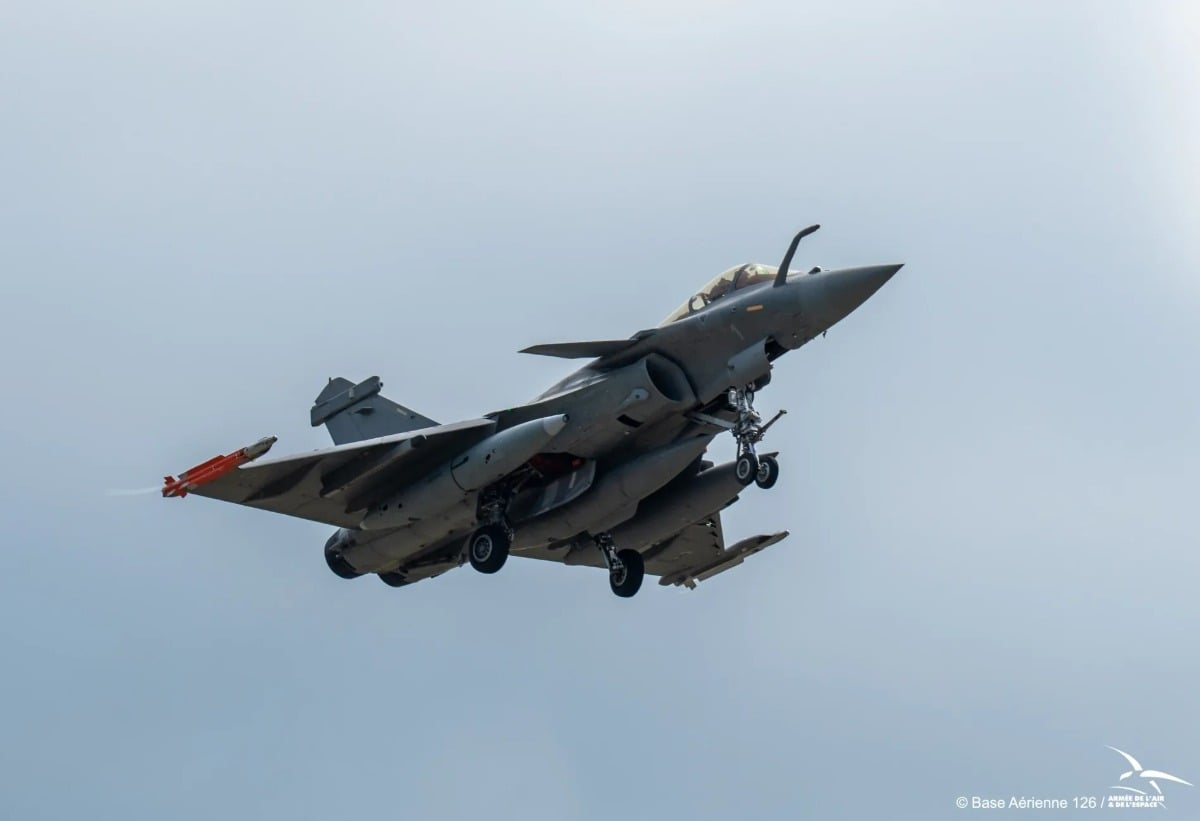
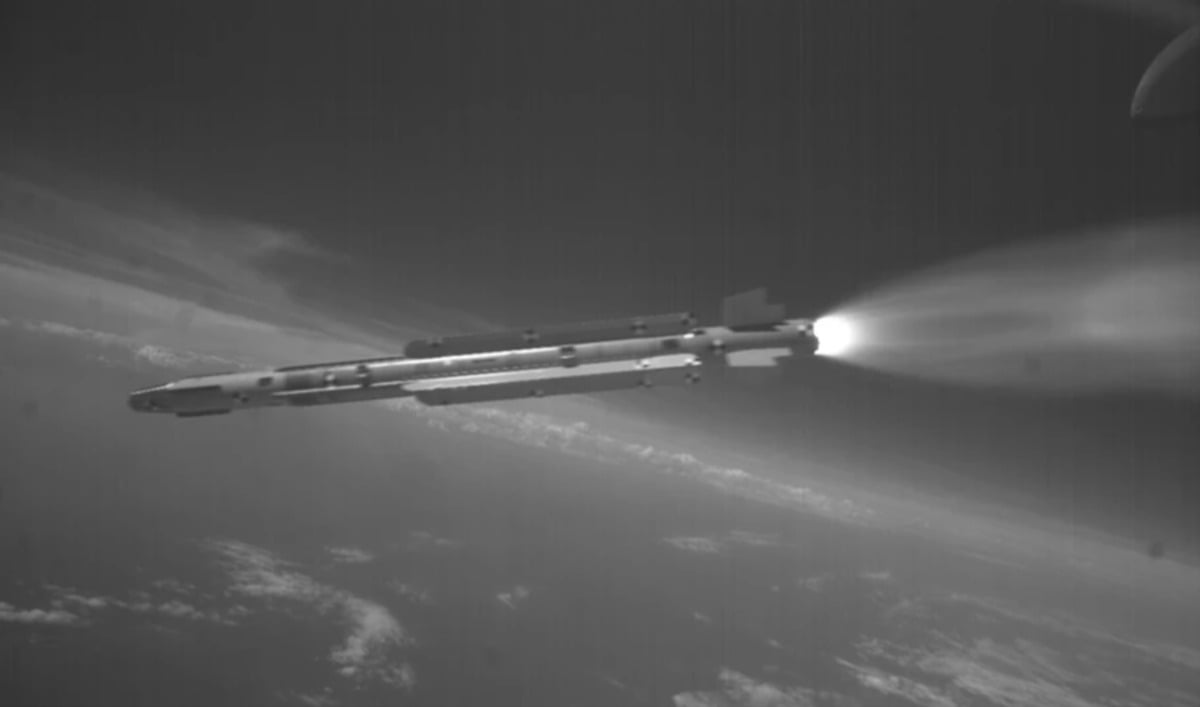
- MBDA conducted the second development firing of the MICA NG from a Rafale at the DGA Mediterranean test site, the first in supersonic flight configuration.
- The test validated the missile's infrared seeker performance under high-temperature supersonic conditions, building on the first Rafale development shot in June 2025.
France has fired its next-generation air-to-air missile from a Rafale at supersonic speed for the first time, clearing one of the most demanding technical hurdles in the weapon’s qualification program and moving MBDA’s MICA NG significantly closer to operational service.
The second development firing of the MICA NG, which stands for Missile for Interception, Combat, and Self-Defence New Generation, took place at the DGA Missile Testing Centre’s Mediterranean site, conducted in collaboration with teams from MBDA, the French defense procurement agency DGA, Dassault Aviation, and the French Air and Space Force. The test followed the first development shot from a Rafale in June 2025 and marked a deliberate step up in difficulty: where the first firing established baseline performance, this one specifically evaluated the missile’s infrared seeker under the high-temperature conditions generated by supersonic flight, conditions that stress the seeker’s ability to distinguish a target from its background in ways that subsonic testing cannot replicate.
The infrared seeker is the missile’s homing brain in its heat-seeking configuration. Once launched, the seeker continuously scans for the infrared signature emitted by the target, whether an engine heat bloom, aerodynamic heating of airframe surfaces, or exhaust plume, and corrects the missile’s trajectory automatically to keep that signature centered in its field of view. The challenge that supersonic flight creates for this process is thermodynamic. When the Rafale carrying the missile accelerates past Mach 1, the speed of sound at approximately 1,235 km/h (767 mph) at sea level, aerodynamic heating raises the ambient temperature around the missile significantly. That elevated background temperature reduces the thermal contrast between the target’s heat signature and everything around it, making the seeker’s discrimination task harder. A seeker that works perfectly at subsonic speeds may struggle to reliably lock onto and track a target when its own airframe is generating substantial heat of its own. The test validated that the MICA NG’s infrared seeker performs successfully under precisely those conditions.
The MICA family has been France’s primary short-to-medium range air-to-air missile since the late 1990s, entering service on the Rafale and Mirage 2000 as a replacement for earlier French air combat missiles. The original MICA is available in both infrared and active radar homing variants, giving Rafale pilots the flexibility to engage targets using either heat or radar return depending on the tactical situation, a dual-seeker approach that remains operationally valuable for maintaining engagement options when electronic countermeasures complicate radar-guided shots. The MICA NG is designed to carry that flexibility forward while substantially expanding the categories of target the missile can reliably engage, extending beyond traditional aircraft and helicopters to address the threats that have emerged or matured since the original MICA entered service a generation ago.
Those new target categories reflect how air combat threats have evolved. MBDA specifically highlights very low infrared and electromagnetic signature targets, citing drones, stealth fighters, and highly maneuverable cruise missiles as the threat set the MICA NG is designed to handle. Each of those categories represents a genuine and growing challenge for existing air defense weapons. Small tactical drones present minimal heat signatures and extremely small radar cross-sections. Stealth fighters are engineered from the ground up to minimize both infrared and radar return. Highly maneuverable cruise missiles, including terrain-following designs that can execute sharp evasive maneuvers, stress the kinematic performance and guidance software of any interceptor tasked to defeat them. The original MICA was not designed with those targets as its primary focus. The MICA NG is.
The qualification timeline for the MICA NG has not been disclosed in this announcement, but the progression from first development shot in June 2025 to supersonic infrared seeker validation in mid-2026 suggests the program is moving at a deliberate pace through its firing campaign. Development firings in missile programs typically number in the dozens before qualification is declared, with each shot designed to stress a specific subsystem or flight envelope boundary. The supersonic infrared test is a high-value checkpoint because it validates the seeker in the conditions where it is most likely to be needed operationally: a Rafale in full afterburner, closing on a target at high speed, launching a missile that must immediately discriminate between a genuine heat signature and the thermally noisy environment surrounding both aircraft.
France is among a small number of countries maintaining a fully sovereign air-to-air missile development and production capability. MBDA, jointly owned by Airbus, BAE Systems, and Leonardo, gives France and its European partners a missile industrial base that does not depend on American export licenses or supply chain access, a strategic consideration that has become more salient as European NATO members have accelerated their defense investment programs. The MICA NG qualification, when complete, will keep France at the front of that capability tier.