


China showcased a new generation of strategic nuclear weapons to the public for the first time on Wednesday, displaying an array of advanced, nuclear-capable ballistic missiles during a large-scale military parade in Beijing.
The event, held in Tiananmen Square to commemorate the 80th anniversary of the end of World War II, is being viewed by defense analysts as a clear demonstration of the country’s rapidly modernizing nuclear triad.
The parade provided international observers and the Trump administration a rare glimpse into the capabilities of the People’s Liberation Army.
Among the systems making their debut was the DF-61, a land-based intercontinental ballistic missile. The DF-61 is considered to be China’s most modern ICBM to enter service after the DF-41. It is expected to become a core component of the PLA Rocket Force’s long-range strike assets.

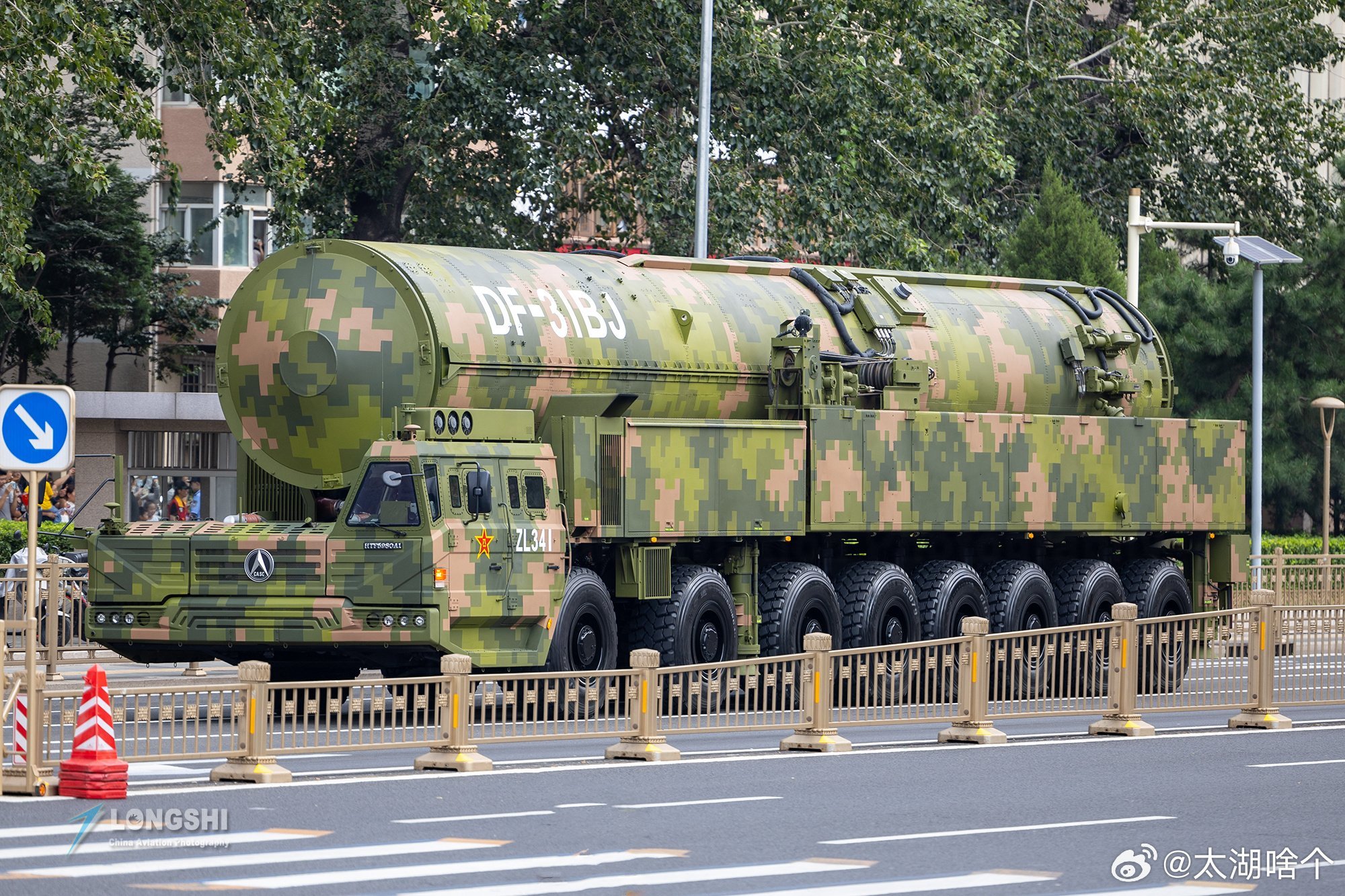
Also revealed was a new road-mobile ICBM, the DF-31BJ. This solid-fuel missile is the latest variant in the DF-31 series and is understood to be an upgrade of the DF-31AG. The weapon system has a stated operational range exceeding 11,200 kilometers. The introduction of the DF-31BJ follows a test launch that occurred last September, which was reported as China’s first nuclear missile test in 44 years.
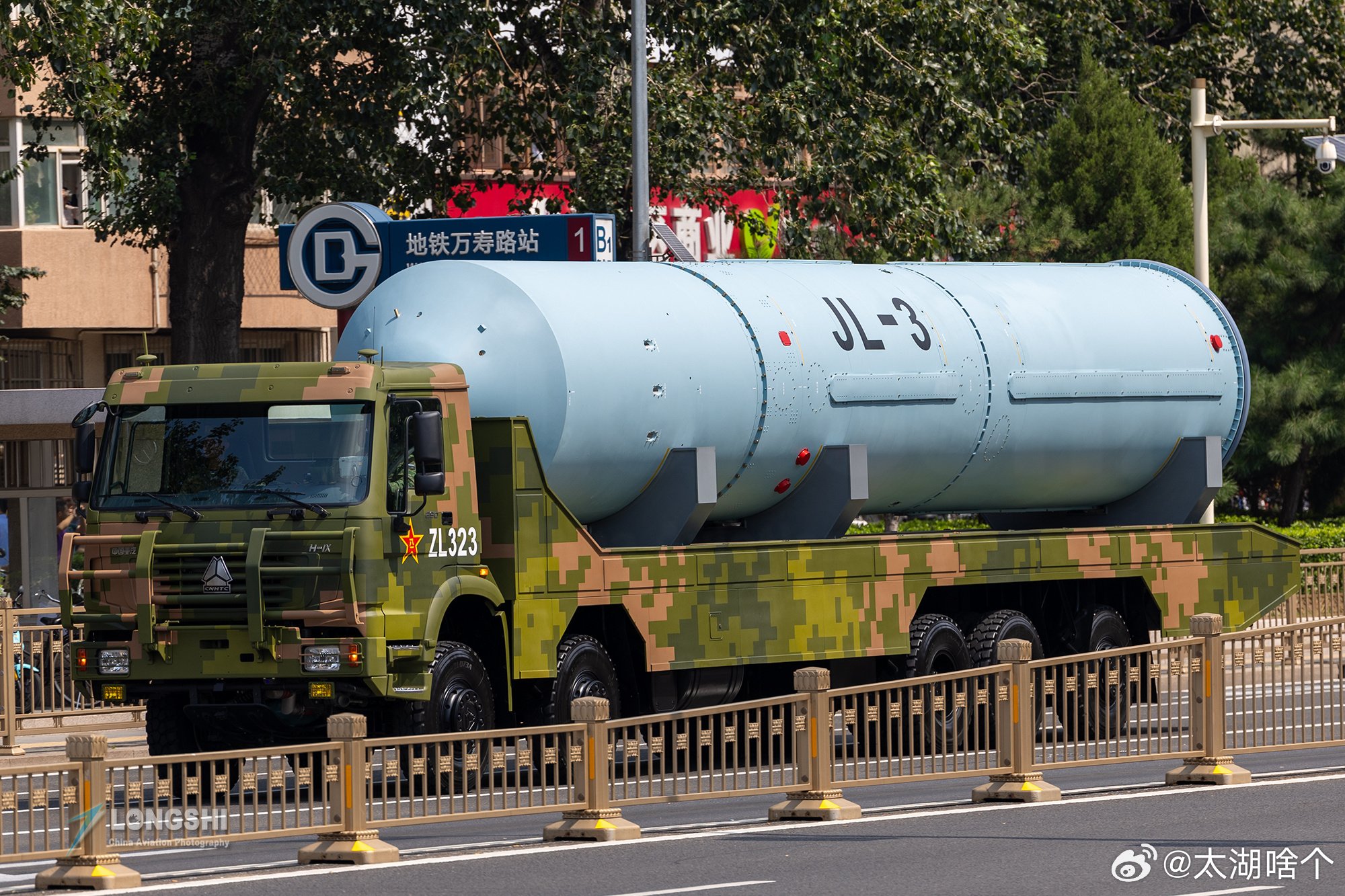
Strengthening the sea-based leg of its nuclear forces, China displayed the JL-3 submarine-launched ballistic missile. The JL-3 is a third-generation ICBM designed for deployment on its Type 094 and future Type 096 nuclear-powered submarines. With a reported range of over 10,000 kilometers, the missile is capable of carrying three independently targetable warheads. This development enhances China’s ability to maintain a credible second-strike capability from the sea.
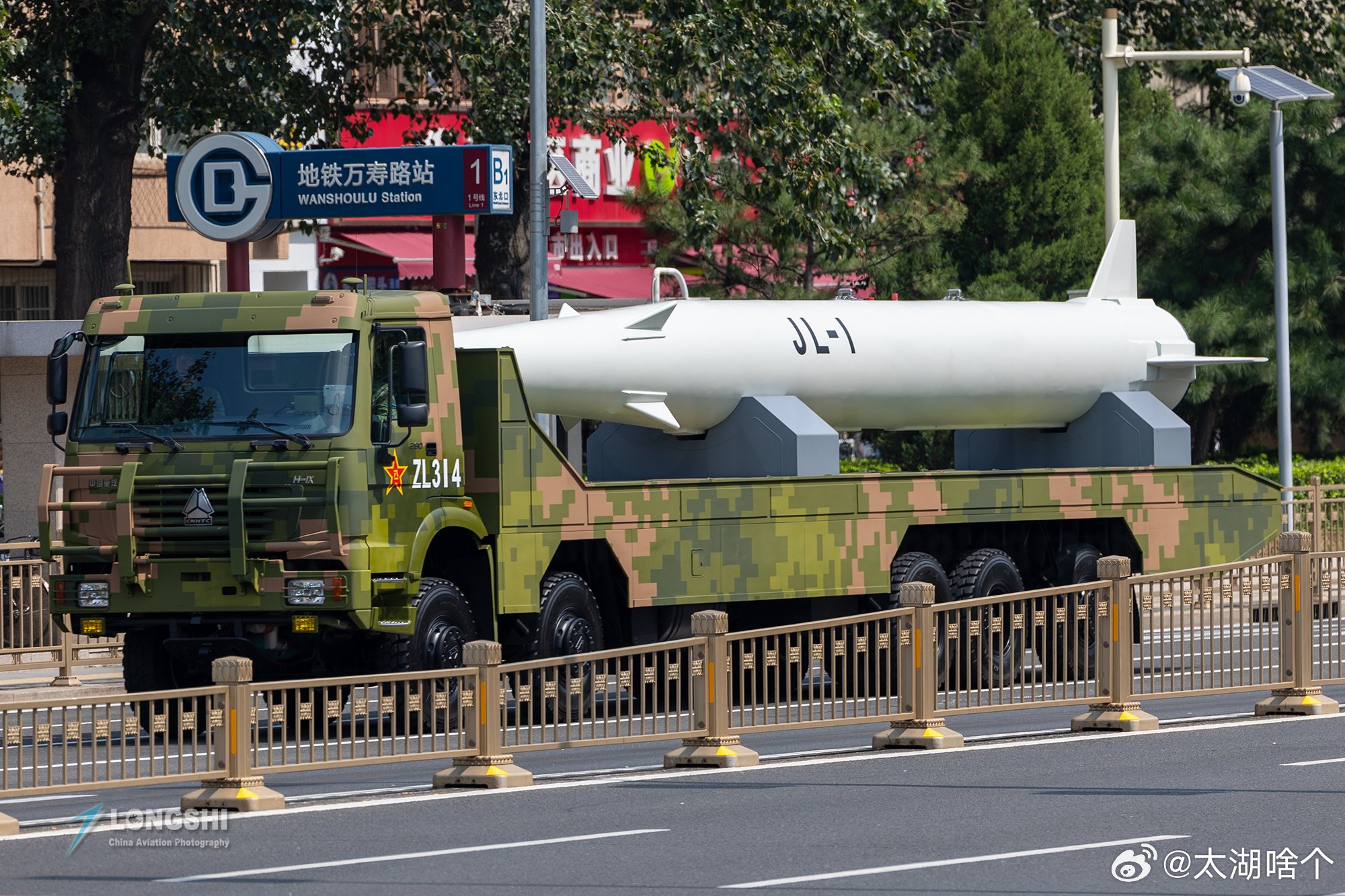
Completing the triad, the parade included the first public appearance of the JL-1, an air-launched long-range missile. This weapon is launched from an H-6 type carrier aircraft. The JL-1 is described as a larger and more advanced analogue to Russia’s Kinzhal missile, adding a new dimension to China’s air-based nuclear deterrent.
The simultaneous presentation of these new land, sea, and air-launched systems underscores a focused effort by Beijing to develop a more robust and survivable nuclear arsenal. The display offers a new baseline for assessing China’s strategic capabilities and presents a complex security dynamic for the United States and its allies in the region.