

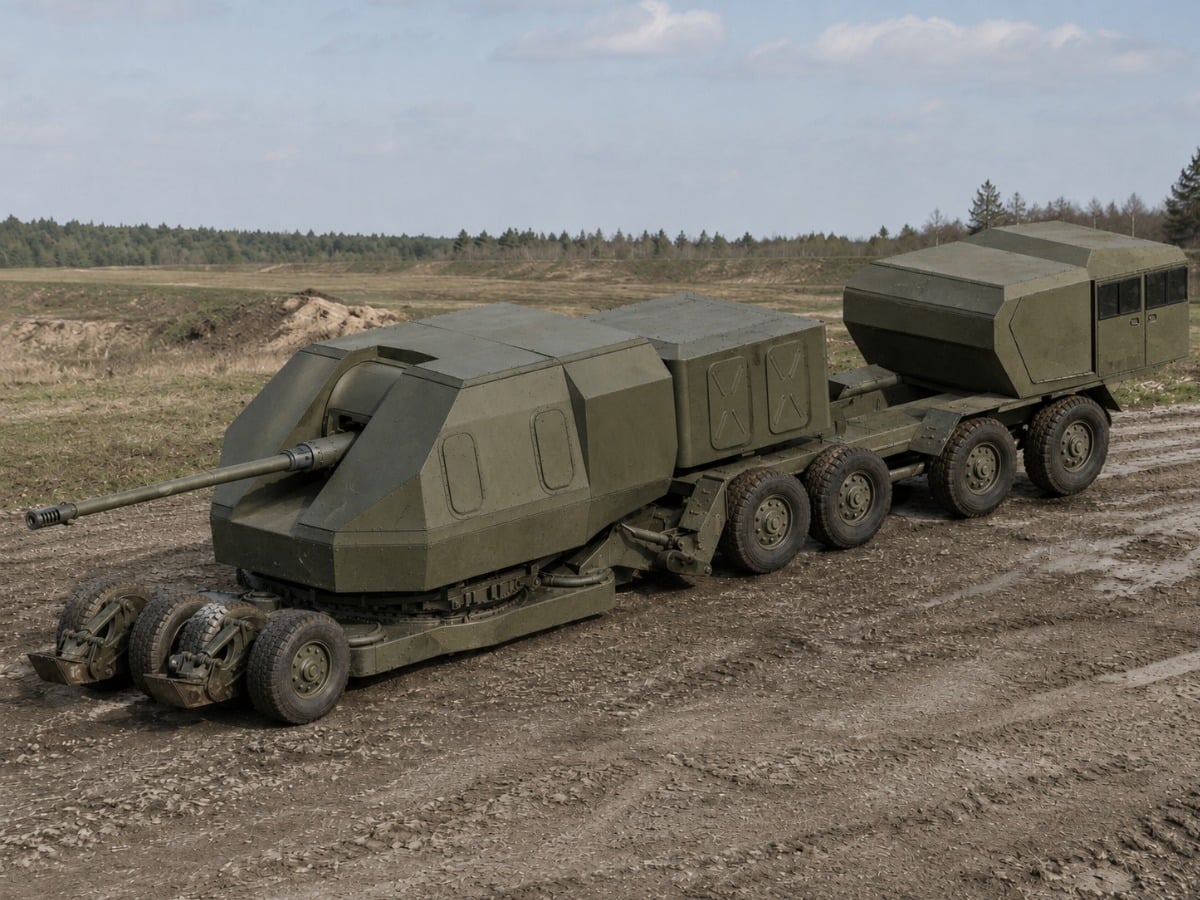
- Arsenal Machine-Building Plant patented a coastal self-propelled artillery mount adapting its A-192M 130 mm naval gun for ground use, according to btvt.info.
- The design uses a semi-trailer platform with rotating support legs and an automated ammunition feed system built around a pendulum-driven loading mechanism.
A Russian shipyard supplier best known for arming warships just patented a way to put its naval gun on wheels, and the design tells a story about a much larger program that appears to have stalled. Saint Petersburg-based Arsenal Machine-Building Plant, the manufacturer behind Russia’s AK-100, AK-130, AK-726 and A-192M naval guns, has patented a new coastal self-propelled artillery mount, according to btvt.info, which published and analyzed the patent documents.
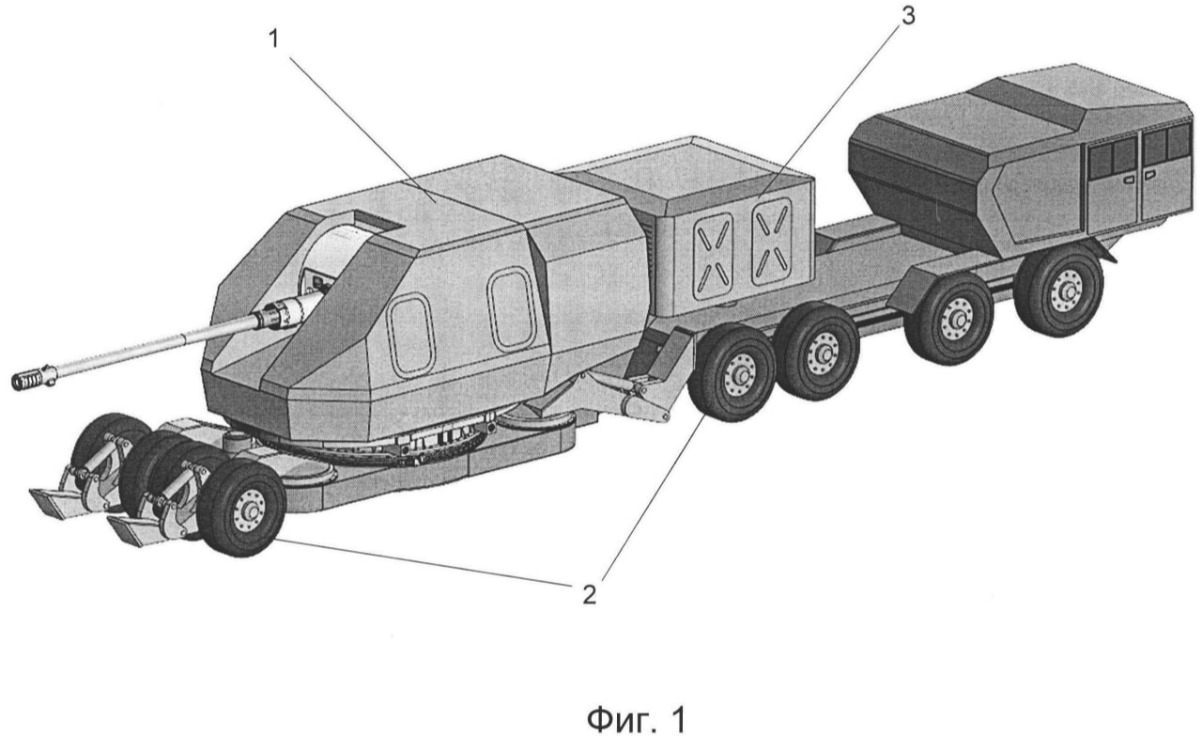
The patent describes a rotating gun mount with all-around protective armor fixed to the platform of a semi-trailer, allowing horizontal aiming of the weapon. That semi-trailer sits on four rotating support legs, two of which carry a pair of road wheels apiece matching those used on high-mobility trucks, letting the entire assembly be towed into position and then set down as a stable firing platform.
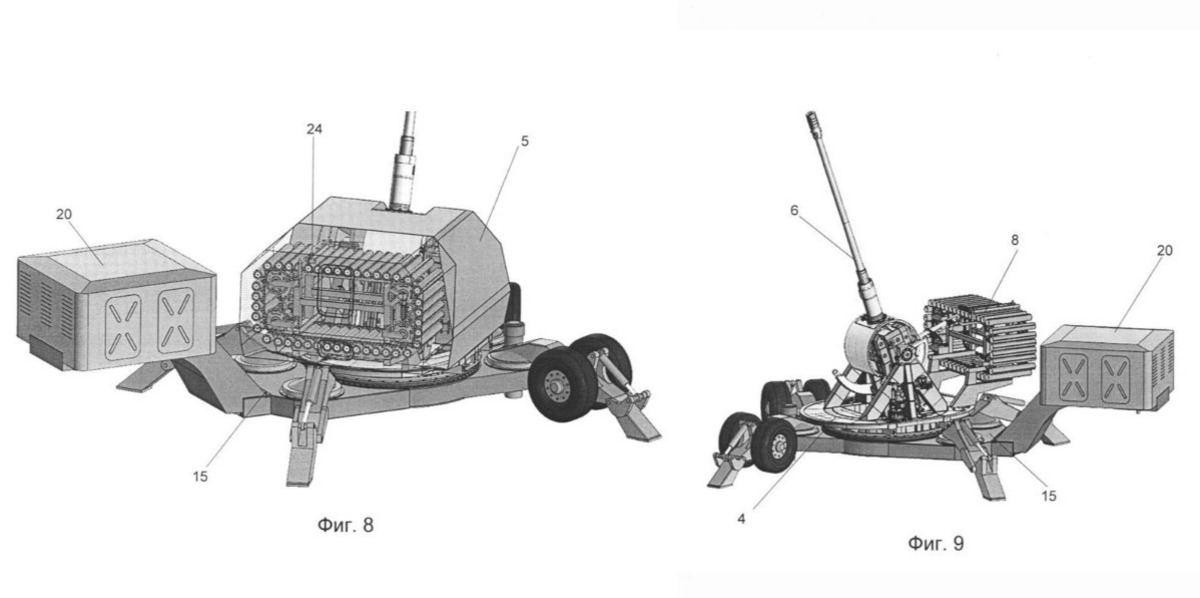
The ammunition handling system centers on a ready-use magazine built from guide tubes assembled into a closed loop resembling a tank tread, mounted on the rotating gun platform behind the weapon itself, feeding rounds through a receiver and a transfer mechanism built around a pendulum that swings on the same axis as the gun’s own elevation, with mechanical grips attached to the pendulum that carry each round through the loading cycle as it swings back and forth.
What makes this patent notable isn’t the mechanism itself but which gun Arsenal appears to be adapting for it. According to btvt.info’s analysis, the concept is built around turning the A-192M Armat, the 130 mm naval gun Arsenal already manufactures for Russia’s Admiral Gorshkov-class frigates and supplies as part of the ongoing modernization of the Kirov-class battlecruiser Admiral Nakhimov, into a ground-based artillery system.
The A-192M itself represents a genuine engineering advance over Arsenal’s older AK-130 twin-barrel naval gun, weighing roughly 25 tons compared to the AK-130’s approximately 90 tons while still firing a 130 mm round out to a maximum range of about 23 km (14 miles) against surface targets, a combination of firepower and reduced weight that made it attractive enough for the Russian Navy to standardize on it for new frigate construction after completing qualification testing in 2021. Adapting a proven naval gun for ground use isn’t a new idea in Russian artillery development, since the underlying goal traces back to Soviet-era research aimed at sharing gun designs, ammunition and components between naval and ground forces rather than developing entirely separate systems for each service.
Btvt.info offered a skeptical assessment of how useful this particular system would actually be on a modern battlefield, writing that while a niche exists for this kind of platform, it’s hard to call it a priority. The analysis suggested the underlying motivation has more to do with corporate strategy than battlefield necessity, describing the concept as an attempt to take a naval gun Arsenal already builds and successfully sell a land-based version of it to what the analysis called Russia’s ground-based Navy admirals, a pointed reference to the internal bureaucratic and industrial politics that can shape which weapons programs actually get funded regardless of their tactical merit. They also noted the design traces back to Soviet-era origins that were only refined and finalized in 2021, suggesting the patent represents years of incremental development rather than a rapid response to lessons from the war in Ukraine.
That skepticism becomes sharper in light of what btvt.info describes as this system’s connection to a much more ambitious program that appears to have quietly faltered. They characterized the new patent as effectively a consolation prize, a leftover byproduct of what was originally meant to be the Koalitsiya-SV program’s cross-service unification effort. Koalitsiya-SV itself is Russia’s next-generation 152 mm self-propelled howitzer, built on a T-90 tank chassis with a remotely operated turret and a three-person crew working from an armored capsule rather than exposed near the gun, a design Rostec has promoted as functionally a robotic artillery system after completing state trials. The original concept behind Koalitsiya dates back decades and was explicitly meant to unify large-caliber gun designs across the Ground Forces and the Navy under a shared 152 mm standard, an ambition reflected in the program’s own naval variant designation, Koalitsiya-F, intended for shipboard use. Despite years of development and periodic announcements of progress, including a 2023 Rostec statement claiming Koalitsiya-SV had completed state testing and outperformed comparable systems worldwide, the program has not reached the kind of widespread fielding Russian officials once projected, and btvt.info’s framing suggests this new coastal gun patent may represent Arsenal salvaging usable ideas from that broader cross-service unification effort rather than continuing to wait on Koalitsiya’s own uncertain timeline.