

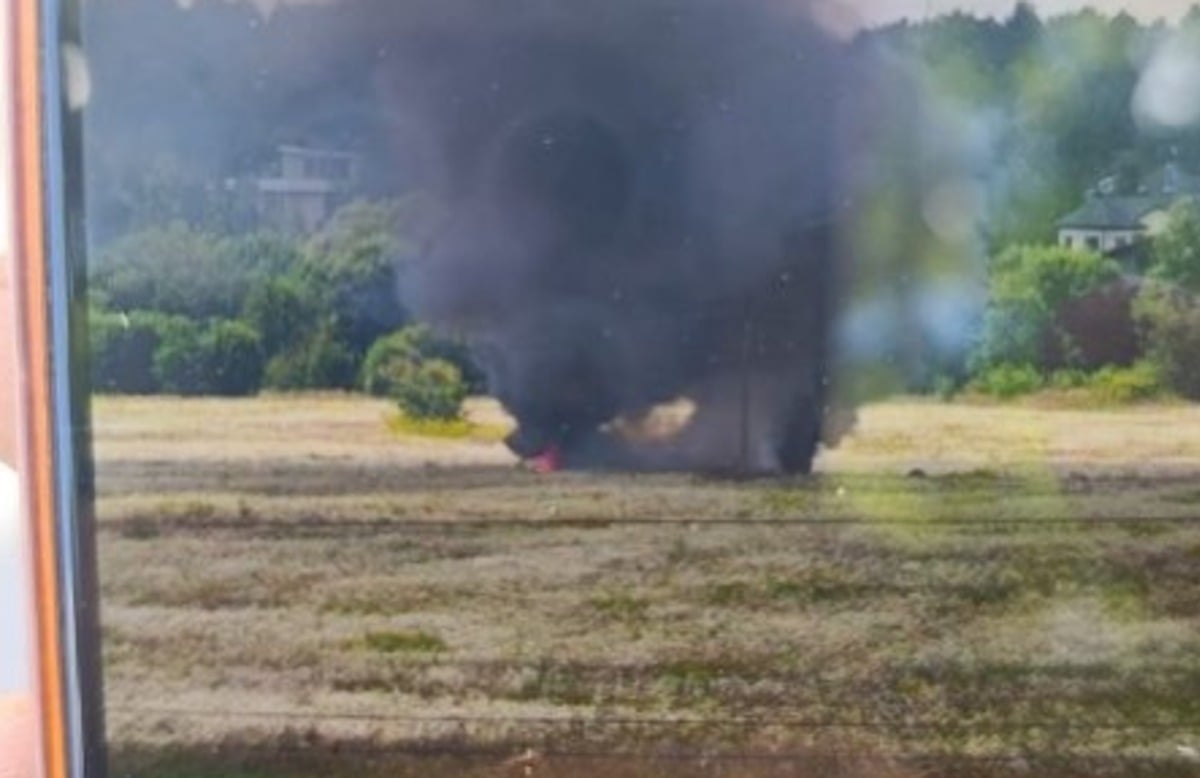
- A military aircraft crashed near Zvenigorod in Russia's Moscow region, with local media reporting the pilot ejected before impact.
- Some unofficial Russian sources identify the aircraft as a Su-57, though this remains unconfirmed by Russia's Ministry of Defense.
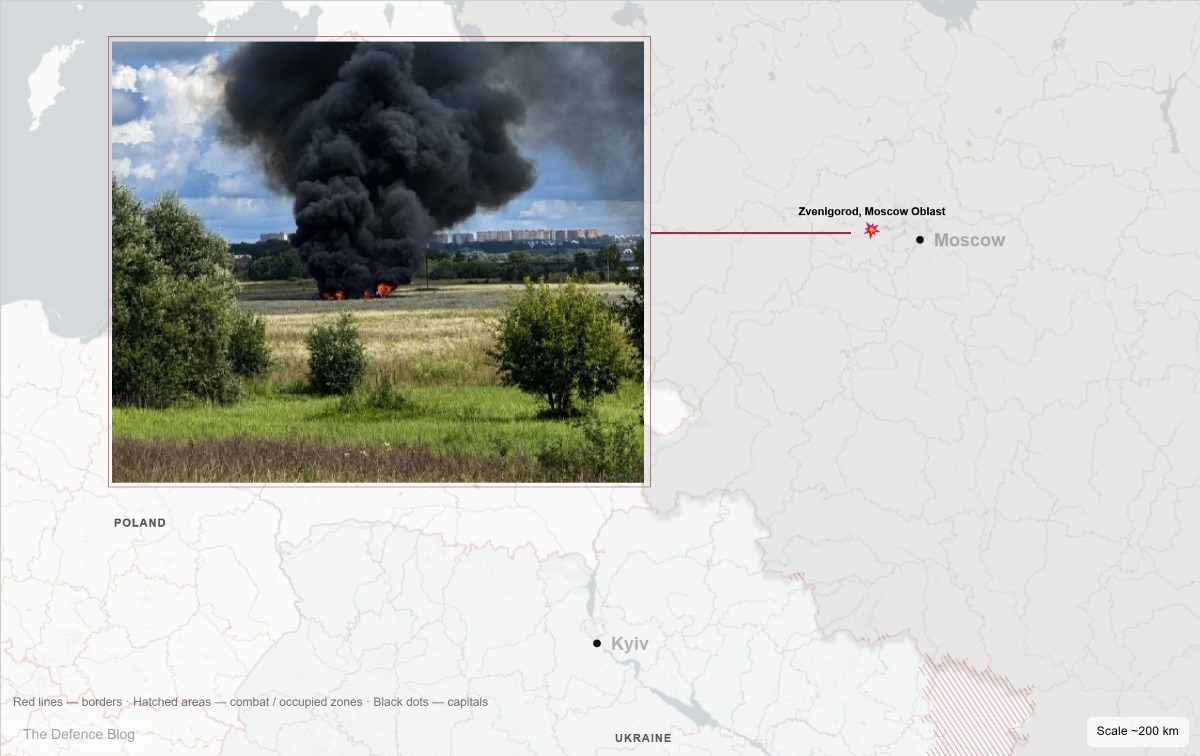
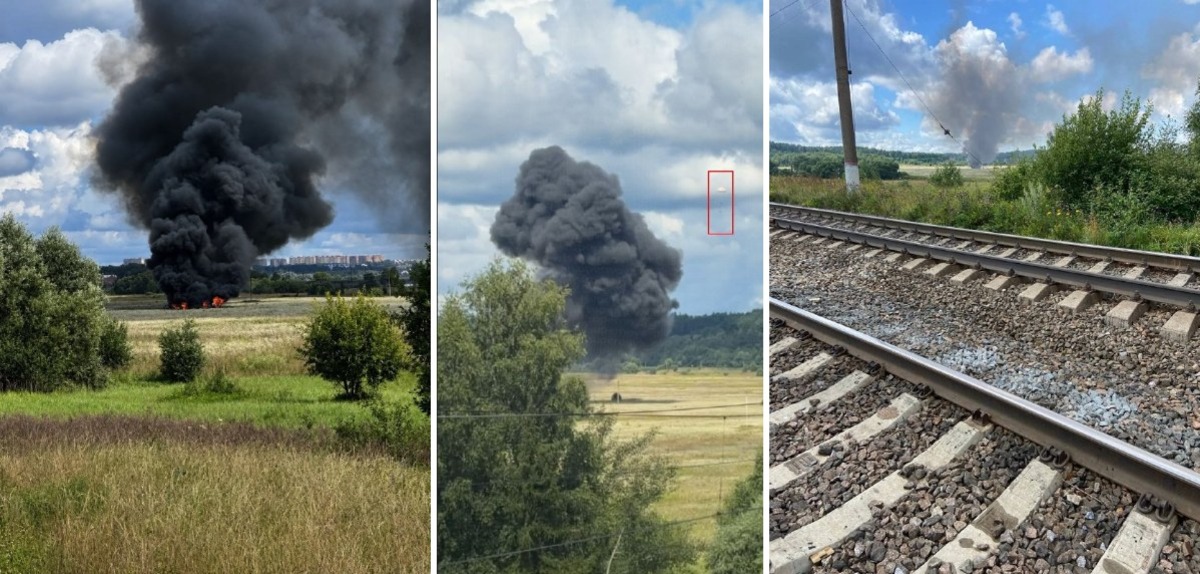
A military aircraft has crashed in Russia’s Moscow region near the town of Zvenigorod, with the pilot reportedly ejecting before impact, according to Russian local media and Telegram channels reporting from the scene.
Footage circulating from the crash site shows wreckage and emergency response activity near Zvenigorod, roughly 40 miles (65 km) west of central Moscow, though Russia’s Ministry of Defense has not issued an official statement confirming the aircraft type, the pilot’s condition, or the cause of the crash as of this writing.
Russian local outlets cited in the reports describe it only as a military aircraft, while some sources specifically identify it as a Su-57, Russia’s most advanced fighter jet and its only operational fifth-generation aircraft, built by Sukhoi to rival American stealth fighters like the F-22 and F-35. Some of the same unofficial sources report the pilot was killed, while others describe his condition as unknown, and no Russian government body has issued a statement addressing his status.
A Russian training aircraft crashed in the Moscow region on July 23 during takeoff, Russia’s Ministry of Defense said, with the pilot ejecting safely and no casualties or damage reported on the ground.
“On July 23 of this year, in the Moscow region, a training and combat aircraft crashed while taking off. The pilot ejected and his life is not in danger. The aircraft fell in an unpopulated area, and there is no damage on the ground,” the Defense Ministry said, according to TASS.
The Defense Ministry’s statement, carried by TASS, did not identify the aircraft’s model. Sources cited by the Russian outlet Kommersant say the aircraft was in fact a Su-57, Russia’s fifth-generation stealth fighter, which was conducting a training flight at the time of the crash. Neither claim has been officially confirmed to name the Su-57 specifically, and the Defense Ministry’s own statement stops short of identifying the aircraft type.
If the Su-57 identification holds up, the loss would be a significant blow to a program Russia has struggled for years to bring to meaningful scale. The Su-57 has suffered a rocky operational history since entering limited service, including its first confirmed crash near Khabarovsk in December 2019 during a test flight, when officials attributed the loss to a flight control system malfunction. Russia has built only a small number of Su-57s, with production repeatedly delayed by sanctions, industrial bottlenecks, and the broader strain the war in Ukraine has placed on Russian aerospace manufacturing, making each individual airframe considerably more consequential to lose than would be the case with Russia’s far more numerous Su-30 and Su-35 fleets. The aircraft has also seen sporadic use over Ukraine, where Ukrainian officials have claimed at various points to have damaged or targeted Su-57s on the ground, claims Russia has not confirmed.
Training-related crashes have remained a persistent problem across the Russian Aerospace Forces even independent of combat losses in Ukraine. Russian military aircraft, from Su-30 and Su-34 fighters to Tu-22M3 strategic bombers, have crashed repeatedly during training flights over the past year alone, with incidents in Karelia, Crimea and Irkutsk region among others, often attributed by Russian officials to technical malfunctions rather than external causes. That pattern reflects the strain of sustaining an intensified flight tempo across a large air force during wartime, when training missions, combat sorties and equipment maintenance all compete for the same limited pool of aircraft, spare parts and experienced maintenance crews.
This article will be updated as confirmed details become available. Given the unresolved status of both the aircraft type and the pilot’s condition, readers should treat the current reporting as preliminary and subject to correction once official or independently verified information emerges.