

- The U.S. Navy awarded Raytheon a $1.8 billion contract extension on July 21, 2026 for SPY-6 radar production and sustainment, with options worth up to $3.3 billion total.
- SPY-6 is currently installed on two commissioned Navy ships and 11 more in testing, with over 50 ships expected to carry it within a decade.
Raytheon, the RTX-owned defense manufacturer based in Andover, Massachusetts, announced that the U.S. Navy awarded it a $1.8 billion contract extension for hardware production and sustainment of the SPY-6 family of radars, building on an initial contract the company received in March 2022. The extension carries options that, if the Navy exercises all of them, would push the total value of the program to $3.3 billion.
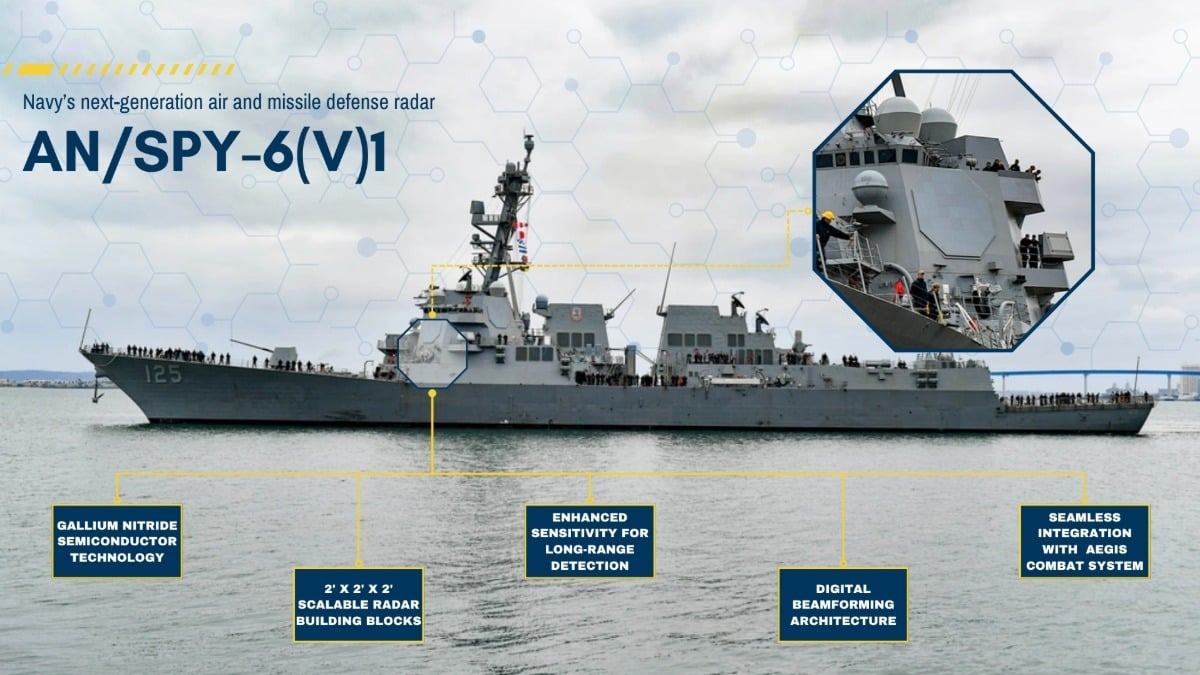
SPY-6 matters because it’s the system standing between a warship and the growing list of threats trying to hit it, from cruise missiles and ballistic missiles to fighter jets and swarms of drones. The radar works by scanning the sky and sea in every direction using panels called Radar Modular Assemblies, individual radar units small enough to be manufactured on an assembly line and then stacked together like building blocks into whatever size array a given ship needs, which is what lets the same underlying technology scale from a small warship to the largest aircraft carrier in the fleet.
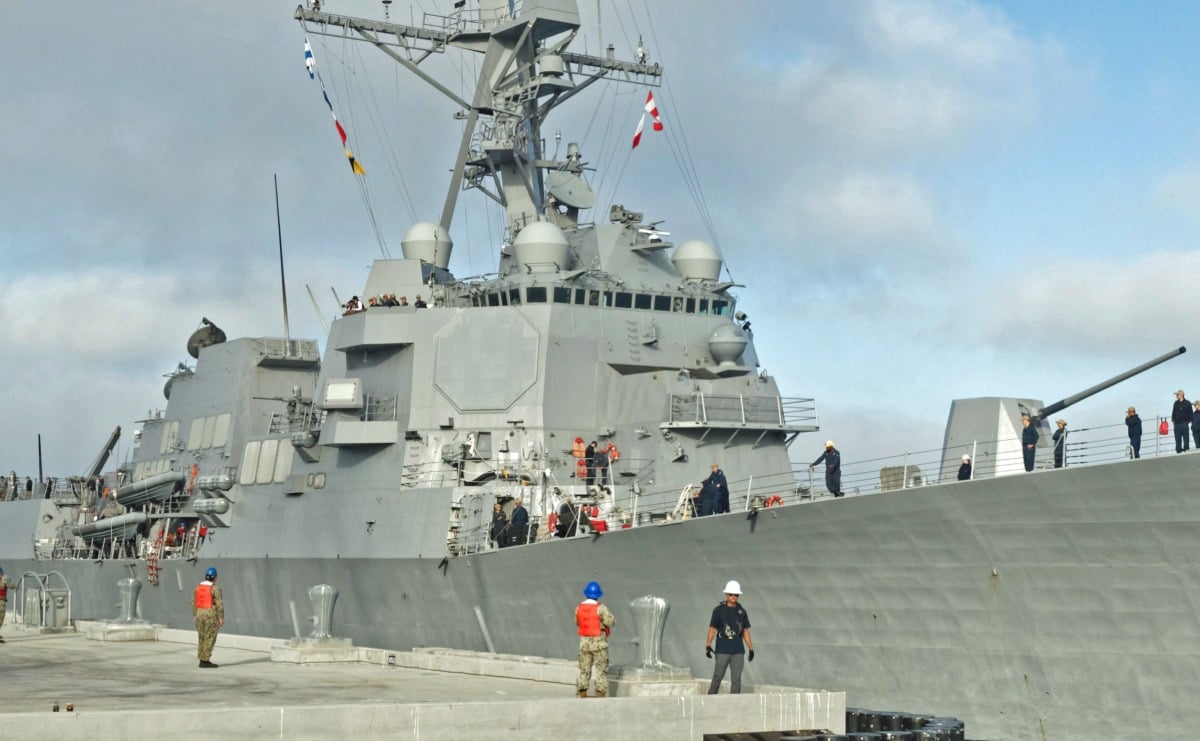
The most powerful version, designated SPY-6(V)1, uses four fixed panels of 37 modules each to deliver full 360-degree coverage and is being installed on the Navy’s newest Arleigh Burke-class destroyers, the Flight III variant, where it works alongside the ship’s Aegis combat system to track ballistic missiles and coordinate an intercept, a capability the Navy has said is roughly 30 times more sensitive than the SPY-1 radar it replaces and can spot threats twice as far away.
Smaller variants of the same radar family are spreading across the rest of the fleet for different jobs. The SPY-6(V)2, built around a single rotating array of nine modules, is going onto amphibious assault ships and helping provide air traffic control and self-defense awareness for vessels that don’t need the full ballistic missile defense punch of the destroyer version, while the SPY-6(V)3, with three fixed panels of nine modules each, is being fitted to Ford-class aircraft carriers, the Navy’s newest and most expensive class of warship, to give them continuous situational awareness in every direction.
A fourth variant, the SPY-6(V)4, is designed as a backfit upgrade for older Flight IIA destroyers that were built before SPY-6 existed, meaning the Navy can retrofit ships already in service rather than retiring them early just because their radar has fallen behind the threat environment.
Barbara Borgonovi, president of Naval Power at Raytheon, framed the new contract as recognition of the company’s production track record rather than just a routine renewal.
“This contract extension reflects the Navy’s confidence in our ability to deliver advanced, reliable and scalable radar solutions,” Borgonovi said.
“Our continued investment and commitment to ramping production will ensure the fleet has the sensing advantage to stay ahead of evolving threats for decades to come,” Borgonovi said.
Right now SPY-6 is aboard two commissioned Navy ships, with 11 more currently installed and moving through various stages of testing, and the company expects that footprint to expand sharply. Raytheon projects that more than 50 Navy ships will carry some version of SPY-6 over the next decade, a rollout that touches nearly every major surface combatant class the Navy operates, destroyers, carriers, frigates and amphibious ships alike, and reflects a deliberate Navy strategy to standardize radar hardware across the fleet rather than running separate, incompatible systems on each ship type. That standardization pays off in logistics as much as performance, since sailors trained to maintain one SPY-6 variant can more easily support others, and a radar panel that fails on one ship class can potentially draw from a common supply chain rather than a bespoke one built for a single vessel.
Meeting that production ramp has required Raytheon to expand well beyond its existing manufacturing footprint. The company has invested more than $800 million to modernize its radar manufacturing facilities and add production capacity, an investment the company says positions it to roughly double SPY-6 output by 2028.
Raytheon is also growing its engineering workforce in Andover specifically to support the program, adding roles aimed at both experienced defense industry professionals and military veterans transitioning into civilian careers, a hiring push that mirrors a broader trend across the defense sector as manufacturers race to keep pace with Navy shipbuilding and radar demand simultaneously.
The scale of this contract lands against a backdrop where naval radar and air defense capability has taken on new urgency. Drone attacks and missile strikes at sea, from Houthi attacks on shipping in the Red Sea to the intensity of naval combat in the Black Sea during the Russia-Ukraine war, have underscored how much modern naval survivability depends on detecting a threat early enough to respond, rather than relying purely on a ship’s weapons or armor after the fact.