

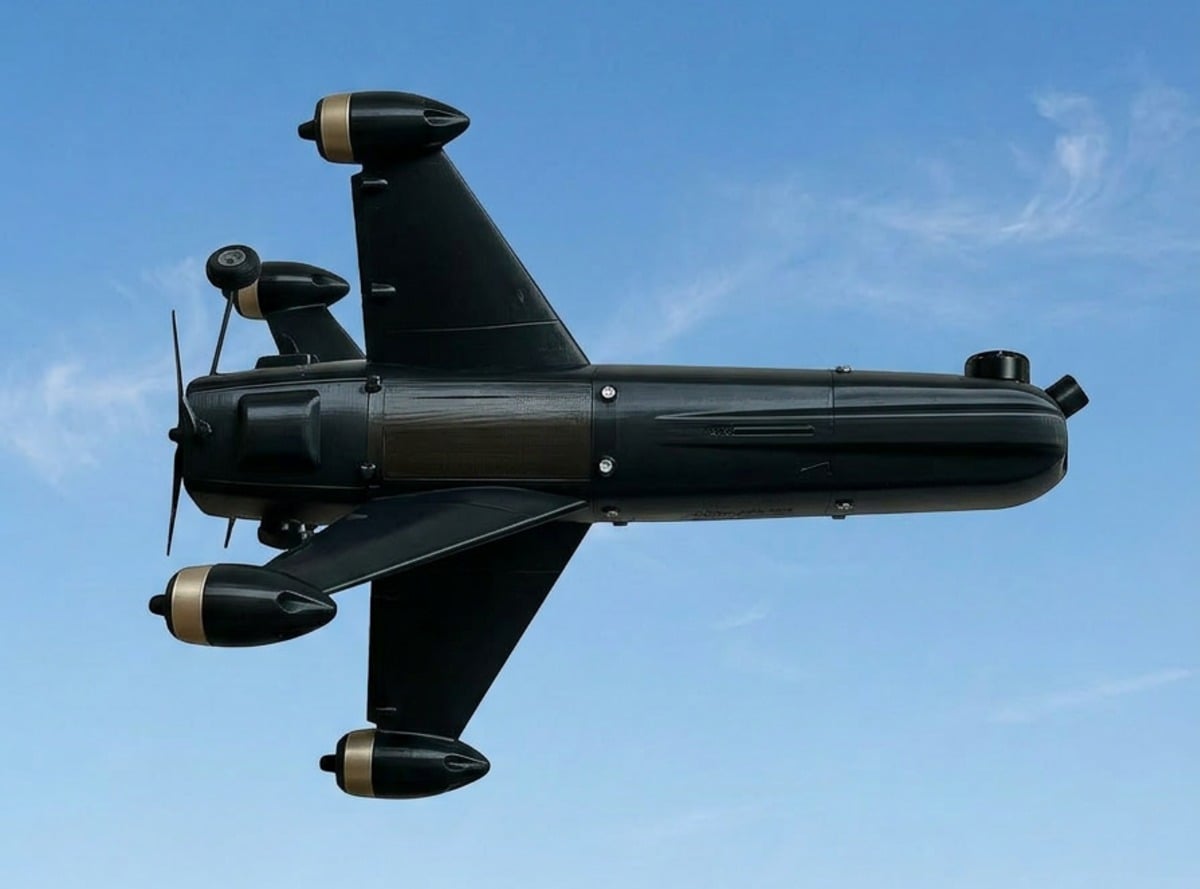
- The U.S. Air Force awarded Tandem Defense a contract worth up to $90 million for Group 1 aerial denial unmanned aircraft systems.
- The competitively awarded contract drew 10 offers and runs through July 2028, managed by the Air Force Life Cycle Management Center.
The U.S. Air Force has handed a Georgia drone maker a contract worth up to $90 million to build small, expendable aircraft designed to deny enemies the ability to fly.
Tandem Defense, based in Richmond Hill, Georgia, won a new contract, meaning the U.S. Air Force can order any quantity of equipment up to the $90 million ceiling as needs arise rather than committing to a fixed purchase upfront, for what the service calls Group 1 aerial denial unmanned aircraft systems, with work expected to run through July 2028.
Group 1 covers the smallest category in the U.S. military’s five-tier drone classification system, encompassing unmanned aircraft weighing less than 20 pounds (9 kilograms), flying below 1,200 feet (366 meters), and topping out under 100 knots (115 miles per hour), a category that includes everything from small reconnaissance quadcopters to compact first-person-view attack drones. The phrase aerial denial signals a specific mission set within that weight class, describing systems built to stop enemy aircraft from operating freely in contested airspace rather than gathering intelligence or striking ground targets, a role that increasingly means intercepting other small drones before they reach a protected base, formation, or piece of equipment.
Tandem Defense has built its business almost entirely around exactly that kind of small, tactical drone work. The company markets itself as an American manufacturer of modular first-person-view drone systems, claiming more than 25,000 systems already deployed across every branch of the U.S. military and more than 11 allied nations, and its product lineup includes what it describes as the first American-made fiber-optic first-person-view drone, developed with L3Harris and built to fly using a physical cable stretching more than 80 kilometers (50 miles) instead of a radio link, making it immune to the kind of electronic jamming that increasingly disrupts conventional drone operations in contested environments. The company also builds a dedicated counter-drone interceptor specifically designed to defeat one-way attack drones like Iran’s Shahed-136 and Russia’s rebranded Geran-2 variant, capable of a kinetic intercept, meaning a direct physical collision rather than an explosive warhead, at speeds up to 340 kilometers per hour (211 miles per hour), all priced considerably below what traditional missile-based air defense systems typically cost per engagement.
That last capability lines up closely with what this new U.S. Air Force contract appears built to support, and the timing fits a broader pattern of urgency spreading across the Pentagon’s approach to countering cheap, mass-produced drones. The U.S. Army awarded AeroVironment a separate $500 million contract on July 1 specifically to acquire commercial counter-drone technology capable of defeating Group 1, 2, and 3 threats over the next three years, ranging from small first-person-view attack quadcopters up to larger reconnaissance and one-way attack drones, a deal Army Recognition reported reflects a broader institutional shift where counter-drone defense is becoming a standard protection requirement for maneuver forces, logistics units, artillery batteries, aviation units, and fixed installations alike rather than a specialized mission handled by a single dedicated air defense branch. That shift traces back to the Department of War’s Drone Dominance initiative, a Pentagon-wide effort to expand America’s domestic drone manufacturing base, arm combat units with low-cost attack drones, and lean on Joint Interagency Task Force 401 to coordinate rapid counter-drone fielding across every U.S. military service simultaneously.
This week’s award to Tandem Defense went through a genuinely competitive process, with the U.S. Air Force receiving 10 separate offers The Air Force Life Cycle Management Center at Wright-Patterson Air Force Base in Ohio is managing the contract, and the initial award obligated just $98,000 in fiscal 2026 procurement funds, a small opening installment that will grow as the U.S. Air Force places individual task orders against the larger ceiling over the life of the agreement, a common structure for this kind of flexible, demand-driven contract vehicle.
The contract also covers ancillary support equipment, operator training, and field service representative support, meaning Tandem Defense will not simply hand over hardware and walk away but will help train the U.S. Airmen who operate these systems and provide ongoing technical support once the drones actually reach units in the field, a commitment that matters given how quickly small drone technology continues to evolve and how much operator proficiency determines whether a system like this actually performs when it matters.