

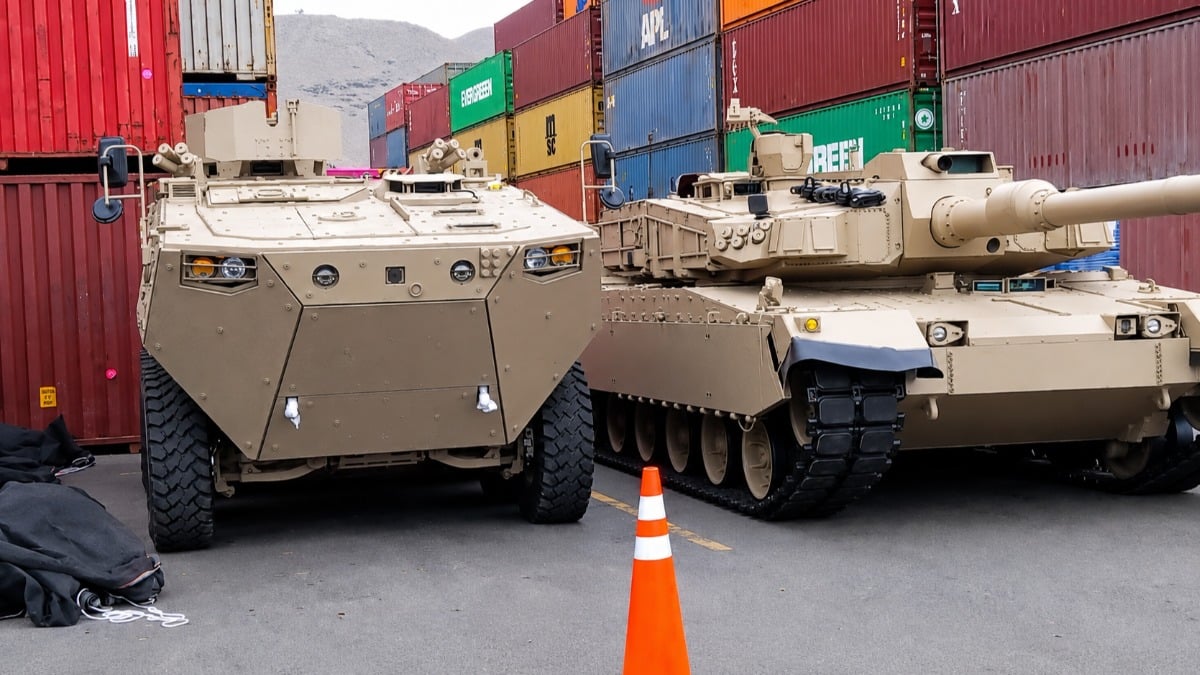
- The vessel GLOVIS SAFETY delivered at least two K2 Black Panther tanks and six K808 armored vehicles from South Korea to Peru's Port of Callao.
- Peru's Army has not signed a formal K2 purchase contract, suggesting the vehicles will be used for trial testing rather than active service.
Observers at the Port of Callao got an unexpected surprise this week: a shipment of at least two K2 Black Panther main battle tanks, alongside six K808 8×8 armored personnel carriers, arriving from South Korea.
The vessel, identified through tracking data as the GLOVIS SAFETY (IMO: 9798399), makes the shipment one of the clearest confirmed signals yet that South Korea’s push into the Peruvian military market has moved from paperwork to physical hardware, and it caught even close followers of the deal off guard given how much of the process still remains unsettled.
The framework agreement behind this delivery dates to December 9, 2025, when Peru and South Korea formalized a plan for 54 K2 tanks and 141 K808 vehicles, a deal Reuters reported at the time as the largest South Korean export of military vehicles to Latin America and the first sale of the K2 outside Europe. South Korean manufacturer Hyundai Rotem and Peru’s state-owned defense company, FAME S.A.C., signed that framework in Lima, but a framework agreement is not the same as a finalized purchase. It sets the scope and intent of a deal while leaving the actual delivery schedules, unit prices, and legal terms to a separate implementation contract, and multiple outlets reported at the time that South Korea and Peru expected to finalize those terms sometime between June and July 2026.
Sending a small number of tanks ahead of a signed contract looks for testing phase: it lets Peruvian crews and maintenance personnel put the vehicle through cold-start testing, altitude trials in the Andes, and comparison against the aging T-54 and T-55 tanks it is meant to replace, all before Lima commits to the full 54-unit order.
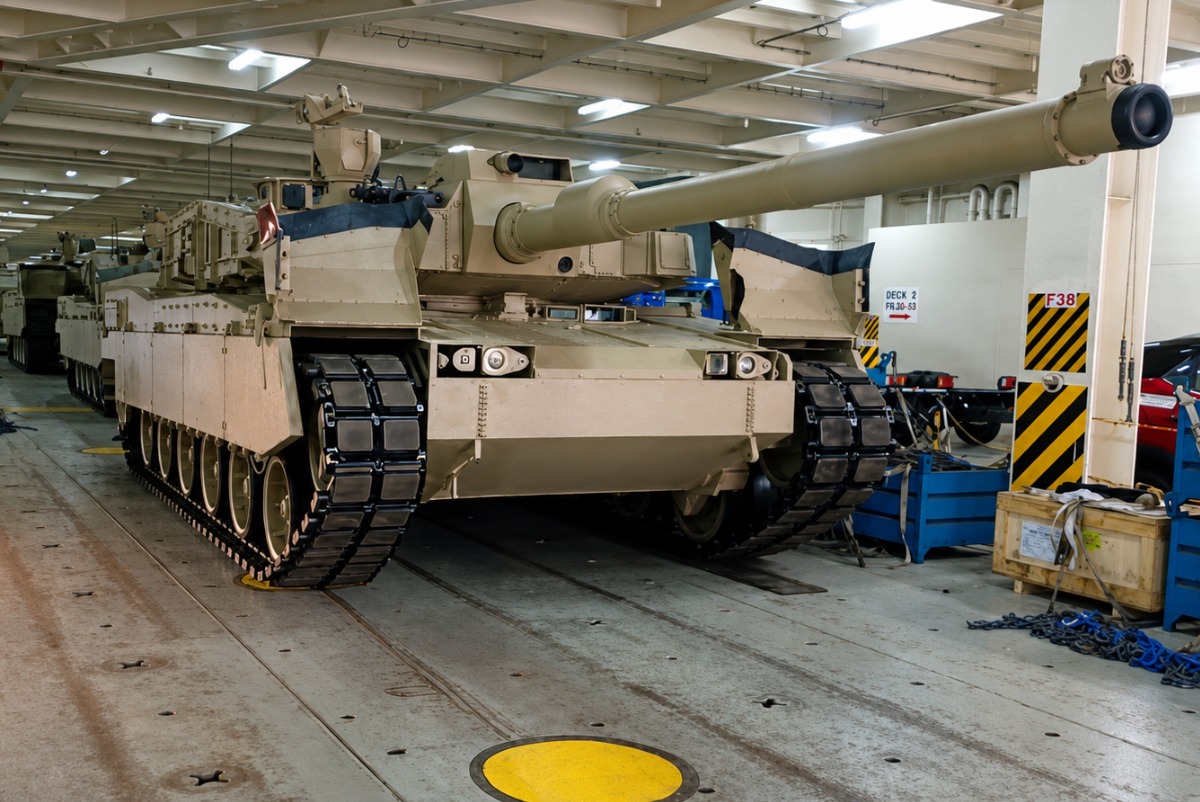
The K2 itself represents a generational leap for a Peruvian armored fleet that has depended on Soviet-era hardware since the 1970s. Built by Hyundai Rotem and developed by South Korea’s Agency for Defense Development, the tank runs on a Hyundai Doosan Infracore diesel engine producing 1,500 horsepower, paired with a suspension system that can raise or lower the hull to adapt to terrain, reaching road speeds up to 70 km/h (43 mph). Its main armament is a 120 mm (4.7 in) smoothbore gun fed by a domestically designed automatic loader capable of loading rounds even while the tank is moving over uneven ground, a feature that reduces crew workload and keeps the gun in action longer during sustained engagements. South Korea has already proven the platform’s export appeal through Poland’s multibillion-dollar orders, and Peru’s rugged, mountainous interior gives the K2 a similar operating environment to the one it was originally designed for on the Korean Peninsula.
The six K808 vehicles that arrived alongside the tanks are 8×8 wheeled armored personnel carriers already contracted in earlier, smaller Peruvian purchases, built to carry infantry and support elements at speeds up to 100 km/h (62 mph) on roads and roughly 8 km/h (5 mph) in water during amphibious operations. But images of this particular batch, reviewed alongside the vessel-tracking data, appear to show a configuration that differs from the standard K808 seen in earlier deliveries and in South Korean Army service, with a redesigned front hull and a turret arrangement that does not match the layout typically seen on previous shipments.
The most likely explanation is that Hyundai Rotem tailored these vehicles to specifications the Peruvian Army requested during negotiations, adapting the base K808 design to local operational standards, climate conditions, or equipment requirements rather than shipping South Korea’s standard export configuration unchanged. Neither Hyundai Rotem nor the Peruvian Army has confirmed the exact nature of the changes, and the redesign remains an open question based on visual comparison rather than a confirmed fact.
That kind of early customization would fit a pattern already visible in the broader deal, where Hyundai Rotem and FAME S.A.C. have emphasized local industrial participation and technology transfer as central pillars of the agreement rather than a simple off-the-shelf sale. If Peru is already shaping the design of vehicles arriving ahead of a signed implementation contract, it suggests both sides expect the relationship to move forward, even if the paperwork has not yet caught up with the hardware on the dock.
Trial deliveries ahead of a final contract are common in international arms sales, precisely because they let a buyer walk away or renegotiate if a platform underperforms in local conditions, and Peru’s own history of tank shopping, including previous unsuccessful evaluations of the Russian and Chinese-made competitors, shows Lima has been willing to change course before committing to a final purchase.