

- USAF and Zone 5 Technologies moved Rusty Dagger, designated AGM-188A, from contract to production in 14 months and live-fire testing in under 16 months.
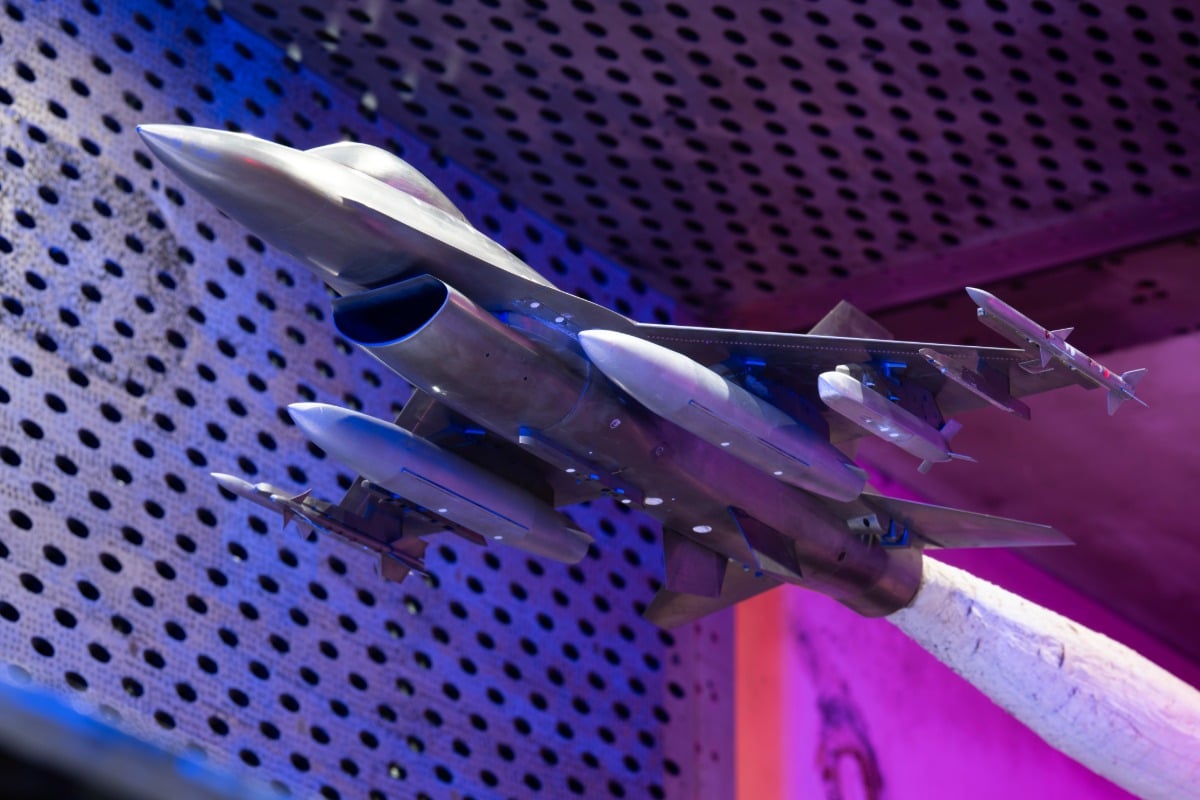
- AEDC engineers built and tested an F-16 scale model carrying the missile in under three days, delivering data to the 96th Test Wing in 67 hours.
A U.S. Air Force and industry tandem developed and tested a new cheap cruise missile, Rusty Dagger, in record time, and the pace of that work is now difficult to compare with any previous program the service has run. What has traditionally taken years came together here in months. Driven by urgent frontline need and the program’s outsized importance, USAF pulled off something that would have been considered close to impossible for a weapons effort not long ago.
The missile carries the official designation AGM-188A and the name Rusty Dagger, built by U.S. manufacturer Zone 5 Technologies under the Extended Range Attack Munition, or ERAM, program, an air-launched, long-range munition designed to let an aircraft strike a target while staying outside the reach of enemy air defenses. That speed showed up first at the Arnold Engineering Development Complex, or AEDC, in Tennessee, where a team raced to build and test a scale F-16 model carrying the missile after the 96th Test Wing at Eglin Air Force Base submitted an urgent request.
According to Lt. Col. Joe Sabat, former commander of AEDC’s 716th Test Squadron, engineers there delivered finished test data in under three days, a turnaround he repeatedly called unprecedented. The request called for a loads test, which measures how much stress and strain an aircraft’s structure can handle while carrying a specific weapon, data the Air Force needed to confirm the F-16 could safely carry Rusty Dagger into combat. Sabat said AEDC needed a physical test model ready in under 48 hours, so the team launched three manufacturing paths at once: the in-house Model and Machine Shop began fabrication immediately, a local business was contracted to build an independent version, and engineers partnered with the U.S. Army’s Combat Capabilities Development Command Aviation & Missile Center at Redstone Arsenal, Alabama, to 3D print two metal test articles. All three paths produced a usable model within two days, though the in-house shop finished first and supplied the article actually used for testing.
Dustin Boss, director of the 804th Test Support Squadron, said his Model Shop team showed zero hesitation the moment the request arrived, building a machining program, sourcing material, and shaping a scale model of the missile in under 24 hours.
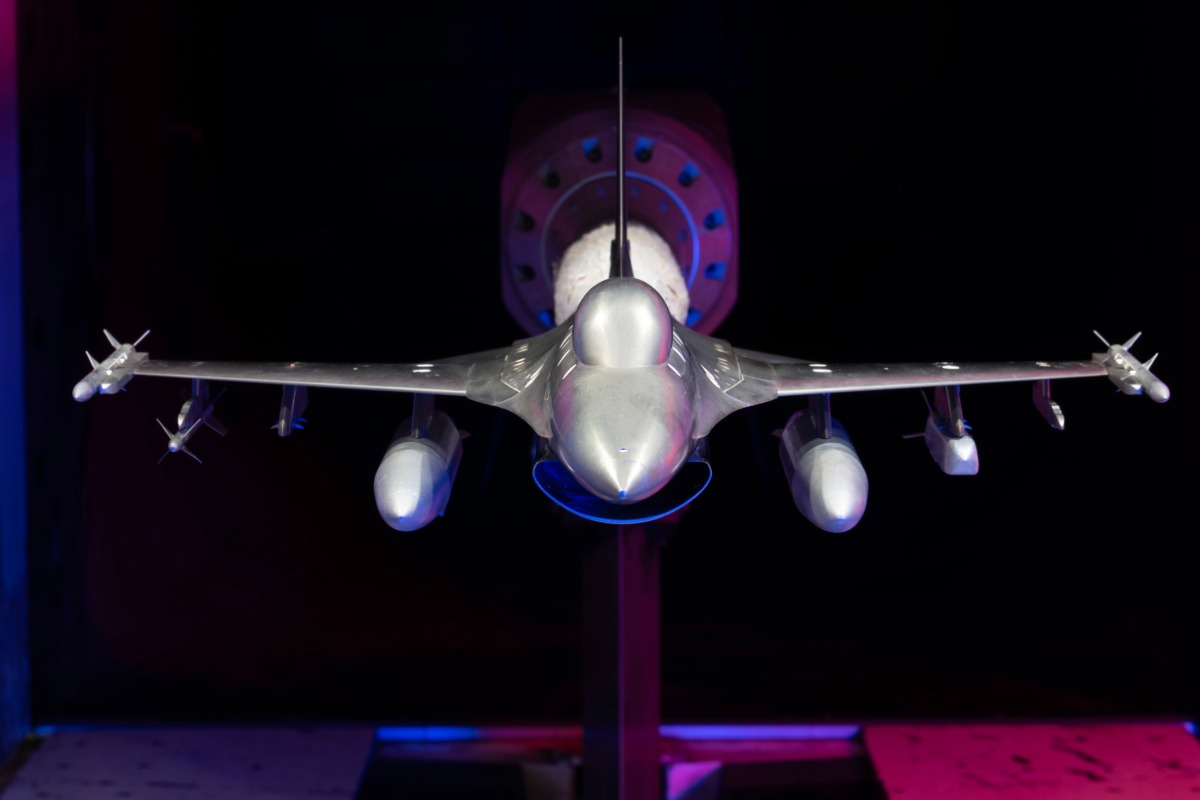
“That took significant personal sacrifice, with team members immediately shifting their work schedules and working through the night to make this happen,” Boss said. “This incredible display of dedication and skill highlights the remarkable talent and capability the Air Force has at the AEDC Model Shop,” he said. Lead test engineer Marvin Sellers said his team designed the wind-tunnel test article and had fabrication underway just after midnight on the first day, without skipping any required safety or technical reviews. “We did not skip on either of the reviews, but everything else was ‘perform only what is minimally required’ to test on the third day and meet the data need date,” Sellers said, adding that in 45 years of testing at AEDC he had seen only one comparable sprint, a four-week Desert Storm-era effort that still ran far slower than this one.
Air-on testing began just 46 hours after the original request, according to 4T Crew Chief Kenneth Ligon, and the team even recovered from a mid-test water leak in the tunnel’s compressor cooler in under four hours without missing its deadline. Quick-look data reached the 96th Test Wing 67 hours after the request first landed, giving engineers insight into how Rusty Dagger performs at high speed and under shockwave conditions. Sabat credited more than 180 personnel across AEDC, Redstone Arsenal and the surrounding Tullahoma community. “The team showed unprecedented responsiveness to the urgent request,” Sabat said. “It’s a humbling honor to be involved with teams that can mobilize to accomplish a test mission like this. The unhesitating support from the entire AEDC, Redstone and Tullahoma teams was eye-watering,” he said.
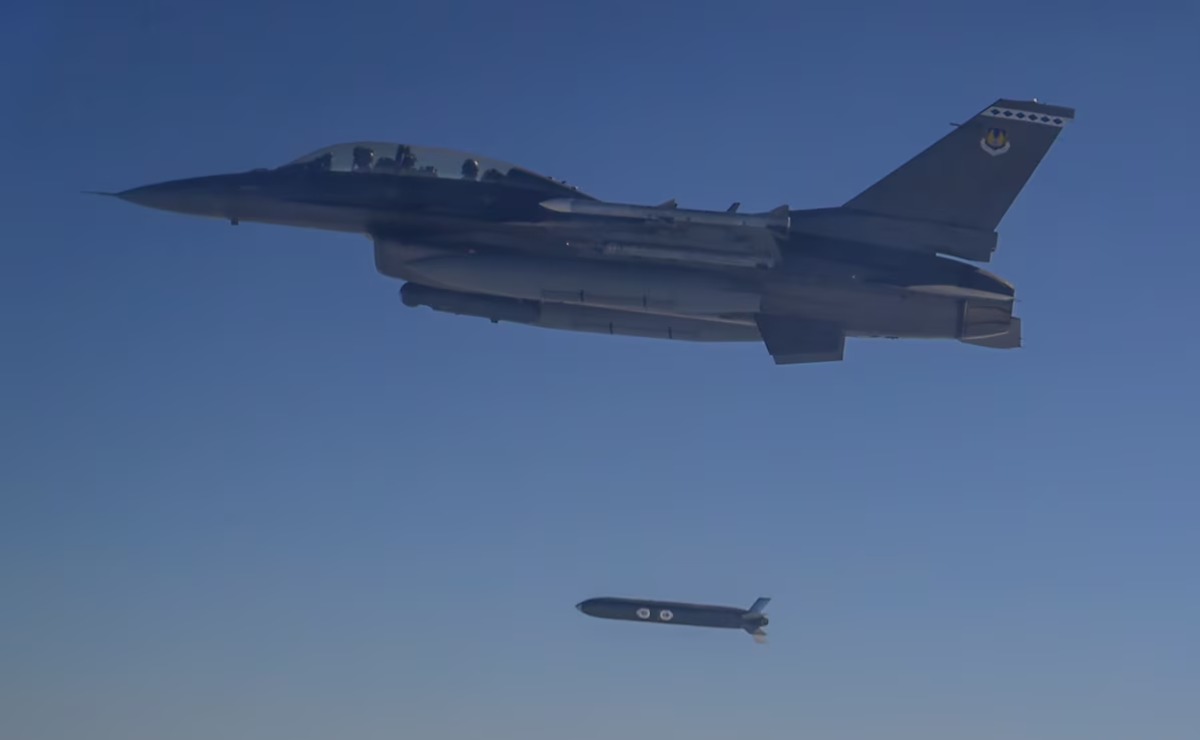
With the wind-tunnel data in hand, the Air Force moved just as fast toward putting the missile on a real aircraft. The Air Force’s own release on that next step did not officially name the weapon, referring to it only by the acronym FAMM-L, short for Family of Affordable Mass Munitions-Lugged. Photos released with the announcement showed a model of the F-16 fitted with a mockup missile that can be visually identified as Rusty Dagger, and the manufacturer filled in the rest. Zone 5 Technologies confirmed its role in a social media post celebrating the test, saying it was proud to have supported “rapid Rusty Dagger integration” on the F-16 alongside the team at Eglin Air Force Base, and that the partnership was turning the concept of “affordable mass” into a reality with precision strike capability built for scale.
That pace was echoed by Brig. Gen. Robert P. Lyons III, the Air Force’s top weapons acquisition official, who told the Senate Armed Services Committee on March 24 that ERAM represents “a new class of affordable, low-cost munitions.” Lyons said the missile moved from initial contract to working prototypes in just four to seven months, and reached production only 14 months after the Air Force first signed the contract, a speed he called without precedent for a modern acquisition program. “These cruise missiles represent a new speed of acquisition,” Lyons said. For comparison, the Air Force’s own AGM-158B JASSM-ER cruise missile took eight years to move from first flight to operational service, and the AGM-179 JAGM needed 12 years between its first test launch and reaching the fleet. Rusty Dagger compressed that kind of timeline into a fraction of the time, by design, because the program was built from the outset to answer a wartime need rather than follow a peacetime modernization schedule.
The integration test on the F-16 Fighting Falcon, conducted in March, included functionality checks, validated the procedures for loading the missile onto the jet, and confirmed the weapon works with the aircraft’s systems. The 96th Test Wing led development testing for the effort, while the 53rd Wing handled operational testing.
“This was a perfect demonstration of test readiness to meet warfighter needs,” said Lt. Col. Brett Tillman, 780th Test Squadron commander. “Integrating the entire test team allowed us to safely test and deliver a critical capability at incredible speed,” Tillman said. Lt. Col. Taylor Wilson, 40th Flight Test Squadron commander, described the same urgency driving the broader effort. “The combined test team is laser focused on accelerating experimentation to deliver capability into the hands of warfighters, faster,” Wilson said.
That March integration test followed a January live-fire demonstration in which the missile detonated a full warhead as part of data collection for what the Air Force described as a cost-effective, long-range strike capability, a test that came less than 16 months after the missile’s initial contract award.
“Moving from a contract to a live-fire demonstration in under two years proves we can deliver lethal, cost-effective capability at the speed of relevance,” Lyons said in the release announcing that milestone. Brig. Gen. Mark Massaro, commander of the 96th Test Wing, tied the urgency directly to the kind of high-intensity warfare planners now expect against a major power. “The future fight demands we create an asymmetric advantage by developing cost-effective, attritable systems like ERAM that give commanders the ability to generate mass,” Massaro said. “This test is a critical milestone on that path,” he said.

The broader program moved just as fast toward the battlefield. In August 2025, the United States approved the sale of 3,350 Rusty Dagger missiles to Ukraine as part of a larger aid package, with the first delivery batch not originally scheduled until October 2026. On June 22, Ukraine’s General Staff said Ukrainian Air Force units struck the Voronezh Semiconductor Devices Plant inside Russia using high-precision, air-launched cruise missiles, without naming the weapon. A Russian military-affiliated Telegram channel, Voevoda Broadcasts, later claimed Rusty Dagger was used in that strike, a claim cited by open-source trackers but not confirmed by Kyiv or Washington. If accurate, it would mean the missile reached combat use months ahead of its own delivery schedule, the clearest sign yet of how far USAF and its industry partner pushed to compress a normally years-long weapons program into a matter of months.