

- Kraken Technology Group closed a $175 million Series B funding round on July 9, 2026, valuing the company at $1 billion.
- The round was led by Digital Transformation Capital Partners and included investors such as Rheinmetall and the NATO Innovation Fund.
A British firm building uncrewed patrol boats for NATO navies just crossed the billion-dollar valuation mark, with Kraken Technology Group announcing the close of a $175 million Series B funding round on July 9 that values the company at $1 billion. The round, led by Digital Transformation Capital Partners, or DTCP, arrives less than a year after Kraken secured its first major U.S. military contract and follows a stretch in which the Fareham, UK-based company went from a relatively obscure maritime robotics firm to a manufacturing partner for some of the largest names in global defense.
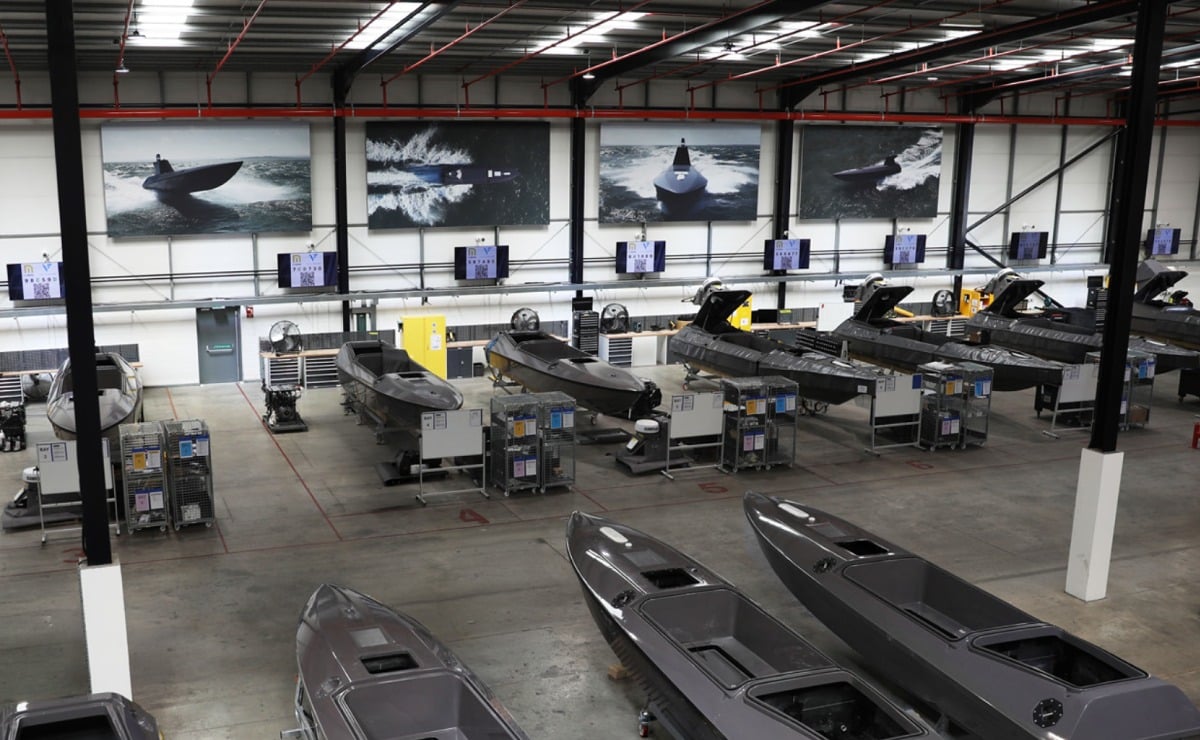
The funding will support two things Kraken says define its next phase of growth: continued development of its uncrewed surface vessels and payload systems, and a rapid expansion of localized manufacturing facilities in multiple countries simultaneously. That manufacturing footprint already stretches further than most companies Kraken’s size ever manage, with production partnerships now running through Rheinmetall’s Blohm+Voss shipyard in Hamburg, Germany, Anduril Industries facilities in the United States, and Inocea Group’s Davie Shipbuilding operation in Canada, giving Kraken domestic production capability across three separate NATO countries rather than shipping every vessel from a single UK factory.
Kraken’s investor roster reads like a cross-section of Europe’s defense and technology investment landscape. Beyond lead investor DTCP, the round drew participation from the British Business Bank, the NATO Innovation Fund, defense manufacturer Rheinmetall itself, Inocea Group, and venture capital firms including HICO, Thesiger Capital Group, BOKA Capital, Supernova Invest, and Hakluyt Capital. Several of Kraken’s earliest backers, including the NATO Innovation Fund, the UK’s National Security Strategic Investment Fund, and Swedish deep-tech investor SmartCap, along with venture firms Notion Capital and Speedinvest, converted their existing stakes into equity as part of the round, reflecting continued confidence from investors who backed the company well before this scale of funding became available.
“Kraken is excited to be partnering with DTCP, leading such a prestigious group of European and international investors,” said Mal Crease, Founder and CEO of Kraken Technology Group. “This significant funding round will accelerate Kraken’s global roll-out, enabling the deployment of hardened, reliable, mission-ready capabilities for NATO and its worldwide partners at an unprecedented scale in the maritime domain.”
Understanding why investors are willing to value a maritime robotics company at $1 billion requires understanding just how quickly Kraken’s actual military business has grown over the past year. In November 2025, U.S. Special Operations Command awarded Kraken a $49 million Other Transaction Authority agreement, a flexible contracting mechanism the Pentagon uses to move faster than traditional acquisition rules typically allow, specifically to accelerate development of Kraken’s K3 Scout uncrewed surface vessels for autonomous intelligence, surveillance, and reconnaissance missions in contested coastal waters. That USSOCOM deal opened the door to a far larger relationship in April 2026, when Anduril Industries announced it would manufacture two new Kraken-designed vessels, the K5 Kraken and K7 Sabre, at its own U.S. facilities specifically to meet U.S. Navy requirements for small, fast uncrewed boats capable of carrying payloads exceeding 1,000 pounds (454 kg) while being producible at scale.
Anduril’s own description of that partnership framed Kraken as bringing something the American company’s massive manufacturing capacity alone could not: proven, combat-tested hull designs already validated through real-world operations. Cory Emmons, general manager of surface dominance at Anduril, praised Kraken’s platform pedigree when the two companies first announced their collaboration in April.
“Kraken is known for their proven, battle-tested platforms,” Emmons said in the original partnership announcement. “This partnership expands Anduril’s family of autonomous surface offerings with small boats carrying mission payloads, adding a complementary capability to larger ASVs and the legacy fleet.”
The company first formed a joint venture with German shipyard Naval Vessels Lürssen in August 2025 specifically to scale European production of the K3 Scout, and when Rheinmetall acquired NVL outright, with that transition completing on March 1, 2026, Kraken’s manufacturing partnership carried over directly into a new joint venture called Rheinmetall Kraken GmbH, which began series production of the K3 Scout at Rheinmetall’s historic Blohm+Voss shipyard in Hamburg. That production relationship gives Kraken a direct manufacturing pipeline inside one of Europe’s largest and most established defense industrial companies, a considerable advantage for a startup trying to convince NATO militaries it can actually deliver vessels at the volume modern naval warfare increasingly demands.
Ole Aguirre, Partner at DTCP, framed the investment as a bet on an entire category of military technology that has historically received far less attention and funding than its land and air counterparts.
“The maritime domain is profoundly under-invested, and Kraken has taken a leading role in bringing affordable, mission-critical high-speed uncrewed vessels to the market in a very short time,” Aguirre said. “Kraken genuinely understands the unique challenges around high-sea-state robotic operations and swiftly responded to NATO requirements, delivering immediate ‘mission-first’ maritime capabilities to secure our waters, our shores and our offshore installations. We have high confidence in Kraken and could not be more excited about the opportunities ahead of us.”
The company has secured contracts from the UK Ministry of Defence, including delivering vessels under the Royal Navy’s Project Beehive uncrewed vessel initiative, along with additional deals across NATO’s European member states, and Kraken has said its platforms are now deployed supporting multiple ongoing conflicts, though the company’s announcement did not specify which conflicts or in what operational capacity. That combination of active combat deployment, a rapidly multiplying manufacturing footprint, and now a nine-figure funding round gives Kraken a case for legitimacy that few maritime robotics startups can match at this stage of their development, moving well past prototype demonstrations into what the company describes as genuine, scaled production.