

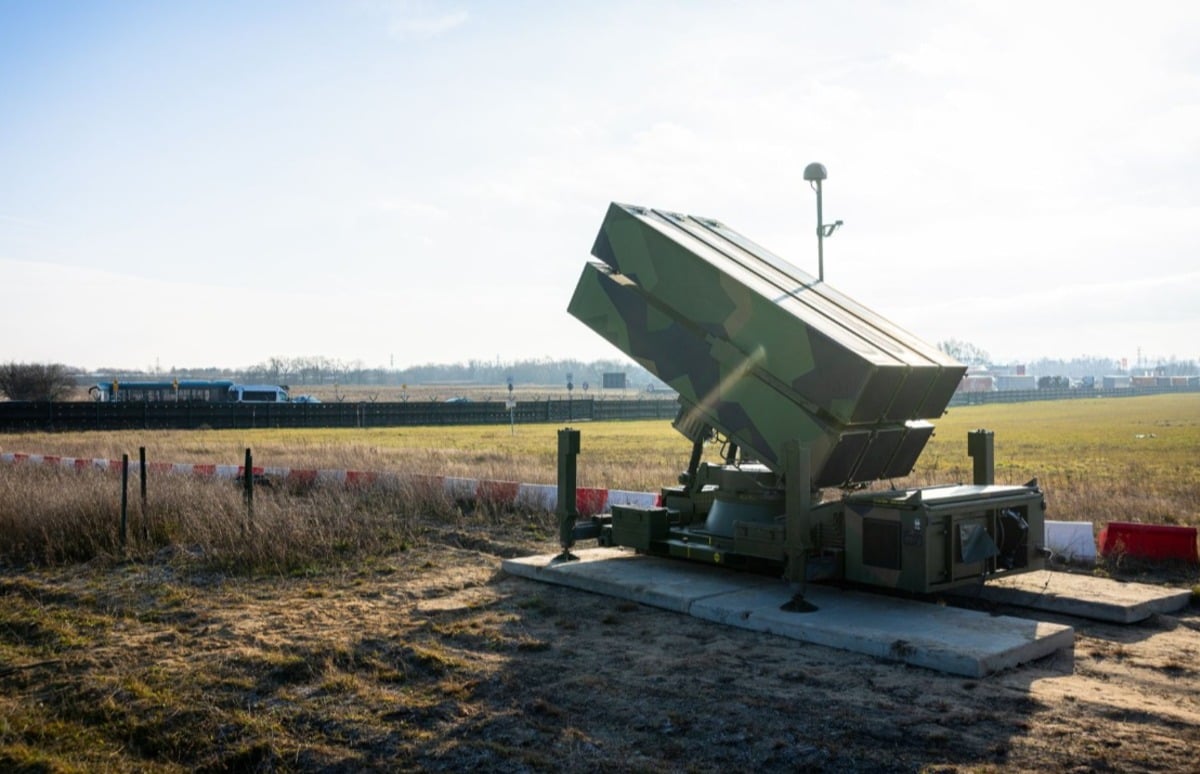
- Belgium signed a cooperation agreement with the Netherlands at the NATO summit in Ankara to acquire 10 NASAMS air defense systems.
- Belgium's Defence Minister Theo Francken said the purchase rebuilds air defense capability the country has lacked for twenty years.
The Belgian government announced plans to acquire the Norwegian-built NASAMS air defense system, according to a press release from manufacturer Kongsberg, signing a cooperation agreement with the Netherlands at the NATO summit in Ankara, Türkiye, that would bring 10 NASAMS batteries into Belgian service as the centerpiece of the country’s first serious rebuild of its national air defenses since the Cold War ended.
NASAMS, short for National Advanced Surface-to-Air Missile System, is a mobile, medium-range air defense system originally developed by Norway’s Kongsberg alongside American defense firm Raytheon, built around a distributed network of launchers, radars, and fire-control stations that can operate separated across different locations while staying linked through digital command connections.
The system fires AMRAAM missiles, the same air-to-air missile family used by fighter jets like the F-16 and F-35, giving NASAMS a proven interceptor already in wide use across NATO rather than relying on an unfamiliar or unproven munition. NASAMS engages targets at ranges of roughly 25 to 40 km (16 to 25 miles), covering the medium-range layer of air defense, capable of intercepting aircraft, cruise missiles, and larger drones, though the system cannot substitute for longer-range platforms designed to counter ballistic missiles or high-altitude threats over much larger areas.
Belgium’s Defence Minister Theo Francken framed the purchase as a matter of basic national protection rather than simply military modernization for its own sake.
“After twenty years without one, Belgium will rebuild its own powerful air defense capability with this joint purchase,” Francken said. “This step is essential for the protection of our population and critical infrastructure.”
The NASAMS purchase represents only one piece of a considerably larger air defense package Belgium unveiled at the same summit. According to Breaking Defense, Belgium and the Netherlands signed a cooperation agreement covering not just the 10 NASAMS batteries but also 20 Rheinmetall-made Skyranger 30 short-range air defense systems, 14 Thales-supplied Ground Master 200 mobile radars, and 54 Iveco-manufactured command and support vehicles, a combined procurement package Belgium says is worth more than €3.1 billion ($3.5 billion). That figure makes this one of the largest single defense acquisitions in recent Belgian history, and it reflects a deliberately layered approach to air defense, with the mobile GM200 radars providing wide-area surveillance and target tracking, the NASAMS batteries handling medium-range interception against aircraft and cruise missiles, and the shorter-range Skyranger systems specifically countering the kind of small, low-flying drones that have become an increasingly common and difficult-to-defend-against threat across Europe.
Belgium’s decision to build this system jointly with the Netherlands rather than acquiring it independently reflects a broader pattern reshaping European defense procurement since Russia’s invasion of Ukraine exposed how thin and fragmented the continent’s air defenses had become after decades of post-Cold War budget cuts. The Netherlands has already operated NASAMS under its own existing contract with Kongsberg, and Belgium’s participation effectively piggybacks onto that established Dutch framework agreement, a structure Dutch Defense Minister Dilan Yeşilgöz said was designed specifically to avoid duplicating training programs, software systems, and maintenance infrastructure between the two neighboring militaries. Yeşilgöz said pooling procurement efforts across allied countries lets defense industries scale up production more rapidly while avoiding the kind of fragmented, incompatible systems that have historically made coordinated European air defense more difficult than it needed to be.
According to Army Recognition, the country plans to procure three additional long-range air defense batteries beginning in 2029 to complete a full layered system, with France and Italy’s SAMP/T NG using Aster missiles competing against the American Patriot system as Belgium’s likely eventual choice for that top tier of protection against longer-range ballistic and high-value aerial threats. That decision carries real strategic weight beyond simple technical specifications, since choosing SAMP/T would deepen Belgium’s defense integration with France and Italy, while selecting Patriot would align more closely with the Netherlands, which has operated the American system since the 1980s and recently expanded its own Patriot fleet with an additional battery.
Belgium’s push toward rebuilding air defense capability arrives at a moment when the vulnerability of critical infrastructure has become impossible to ignore across Europe. The stated goal of this week’s package extends beyond simply intercepting aircraft, focused specifically on protecting the port of Antwerp, one of Europe’s largest and busiest shipping hubs, along with other key logistics corridors and transport infrastructure that would become critical chokepoints during any NATO military mobilization. Francken has separately confirmed plans to pursue European co-production of the AMRAAM missiles NASAMS relies on, with Belgium indicating it wants domestic industry to play a direct role in manufacturing the interceptors rather than depending entirely on American supply chains for a weapon central to its own national defense.