

- The U.S. Air Force awarded Geneva Technologies of Monument, Colorado, a $4.3 million contract on June 9, 2026, for Rocket Cargo research.
- The work covers architecture studies, system design, and demonstrations under the REGAL program to define requirements for future rocket-based cargo delivery.
A two-person engineering firm in a small Colorado town just picked up a $4.3 million contract to help the Air Force answer a question that still sounds like science fiction: can rockets replace cargo planes for getting supplies anywhere on Earth in under two hours?
The Department of the Air Force awarded the money to Geneva Technologies, Inc., based in Monument, Colorado, to support architecture studies, system design work, and demonstrations for a program called Rocket Cargo. The award, dated June 9, 2026, was confirmed in a federal contracting notice published June 30 and marks the latest step in an effort that has existed on paper since 2021 and is only now starting to attach real engineering dollars to what has mostly been research and planning.
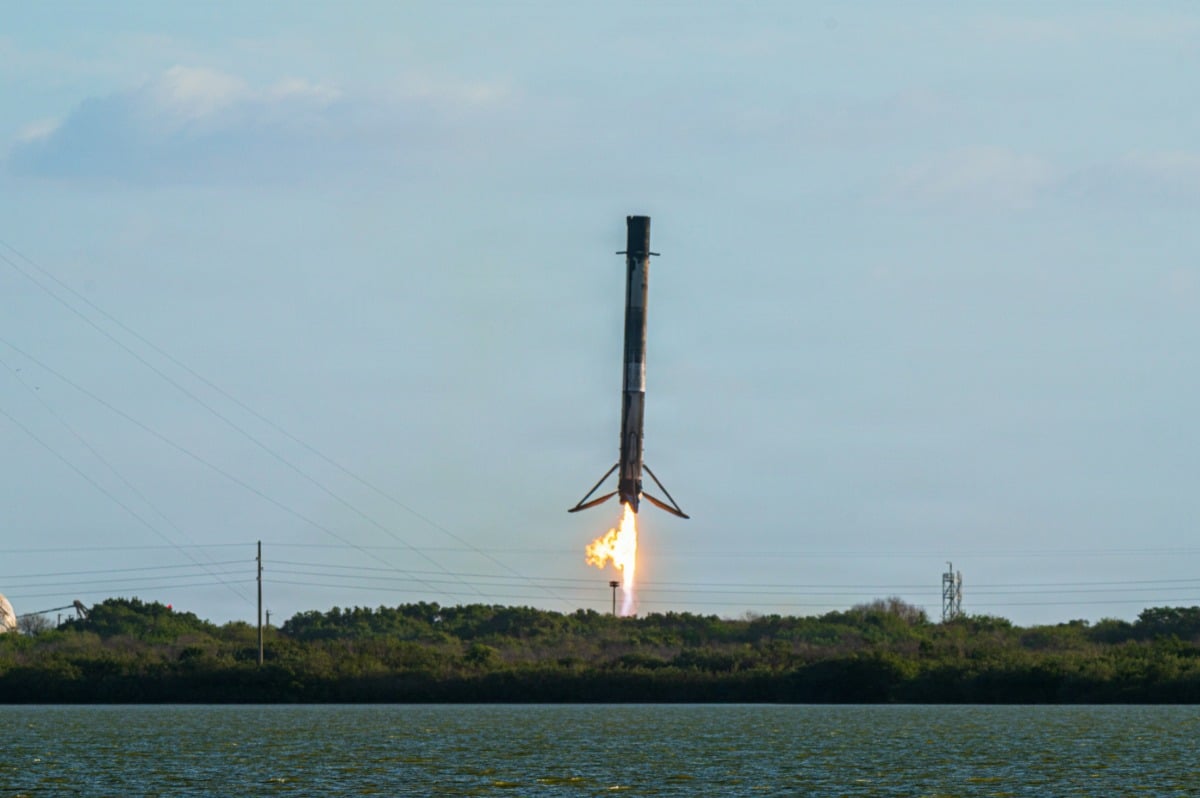
The Air Force Research Laboratory, the branch’s in-house science and technology arm, designated Rocket Cargo one of its “Vanguard” programs back in 2021, a label reserved for a handful of research efforts that receive concentrated funding and top-level attention because they could change how the military operates, and the concept behind it is simple to state even though it is staggeringly hard to execute. Instead of loading a cargo plane and flying for 15 hours to reach a disaster zone or a forward military outpost, the Air Force wants to load a rocket, launch it into a suborbital trajectory, and have it land anywhere on Earth within 60 to 90 minutes. The eventual goal is a vehicle that can haul roughly 77 metric tons (85 tons) of material, comparable to what a C-17 Globemaster III, the military’s primary heavy cargo plane, can carry in a single load.
Geneva Technologies is a small, woman-owned engineering firm that has operated out of Monument, a town just north of Colorado Springs, since 2004, employing only a handful of people while building a working relationship with the Air Force Research Laboratory over the years that predates this newest award. Earlier in 2026, the same company landed a separate $17.7 million contract to help build FalconSAT-11, a satellite operated by cadets at the Air Force Academy, giving it a track record on Air Force space hardware before this Rocket Cargo contract ever landed on its desk. The new award was competed under a longstanding Air Force research solicitation and structured as a mix of a fixed-price agreement with a cost-reimbursement component, a contracting method the Air Force uses when a project involves genuine technical uncertainty rather than an off-the-shelf purchase.
According to the contract description, Geneva Technologies will conduct architecture and requirements studies, system design, and demonstrations aimed at defining how commercial and government technologies already in development could be adapted to meet the needs of the Department of War. The work falls under a broader effort called REGAL, short for Rocket Experimentation for Global Agile Logistics, which is the formal research vehicle carrying the Rocket Cargo concept forward, and the distinction matters because the Air Force is not buying a finished rocket delivery system with this contract. It is paying engineers to figure out what such a system would even need to look like, what requirements it must satisfy, and how existing rocket technology built for commercial launches might be repurposed for military logistics instead.
Rocket Cargo has already produced real, if modest, hardware milestones elsewhere, which gives this small Colorado contract more context than its size alone would suggest. Rocket Lab, the medium-lift launch company, holds a separate AFRL contract to fly its new Neutron rocket on a return-to-Earth mission no earlier than 2026, specifically to test whether a rocket-delivered payload can survive reentry into the atmosphere, a critical hurdle before any cargo mission could carry sensitive equipment or, eventually, people. Sierra Space has a contract to scale up a reentry vehicle called Ghost from carrying 150 kilograms (330 pounds) to as much as 10 metric tons (11 tons), while Anduril and Blue Origin were brought on in 2025 for their own orbital cargo transport studies. Even Elon Musk’s SpaceX has been eyed for a possible Starship demonstration flight, a vehicle capable of the kind of massive payloads the Air Force ultimately wants. The program has hit real friction too, since a plan to build landing pads at Johnston Atoll, a remote U.S. territory roughly 750 miles (1,200 km) southwest of Hawaii, was suspended in July 2025 after environmental review complications, a reminder that even a program with strong institutional backing still has to clear mundane regulatory hurdles before it clears the atmosphere.
When the Air Force first announced Rocket Cargo as a Vanguard program in June 2021, Gen. Arnold W. Bunch Jr., who led Air Force Materiel Command at the time, explained the reasoning in an official Air Force statement:
“Rapid logistics underpins our ability to project power.”
Bunch’s 2021 comment has nothing to do with this week’s contract specifically, but it remains the clearest public explanation the Air Force has given for why the program exists at all, since military planners have spent decades wrestling with the same bottleneck of getting critical parts, medical supplies, or emergency aid to a distant location fast enough to matter, especially in places where runways are damaged, contested, or simply do not exist. A rocket does not need a runway. It needs a clear patch of ground and enough thrust to get there in under two hours instead of two days.
The company furthest along in actually testing that idea in flight is Rocket Lab, which announced its own AFRL contract for a Neutron reentry demonstration on May 8, 2025. In a statement released that day, Rocket Lab founder and CEO Peter Beck said the award validated his company’s rocket in the eyes of the Pentagon:
“This opportunity for the U.S. Air Force not only helps to advance space logistics, it also demonstrates a high degree of confidence by the DOD in Neutron’s capabilities.”
Beck’s May 2025 statement predates the Geneva Technologies award by more than a year, but it shows how the Rocket Cargo effort has already moved beyond paperwork for at least one contractor, even as the new work assigned to the Colorado firm remains focused on studies and requirements rather than an operational system.