

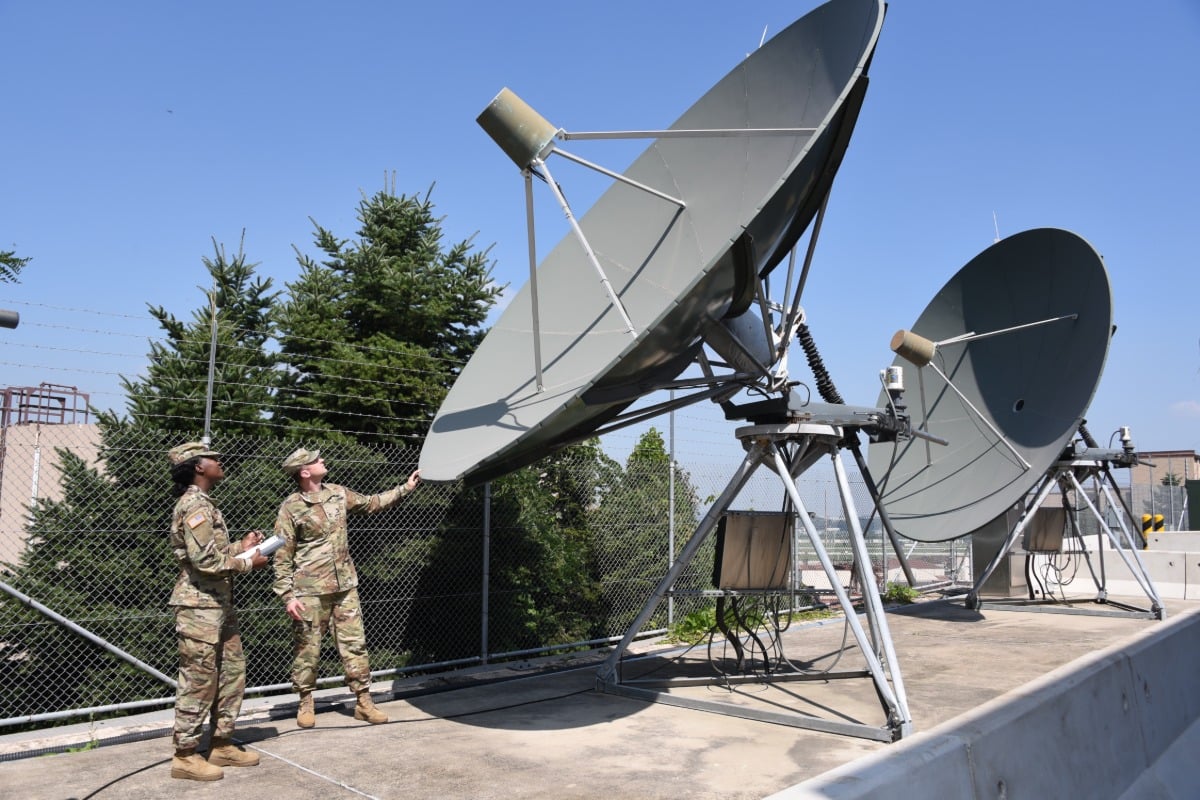
- Space Systems Command awarded Northrop Grumman a $49 million sole-source contract on June 30, 2026, for Joint Tactical Ground Station sustainment and engineering services.
- Work will be performed in Colorado Springs, Colorado, and globally, with $19 million obligated immediately and completion targeted for June 30, 2027.
Northrop Grumman secured a $49 million contract from U.S. Space Systems Command to provide sustainment services for the Joint Tactical Ground Station, a network of mobile satellite ground receivers that give U.S. and allied military commanders real-time warning when an adversary launches a ballistic missile anywhere on Earth.
The contract was awarded on a sole-source basis, with $13.5 million in operations funding and $5.5 million in research and development funds obligated immediately. Work will be performed primarily in Colorado Springs, Colorado, with additional locations globally, targeting completion by June 30, 2027.
Understanding what JTAGS does requires a brief explanation of how missile warning actually works in practice, because the system is not a radar or a weapon but rather the critical link between sensors in space and soldiers on the ground. The Space-Based Infrared System satellites, a constellation of geosynchronous and highly elliptical orbit satellites operated by the Space Force, detect the intense heat plumes that ballistic missiles generate at launch and relay that detection data to ground stations in near-real time. Most of that data flows back to centralized command nodes in the United States for theater-level warning, but the Joint Tactical Ground Station exists specifically to push that warning data directly to forward-deployed military units in a theater of operations, bypassing the relay chain that can add precious seconds to the time between detection and the alert reaching the troops who need to take cover or activate their own defensive systems.
The operational logic behind JTAGS becomes concrete when the timeline of a ballistic missile attack is considered. An intermediate-range ballistic missile traveling 2,000 km (1,243 miles) at Mach 10 to Mach 15 has a flight time of roughly eight to twelve minutes from launch to impact. Every second that warning arrives earlier gives air defense crews more time to engage with Patriot or THAAD interceptors, gives fighter pilots time to scramble, and gives personnel in the target area time to reach protective shelters. JTAGS cuts the warning distribution chain at its longest link, the relay from strategic command nodes back to individual tactical units, reducing the latency that costs lives when missiles are in the air.
The system physically consists of a transportable receive suite that can be carried aboard an aircraft and set up in the field, designed to operate with teams as small as two or three trained operators. It receives the infrared data from Space-Based Infrared System satellites directly and processes it into standardized tactical warning messages that feed into the command-and-control systems that unit commanders already use, without requiring those units to acquire or integrate specialized display hardware. That interoperability, delivering warning in a format that a tactical operations center can immediately act on rather than requiring translation or expert interpretation, is the feature that distinguishes JTAGS from the broader strategic warning architecture that existed before it.
The program traces its origins to the Gulf War in 1991, when the limitations of the existing warning infrastructure became dramatically apparent. Patriot batteries defending against Iraqi Scud missiles received warning data through a relay chain that sometimes added several minutes to the effective notice time, reducing the engagement window to the point where some Scuds evaded intercept attempts that might have succeeded with earlier warning. Post-war analysis identified the tactical warning distribution gap as a critical vulnerability, and JTAGS emerged from that analysis as the Army’s answer, with program management subsequently transitioning to Space Systems Command as the mission evolved alongside the Space Force’s formation.
The sustainment contract Northrop Grumman received covers the full range of contractor logistics support needed to keep a complex, globally distributed network of specialized ground stations operational across every geographic theater where U.S. forces might need ballistic missile warning, from the Korean Peninsula to the Middle East to Europe. That scope, described in the contract announcement as “various locations globally,” reflects the JTAGS network’s actual footprint, which supports combatant commands in all the regions where adversaries with ballistic missile programs pose a realistic threat. North Korea’s continued development and testing of intercontinental and intermediate-range ballistic missiles, Iran’s expanding ballistic missile inventory, and Russia’s ongoing deployment of Iskander-M systems across its military make that global footprint a permanent operational requirement rather than a legacy capability waiting for retirement.
The research and development component of the immediate funding obligation, $5.5 million of the $19 million committed at award, suggests active work on capability improvement rather than purely routine sustainment, though the contract announcement does not specify what improvements or modifications are being pursued. That fraction is notable because it indicates Space Systems Command is not simply maintaining JTAGS in its current configuration but is investing in its evolution, likely addressing either the integration with newer Space-Based Infrared System capabilities, improvements to the ground station’s own processing speed and accuracy, or both.