

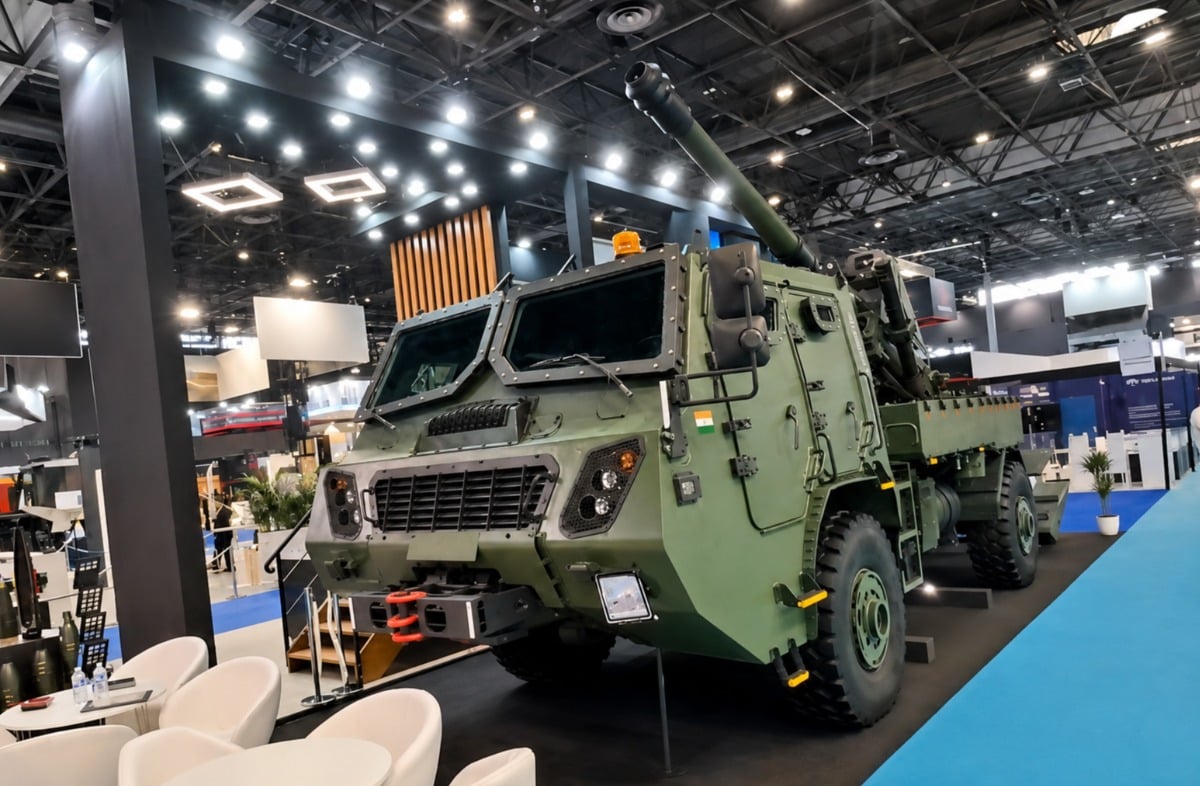
- AM General and KSSL signed a strategic partnership at Eurosatory 2026 and submitted a joint proposal for the U.S. Army Mobile Tactical Cannon program.
- The KSSL MArG 52-caliber system fires standard high-explosive rounds over 40 km and carries over 20 projectiles on board.
An Indian-made artillery gun is now in the running to equip the U.S. Army, after AM General, the Michigan-based military vehicle maker best known for building the Humvee, signed a strategic partnership with India’s Kalyani Strategic Systems Limited at the Eurosatory defense exposition in Paris on June 18, 2026, and immediately submitted a joint proposal to compete for one of the Army’s most significant near-term artillery contracts.
The system at the center of the deal is the MArG, short for Mounted Artillery Gun, a 155 mm cannon mounted on a 4×4 high-mobility truck chassis developed by Kalyani Strategic Systems Limited, known as KSSL, the wholly owned defense subsidiary of Bharat Forge Limited, one of India’s largest engineering and metallurgy conglomerates with over six decades of manufacturing experience. The MArG’s flagship configuration for the U.S. bid carries a 52-caliber barrel, meaning the barrel length is 52 times the internal diameter of the gun, which translates to greater muzzle velocity and longer effective range.
According to the companies, the 52-caliber MArG fires a standard high-explosive projectile to a range exceeding 40 kilometers (25 miles) and carries more than 20 projectiles and propellant charges on board, giving a crew the ammunition it needs for a sustained fire mission without external resupply.
The U.S. Army contract both companies are targeting is the Mobile Tactical Cannon program, a competition the Army launched to replace the M777 towed howitzer in lighter formations, particularly Stryker brigades, which currently lack a self-propelled artillery option capable of moving under its own power after firing. The M777, a titanium-framed towed gun that has served with American, Australian, Canadian, and Ukrainian forces, weighs approximately 4,200 kilograms (9,260 pounds) and must be hitched to a truck to relocate after each firing position, a vulnerability that has proven lethal in Ukraine, where counter-battery radars and loitering munitions can track an artillery round back to its source and strike within minutes. The Army’s solicitation for the Mobile Tactical Cannon program called explicitly for a wheeled, self-propelled system with shoot-and-scoot capability as a baseline requirement, not an optional feature. Proposals were due in April 2026, with a contract award targeted for July 2026 and first prototype deliveries expected as early as 60 days after award.
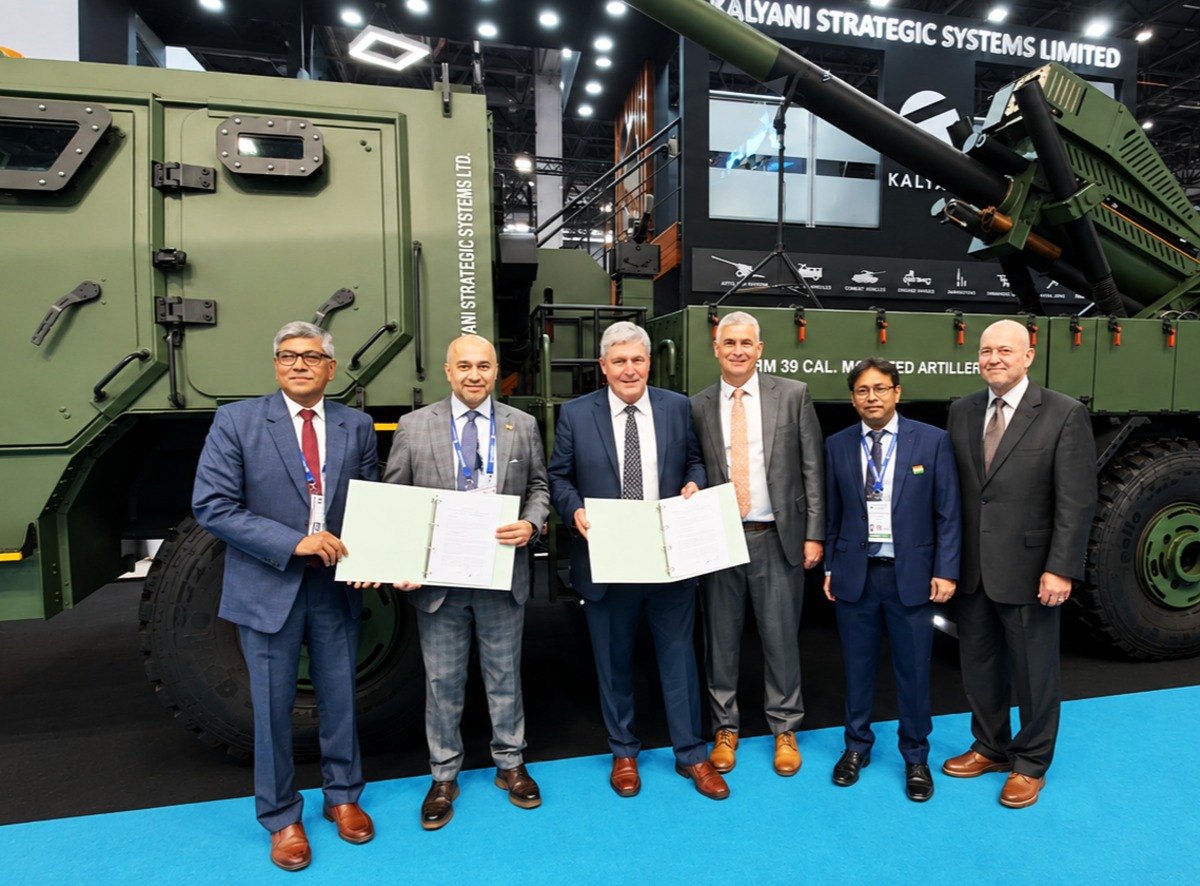
AM General and KSSL have submitted a proposal under which AM General would lead delivery of a 155 mm MTC solution built around KSSL’s MArG architecture, with delivery of prototype systems planned for 2027 if the proposal is selected. That timeline is aggressive by defense procurement standards, but the MArG’s relative maturity compared to clean-sheet competitors gives the partnership a credible claim to readiness. KSSL’s artillery program has been active for several years, with the MArG 39, a shorter-barreled variant firing conventional ammunition to a range of more than 36 kilometers (22 miles), already exported to at least one foreign military customer. According to publicly available records, Armenia publicly unveiled India-supplied MArG 155mm artillery systems in February 2026, following a supply agreement worth approximately $155.5 million signed in 2022, making it the first known export of an Indian-made mounted artillery gun platform.
The MArG family now spans three configurations sharing a common 4×4 platform: the MArG 39 optimized for tactical mobility and already in customer hands, the MArG 45 with a longer barrel balancing range and firepower at a total system weight of approximately 23.5 metric tons (26 short tons), and the MArG 52 submitted for the U.S. Army bid as the extended-range high-performance variant. The 4×4 platform is a notable engineering distinction in a weapon class where competitors almost universally mount 155 mm guns on 6×6 or 8×8 truck chassis, or on tracked hulls. Heavier wheeled platforms offer greater load capacity but reduce strategic transportability and increase the logistical burden on supply chains that must move systems to remote or infrastructure-poor environments, including mountains, deserts, and the kind of contested littoral terrain that modern military planners increasingly prioritize.
The technical key to making a 155 mm gun work on a lighter 4×4 platform is the Soft Recoil Technology system, a patented recoil mitigation mechanism that KSSL describes as absorbing significantly more recoil force than conventional artillery recoil systems. Standard artillery recoil management relies on hydraulic buffers and recuperators that absorb the force of the gun firing but still transmit considerable stress into the gun carriage and the vehicle beneath it. KSSL’s system interrupts the recoil cycle differently, allowing the barrel to begin moving rearward before firing, which spreads the impulse load over a longer time window and reduces peak force on the mounting structure. The result, according to the company, is a lighter vehicle, a lighter turret, and reduced cumulative shock on the entire weapons system across its service life. That last point matters for acquisition planners calculating long-term maintenance costs, since artillery systems subject to high firing cycles accumulate structural fatigue at a rate directly tied to recoil stress levels.
The MArG 52 also incorporates an automated load-assist system, which reduces the physical demand on the crew during rapid fire sequences, and an advanced all-weather fire control suite capable of both indirect fire, where the gun crew cannot see the target and aims using mathematical calculations and ballistic data, and direct fire, where the gun engages visible targets at shorter ranges, a useful capability in the kind of complex terrain where artillery occasionally faces direct threats. The system carries more than 20 projectiles on board, a figure that compares favorably with other mounted gun systems in the 155 mm class.
The company’s manufacturing and supply chain relationships within the U.S. defense industrial base give the KSSL partnership a path to satisfying the Army’s requirement that winning systems transition production and final assembly to the United States within two years of contract award, with capacity to produce at least 24 systems per year initially and ramp to 48 annually. For KSSL, the partnership offers something the Indian defense industry has rarely achieved: a credible route to a platform-level contract with the U.S. military itself.
John Chadbourne, AM General’s president and chief executive officer, said the integration of KSSL’s recoil technology represented capabilities he described as “truly groundbreaking” for the battlefield. Amit Kalyani, vice chairman and joint managing director of Bharat Forge, the parent company, described the partnership as reflecting international trust in KSSL’s artillery program and “confidence in our commitment to delivering leading-edge and combat-proven solutions that meet modern warfare requirements.”