

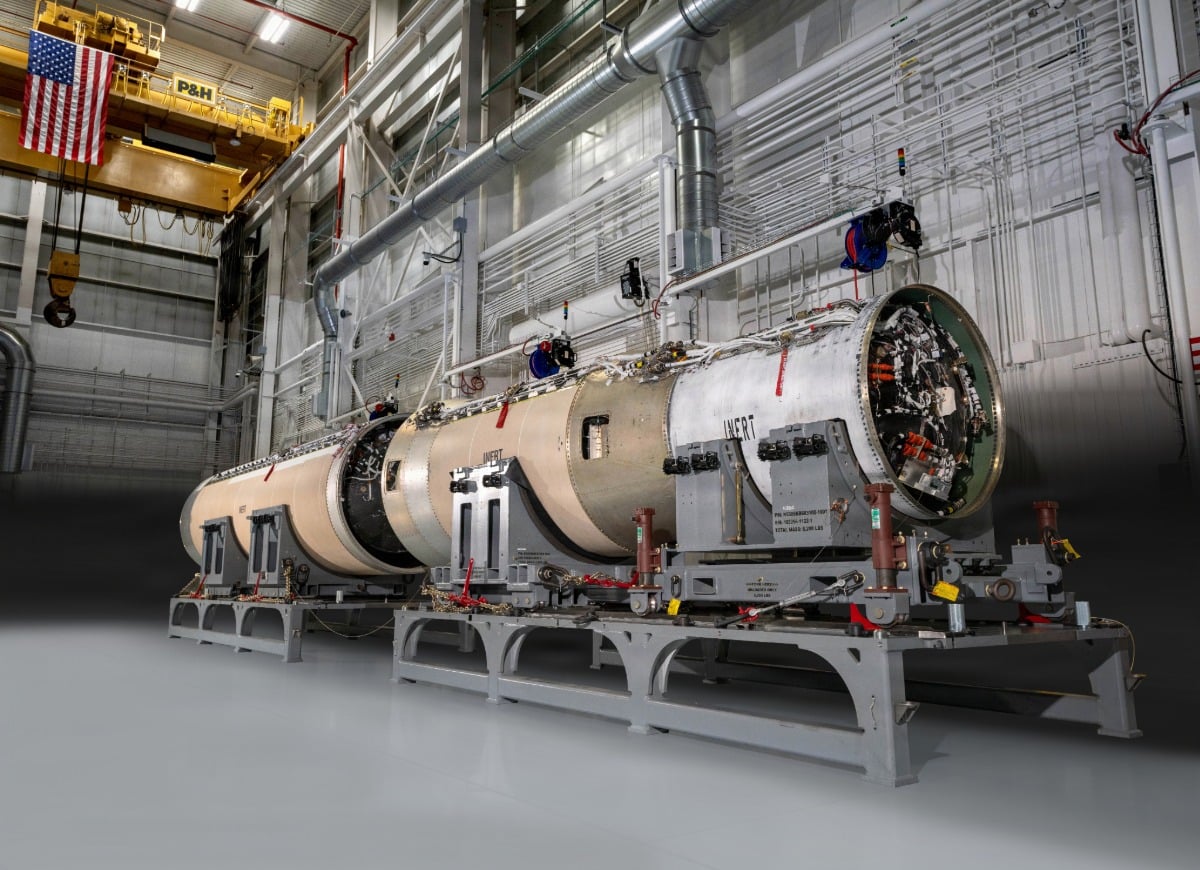
- Korte Construction Co. won a $114 million contract to build the Sentinel AETC Formal Training Unit at Lompoc, California, with completion expected by March 6, 2029.
- The facility will train airmen for LGM-35A Sentinel ICBM maintenance and operations, replacing infrastructure built around the Minuteman III that has been on alert since the late 1960s.
The United States is building a new training facility for the nuclear missile that will replace the country’s aging intercontinental ballistic missile force, awarding a $114 million construction contract for a dedicated school at Vandenberg Space Force Base in California where airmen will train for Sentinel maintenance and operations.
Korte Construction Co., based in St. Louis, Missouri, won the contract to build the Sentinel Air Education and Training Command Formal Training Unit at Lompoc, California, the community adjacent to Vandenberg Space Force Base on the California coast.
The contract, awarded by the U.S. Army Corps of Engineers Los Angeles District, is valued at approximately $114 million and is expected to be completed by March 6, 2029. Two bids were received for the project, and the full contract value was obligated at the time of award using fiscal year 2025 military construction funds.
The Sentinel, formally designated the LGM-35A, is the Air Force’s next-generation intercontinental ballistic missile, the weapon designed to replace the LGM-30G Minuteman III that has stood alert from launch facilities across five states, organized under three ICBM wings, since the late 1960s. The Minuteman III has been in service for more than five decades, making it one of the oldest continuously operational nuclear weapons systems in the American arsenal. While the missiles have been updated repeatedly over the decades, the airframe itself dates to a generation of Cold War engineering, and both the Air Force and outside analysts have long argued that a complete replacement rather than continued upgrading is necessary to maintain a credible nuclear deterrent into the mid-21st century. The Sentinel program, managed by Northrop Grumman, is intended to field a new ICBM with updated guidance, propulsion, and command-and-control systems while being designed from the outset for life extension and modification rather than requiring replacement again in another fifty years.
A training facility of this scale is a necessary and early investment in any major weapon system transition. Before the Air Force can field Sentinel across the existing ICBM missile fields, it must complete new launch silos, launch centers, communications systems, and supporting infrastructure. The Formal Training Unit, the dedicated school where initial qualification and transition training will take place, needs to be built, equipped, and staffed to support that broader transition. Vandenberg Space Force Base, which hosts significant nuclear missile testing infrastructure and serves as the primary range for U.S. ICBM test launches, is the natural location for that training enterprise.
The Air Education and Training Command, the Air Force command responsible for training all Air Force and Space Force personnel, will operate the new facility. Building a dedicated Formal Training Unit rather than attempting to adapt existing Minuteman III training infrastructure reflects the scale of the transition and the extent to which the Sentinel’s systems, procedures, and technical characteristics differ from the weapon it replaces. Minuteman III crews trained for decades on simulators and classroom environments built around that specific missile’s hardware. Sentinel personnel will need entirely new training devices, updated technical documentation, and revised procedures for a system with different propulsion, different electronics, and a different operational concept.
The Sentinel program has faced significant scrutiny over its cost trajectory. The program, initially estimated to cost roughly $95 billion for development and initial production, has grown substantially since those early figures were established, with more recent estimates placing life-cycle costs considerably higher. Congressional oversight committees have challenged Northrop Grumman and Air Force leadership repeatedly about cost growth and schedule risks, with some members arguing that a ground-based ICBM force could be reduced or restructured rather than replaced entirely. The Air Force and successive administrations have maintained that a credible land-based leg of the nuclear triad, the three-part deterrent structure built around ICBMs, submarine-launched ballistic missiles, and nuclear-capable aircraft, is essential to strategic stability and cannot be substituted by sea-based or air-delivered weapons alone.
The $114 million training facility contract is one of many pieces of infrastructure investment that the Sentinel program requires. New launch control facilities, upgraded communications systems, hardened command posts, and new launch silos across the three ICBM wings all require construction. The training facility in California represents the human capital side of that investment, ensuring that the airmen and maintenance specialists who will operate and sustain the Sentinel are qualified and ready to support the broader Sentinel transition and training pipeline.
Vandenberg hosts Space Launch Delta 30 and remains a key test range for U.S. ICBM launches. Minuteman III missiles are periodically launched from Vandenberg in test flights toward the Kwajalein Atoll in the Marshall Islands to validate reliability and accuracy. Sentinel test launches will follow the same pattern, and having the primary training facility adjacent to the primary test range creates efficiencies in the qualification pipeline that a geographically dispersed training program would lose.