

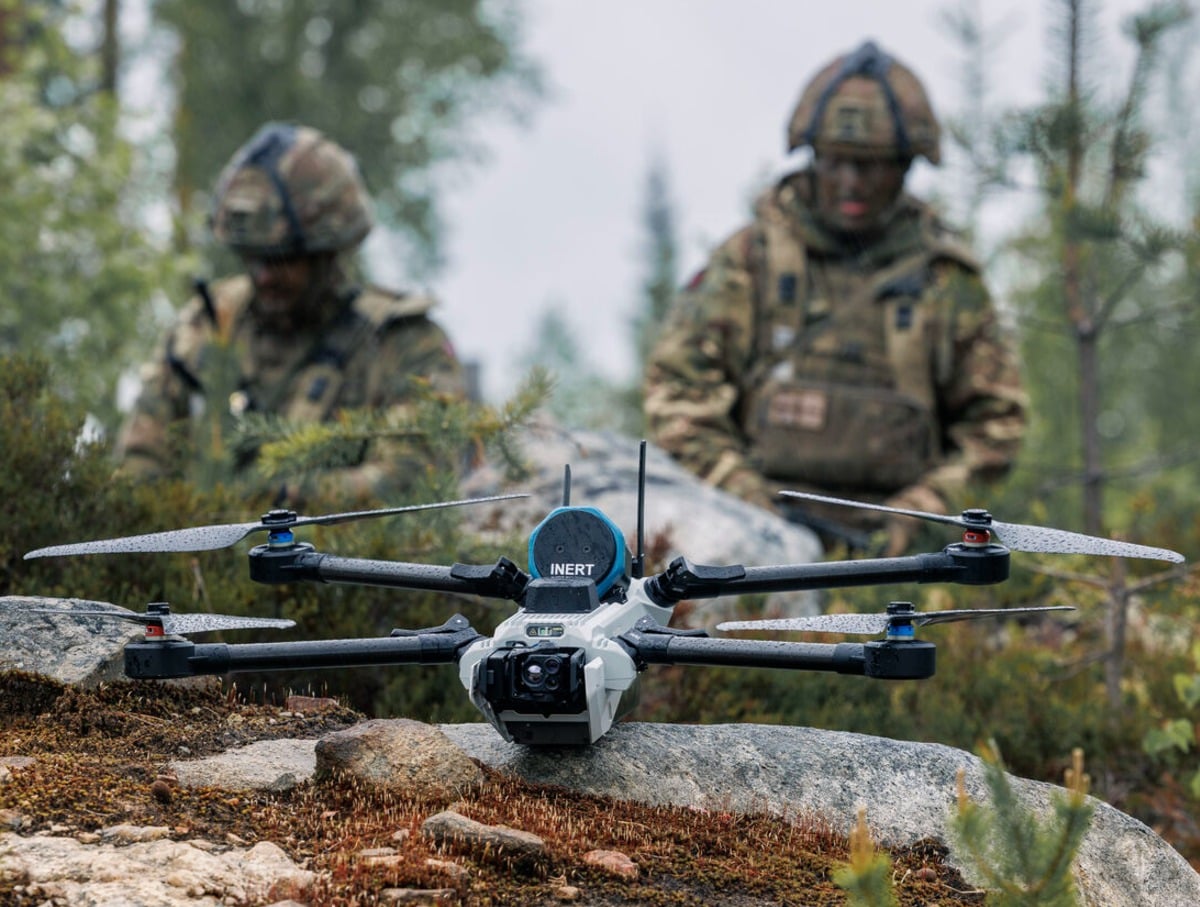
- Around 4,500 soldiers from NATO nations including the UK, Finland, France, Hungary, and the USA are participating in Exercise Northern Star near Finland's Russian border.
- Britain's 3 Rifles battalion is operating Ghost reconnaissance drones and Bolt loitering munitions, linked via ATAK digital systems, as part of the Army's new Near Surface Infantry Battalion concept.
British infantry soldiers are training 70 kilometers (43 miles) from the Russian border in Finland, practicing how to kill enemy targets with Anduril’s autonomous drones without ever exposing themselves to direct fire — and doing it alongside Finnish troops who have spent decades preparing for exactly the kind of war now grinding through Ukraine.
Around 4,500 soldiers from NATO countries including the United Kingdom, Finland, France, Hungary, and the United States are taking part in Exercise Northern Star, conducted in partnership between Britain’s 3rd Battalion, The Rifles, known as 3 Rifles, and Finland’s Kainuu Brigade. The exercise follows a winter iteration called Northern Axe and builds on the growing defense relationship between Britain and Finland since Helsinki joined NATO in April 2023, ending more than seven decades of military non-alignment. For 3 Rifles, the exercise is both a tactical training event and a technology demonstration, showcasing a new approach to infantry combat that places autonomous drones at the center of how the battalion finds and kills its enemies.
Finland’s decision to join NATO transformed the strategic geometry of the alliance’s northeastern flank almost overnight. Before accession, NATO’s land border with Russia stretched approximately 1,215 km (755 miles), mostly along the Baltic states. Finland’s membership added another 1,340 km (832 miles) of shared border, more than doubling NATO’s direct land frontier with Russia and positioning alliance forces within striking distance of the Kola Peninsula, where Russia concentrates a substantial portion of its nuclear and naval forces. The Kainuu Brigade, based in eastern Finland and responsible for defending terrain directly adjacent to the Russian border, trains in conditions that British and other NATO soldiers rarely encounter: dense boreal forest, thousands of lakes, extreme cold, and terrain that channels movement and limits vehicle mobility in ways that open-ground tactics cannot account for. Sending 3 Rifles to train alongside them is a concrete investment in the kind of interoperability that transforms alliance commitments on paper into practiced military coordination.
Lieutenant Colonel Tom Redon, the Commanding Officer of 3 Rifles, made the tactical ambition of the exercise explicit. “It’s a strategically important location for NATO and it gives us the chance to train and develop our tactics in challenging environments,” Redon said. “The Finns are serious about defence, and learning from each other we can work better together. What we are looking at doing is to increase our lethality to kill the enemy further away and quicker.”
The technology being exercised at Northern Star represents a significant departure from how British infantry has historically operated. 3 Rifles is part of 11th Brigade, one of the British Army’s formations specifically equipped and organized around uncrewed aerial systems operating at low and medium altitudes. The battalion has recently been redesignated as a Near Surface Infantry Battalion, a new organizational concept built around the integration of drones, sensors, and loitering munitions into standard infantry tactics rather than treating them as specialist attachments. Two systems are central to how the battalion is operating in Finland.
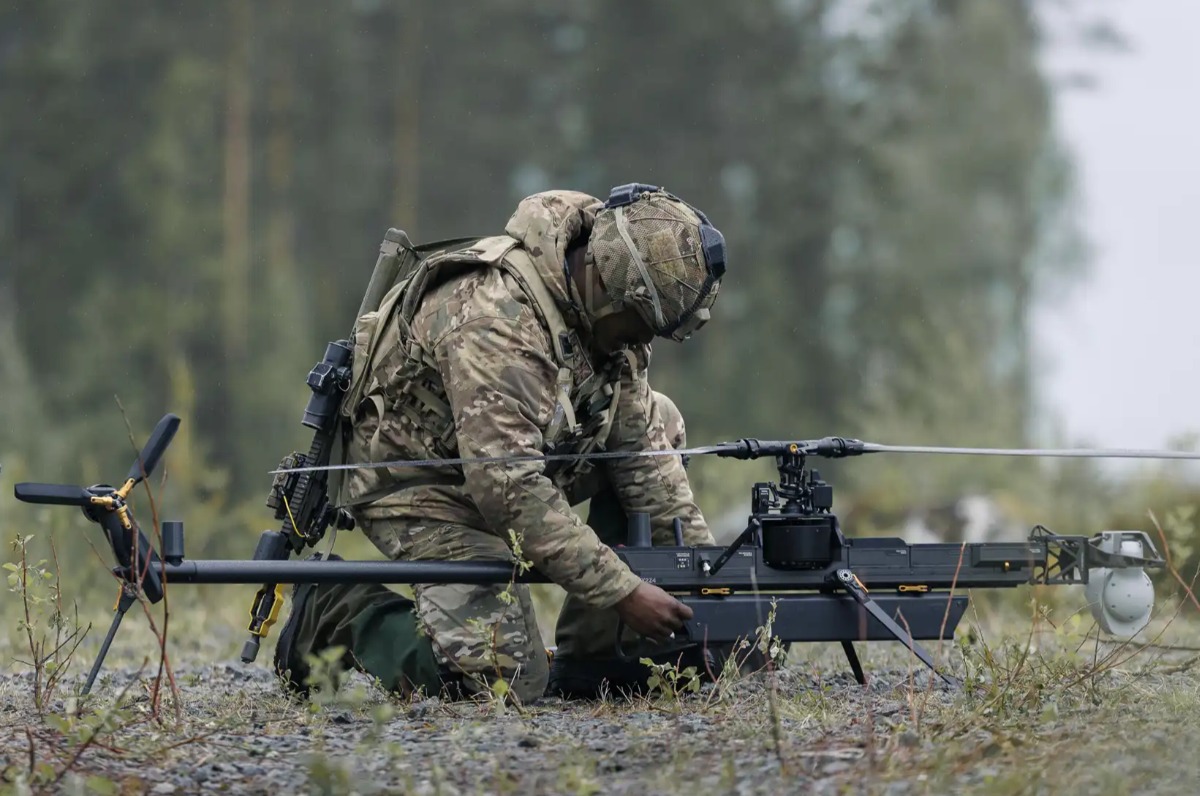
The first is Ghost, an autonomous uncrewed aircraft system designed for medium-range reconnaissance and surveillance that resembles a small helicopter in appearance. Ghost provides frontline infantry with real-time intelligence, target detection, and communications relay capabilities, feeding data back to a Command Post that can be located well away from the forward line of troops.
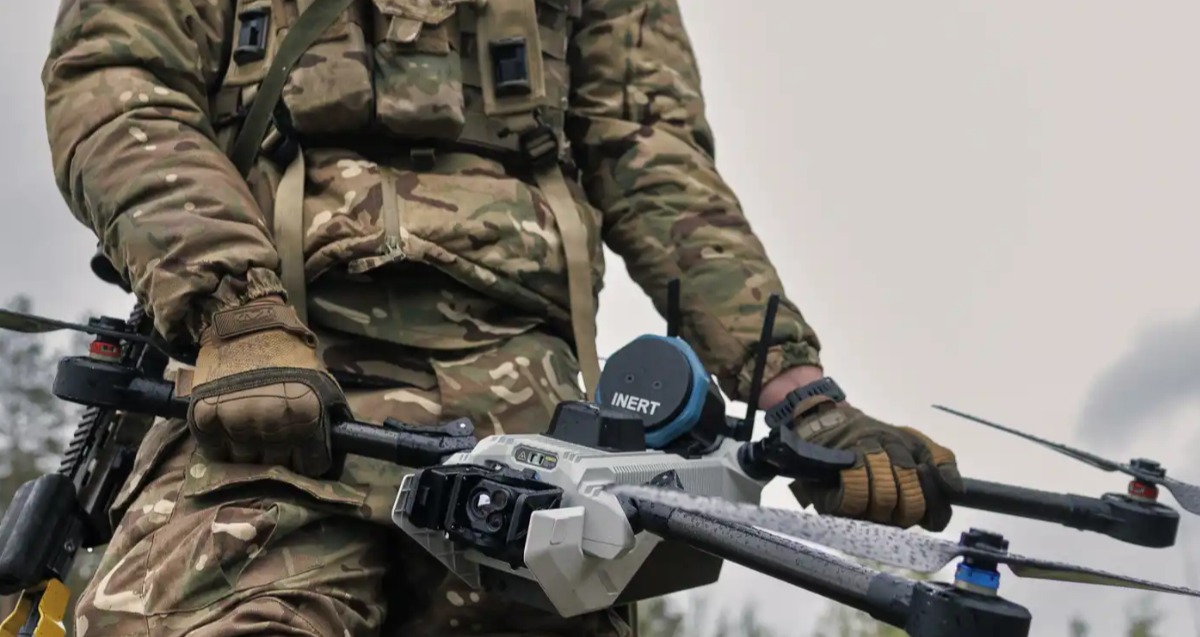
The second system is Bolt, a one-way attack drone, sometimes called a loitering munition or a one-way effector, that carries onboard munitions and destroys itself along with its target on impact. The operational concept links the two: Ghost finds and identifies a target, transmits that information to the Command Post, and Bolt is then dispatched to destroy it. The infantry soldier directing the engagement never needs to be within direct observation range, or even within direct fire range, of the enemy.
Major Steve Watts, the Exercise Conducting Officer for 3 Rifles, described the practical battlefield implications of that combination. “With ‘Ghost’ and ‘Bolt,’ you can make a decision faster and you can kill things further away. What that does is it increases our lethality, it also increases our survivability, because you haven’t got to be there to kill something, you can send a sensor forward, and that’s really critical as we look to the future,” Watts said.
The data network binding these capabilities together is an Android Tactical Assist Kit, known as ATAK or the TAC system, worn on each soldier’s chest. The device combines GPS positioning, digital mapping, and a shared common operating picture that shows each soldier’s location alongside drone feeds and threat information in real time.
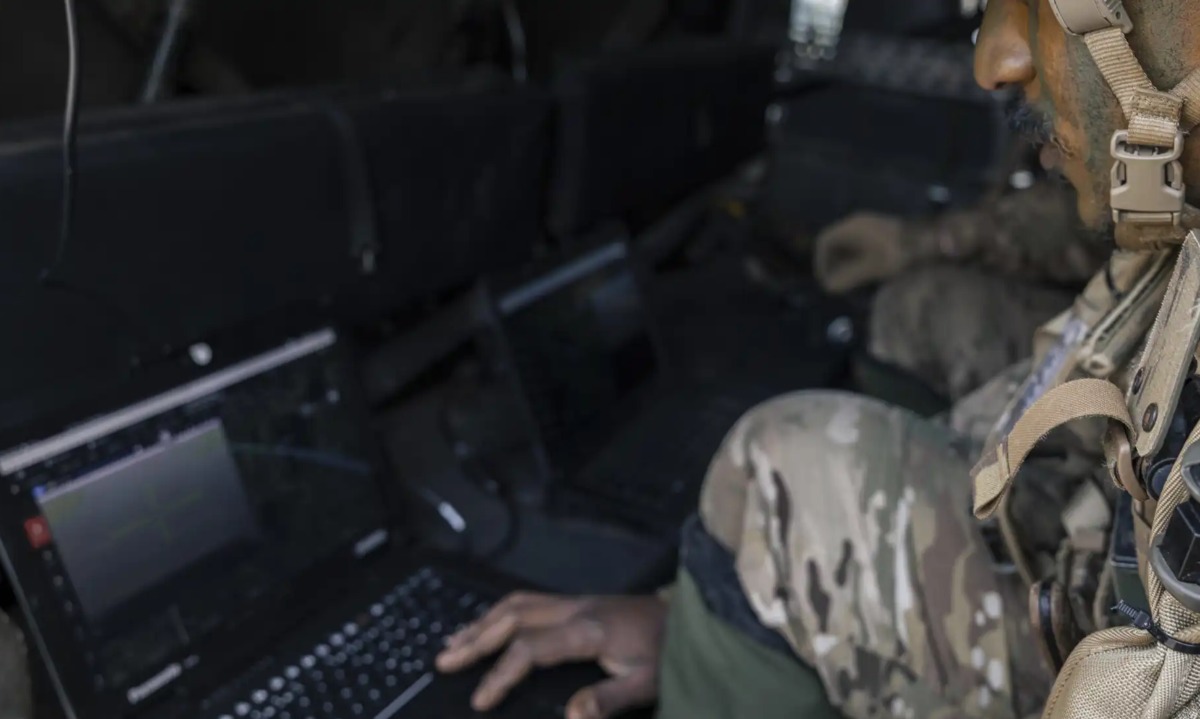
Watts described the network architecture the system creates as a lattice, where every node shares information with every other. “The people on the ground that have a TAC on their chest can see what the drone is seeing. It can show that an enemy aircraft has entered your area. It can give instant situational awareness, and that’s all key, because once you join together like that, you can pass information, and therefore you can become more lethal,” he said.
The ATAK system has a well-documented history in U.S. military operations, developed originally by the U.S. Air Force Research Laboratory and subsequently adopted across multiple services and shared with allied forces. Its integration into British infantry platoons as a standard item rather than a specialist tool marks a meaningful shift in how lower-echelon units can maintain situational awareness in complex terrain. Combined with the Ghost-Bolt sensor-to-shooter pipeline, the result is an infantry battalion that can engage targets at ranges and with a degree of precision that would have required dedicated artillery or air support a decade ago.
The terrain of eastern Finland, where vast forests and thousands of lakes break line of sight and channel movement into predictable corridors, makes drone-based reconnaissance and engagement particularly valuable. In that environment, the side that can see further without being seen holds a decisive advantage, and the side that can kill at range without moving into the open survives longer.