

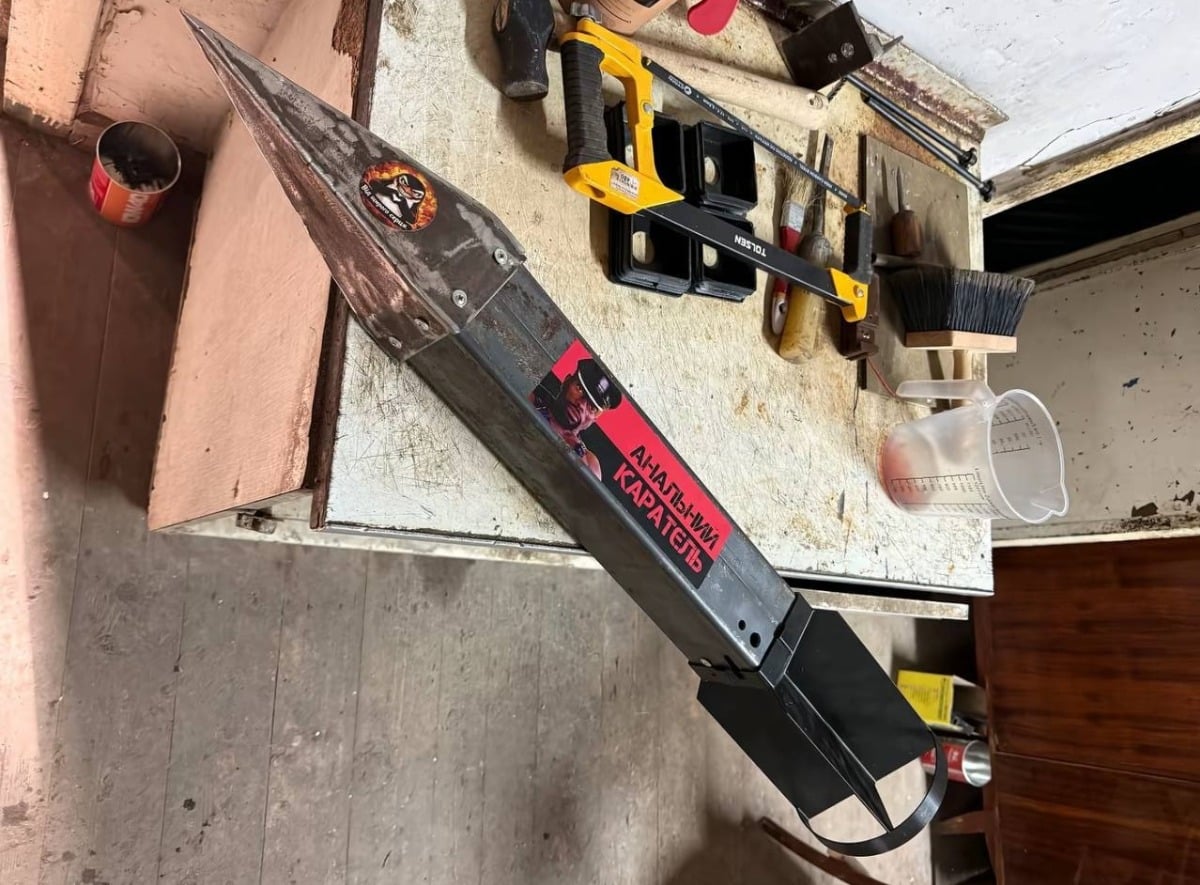
- Exilenova+ published photographs of a new rectangular, wedge-nosed Ukrainian drone-dropped munition designed to penetrate the overhead cover of Russian trench positions.
- Russian soldiers reported on social media that Ukrainian forces have been dropping a new munition type onto covered positions at night, prior to the photographs' circulation.
Photos of a new Ukrainian drone-dropped munition began circulating on social media this week, published among the first by the open-source intelligence community Exilenova+, showing a rectangular metal device with a sharpened wedge at its forward end specifically engineered to penetrate the overhead cover of Russian field fortifications rather than detonate on surface impact. The munition represents a direct tactical response to one of the most persistent challenges of attritional trench warfare: how to kill soldiers inside covered positions that conventional fragmentation grenades and FPV drone warheads cannot reliably penetrate.
The design visible in the photographs differs fundamentally from standard drone-dropped munitions in use by both sides throughout the war. Typical drop munitions, ranging from modified 40 mm grenade rounds and repurposed anti-tank mines to purpose-built shaped charge dispensers, are optimized to produce lethal fragmentation or blast overpressure effects on or near the surface. They work effectively against personnel in open trenches, at entrances, or caught in the open, but soldiers sheltering inside covered dugouts with overhead protection made from timber, compacted earth, metal sheeting, or lightweight concrete can survive most of them. The wedge-nosed rectangular munition appearing in the Exilenova+ photographs appears designed to address exactly that gap, with the forward metal wedge shaped to drive into soil or overhead cover material rather than detonate on first contact, allowing the warhead to penetrate into the interior space before functioning.
The precise technical specifications, including weight, explosive fill, fuzing mechanism, and effective penetration depth, have not been publicly confirmed. Exilenova+ and other OSINT sources that have circulated the images have not published performance data, and no official Ukrainian military statement has confirmed the munition’s existence, manufacturer, or operational status. What the photographs confirm is the physical form: a rectangular body, a forward penetrating wedge, and a configuration consistent with air delivery from a drone platform rather than artillery or mortar launch.
Russian soldiers’ accounts reported on Telegram channels in recent weeks, well before the photographs emerged, described Ukrainian forces at certain front sectors deploying a new type of munition dropped from drones at night directly onto the roofs of covered positions. Those reports, circulating on Russian military-oriented social media channels, did not identify the specific weapon but described the effect: munitions that entered the overhead covering of shelters rather than detonating externally. The timing of those Russian field reports and the subsequent appearance of the photographs in Ukrainian OSINT channels is consistent with a weapon that has moved from limited operational testing into more widespread tactical use, though confirming a direct connection between the reported Russian accounts and the munition in the photographs requires caution given the fragmentary nature of both sources.
The tactical problem the munition is designed to solve has become one of the defining engineering challenges of the drone era in Ukraine. Both sides have invested heavily in overhead cover for front-line positions since 2022, with Russian forces in particular building increasingly elaborate fortified systems combining earthen berms, reinforced timber framing, concrete sections salvaged from civilian construction, and corrugated metal roofing across their defensive lines in Donetsk, Zaporizhzhia, and other contested regions. Overhead cover that was adequate against fragmentation grenades dropped from first-generation commercial drones has progressively improved, and the proliferation of drone drop munitions has driven a parallel arms race in shelter construction that mirrors historical patterns from World War I, when armies continuously upgraded their field fortifications in response to evolving artillery threat.
The use of drone-delivered penetrating munitions has precedent in the broader Ukrainian conflict, though primarily at a larger scale. Ukraine has employed various improvised and purpose-built penetrating warheads in larger drone systems targeting buildings, vehicle interiors, and hardened positions. The innovation visible in the Exilenova+ photographs appears to scale that concept down to the tactical level, producing a device light enough for delivery by the small drop-capable drones that Ukrainian infantry units operate in large numbers at the squad and platoon level, where coordinated night operations against covered Russian positions are a regular feature of front-line activity.