


A new remote combat vehicle prototype that the U.S. Army is acquiring to navigate through the most dangerous sectors of the battlefield and engage the enemy is being tested at Fort Dix in New Jersey.
According to Army Recognition, the Army is experimenting with the remote combat vehicle medium prototypes, known as RCV-Ms.
The new remote combat vehicle builds at the base of the Ripsaw M5 robotic combat vehicle (RCV) by Textron Systems and Howe & Howe Technologies Inc as a part of the Next-Generation Combat Vehicle (NGCV) U.S. Army program. This platform features an optionally tethered unmanned aerial system, a 30mm chain gun and a marsupial robot.
As noted by the Army Recognition magazine, the RCV-M is to weigh between 10 and 20 tons, with dimensions (length, width, height) of no more than 230 x 107 x 94 inches. In terms of transportability, a single RCV-M is to be transported by a C-130 transport aircraft.
The main goal of the RCV project – the creation of the next generation of vehicles that are not only more lethal and survivable than current combat platforms but much smaller, lighter, and more fuel-efficient.
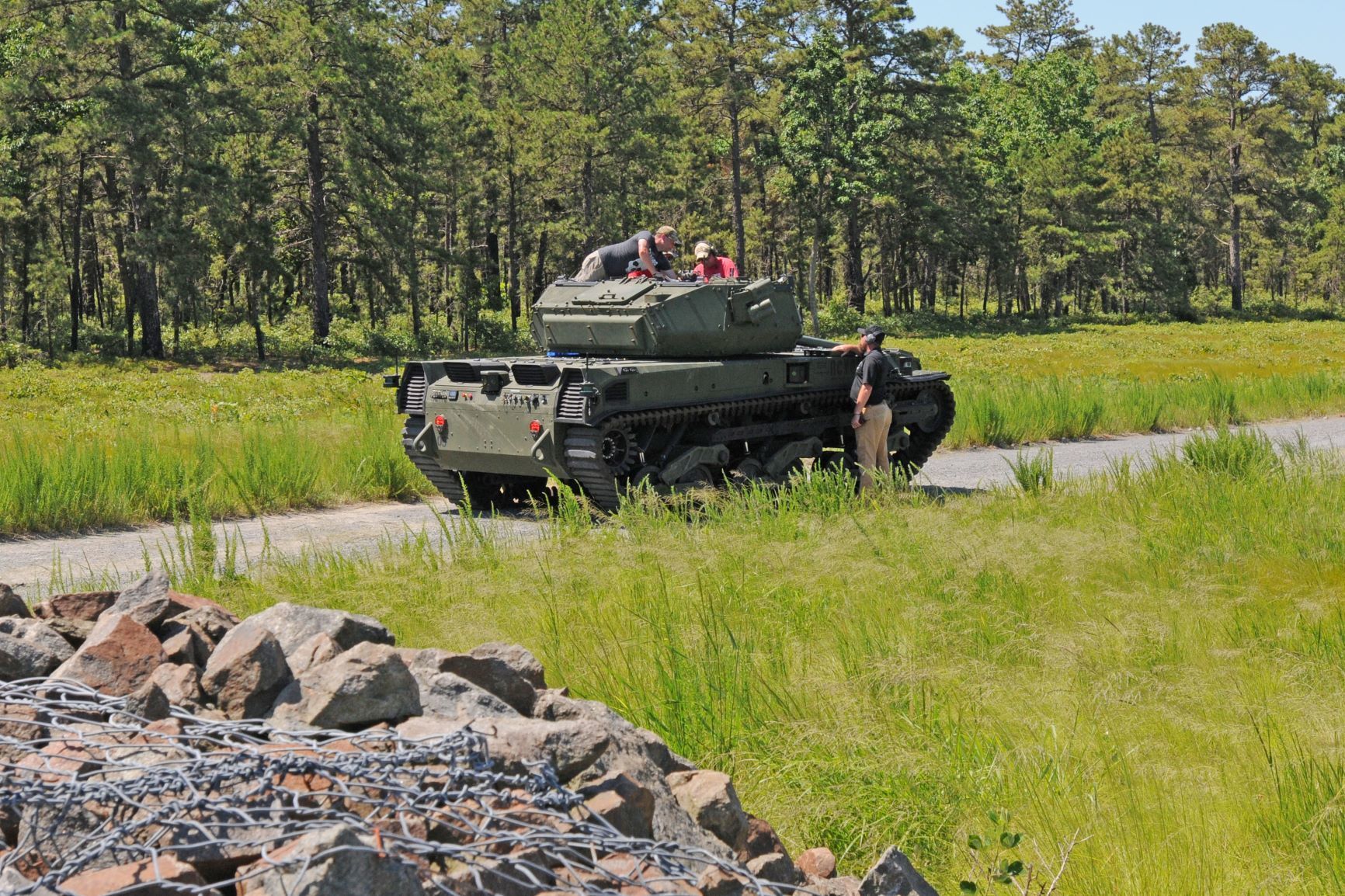
Fort Dix Range 65
The new RCV will also be able to keep pace with infantry and other armored vehicles during off-road maneuver and movement on paved streets and highways.
Textron Systems says the vehicle is the 5th generation of Ripsaw providing speed, mobility and unmanned capability. The M5 can silently maneuver and keep pace with the current and future maneuver forces, pushing capabilities beyond the human formation.
With innovative engineering and systems integration, this vehicle offers unprecedented endurance and revolutionary capabilities. Its hybrid engine allows for quiet maneuvers and increased reliability.
Also, Textron added that the customer will begin integration and testing of their own robotic controller technologies in preparation for the 2022 Soldier Operational Experiment. Insights gained from these vehicles will help shape future capability requirements and program priorities.