

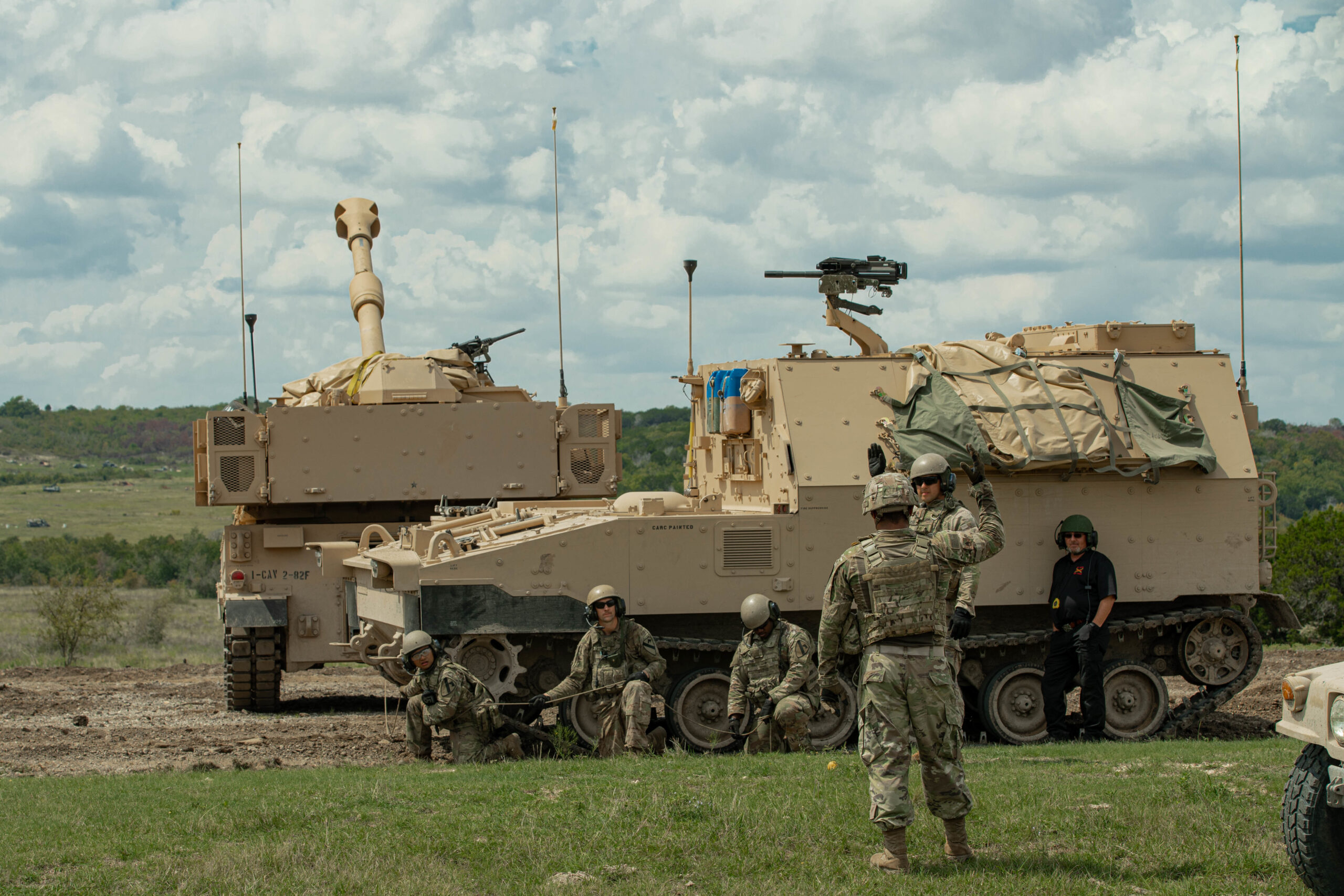
The U.S. Army is ramping up production of its new M109A7 Paladin self-propelled howitzer while providing increased commonality within the U.S. Army Armored Brigade Combat Team (ABCT).
The M109A7 is the latest howitzer in the BAE Systems M109 family of vehicles, the primary indirect fire support system for the ABCTs.
According to a tweet from BAE System, the U.S. defense contractor entered into full-rate production, and are finishing the year with more than 250 vehicles delivered.
“The M109A7 Self-Propelled Howitzer addresses long-term readiness and modernization needs and leverages today’s most advanced technology,” the command said in a Twitter post.
The Army’s new self-propelled howitzer is more lethal now than ever. It uses the existing main armament and cab structure of a Paladin M109A6, and replaces the vehicle’s chassis components with modem components common to the Bradley vehicle. The improved chassis structure provides greater survivability and commonality with the existing systems in the ABCT, reducing operational sustainability costs by replacing obsolete components.
“In the past, the A6 Paladin was the slowest vehicle in the Army. It needs to leapfrog. We are restoring that mobility so it will be one of the faster vehicles. Howitzers can now outrun 113s,” a senior Army weapons developer said.
The M109A7 is considered to be the most cost-effective method to significantly improve sustainability and survivability, while reducing the logistics burden on the ABCT and supporting fires brigades.
What’s more, the U.S. Army has released a request for a proposal to add additional option years (FY21-FY23) to contract for the M109A7 Paladin artillery systems and M992A3 ammunition carriers.