

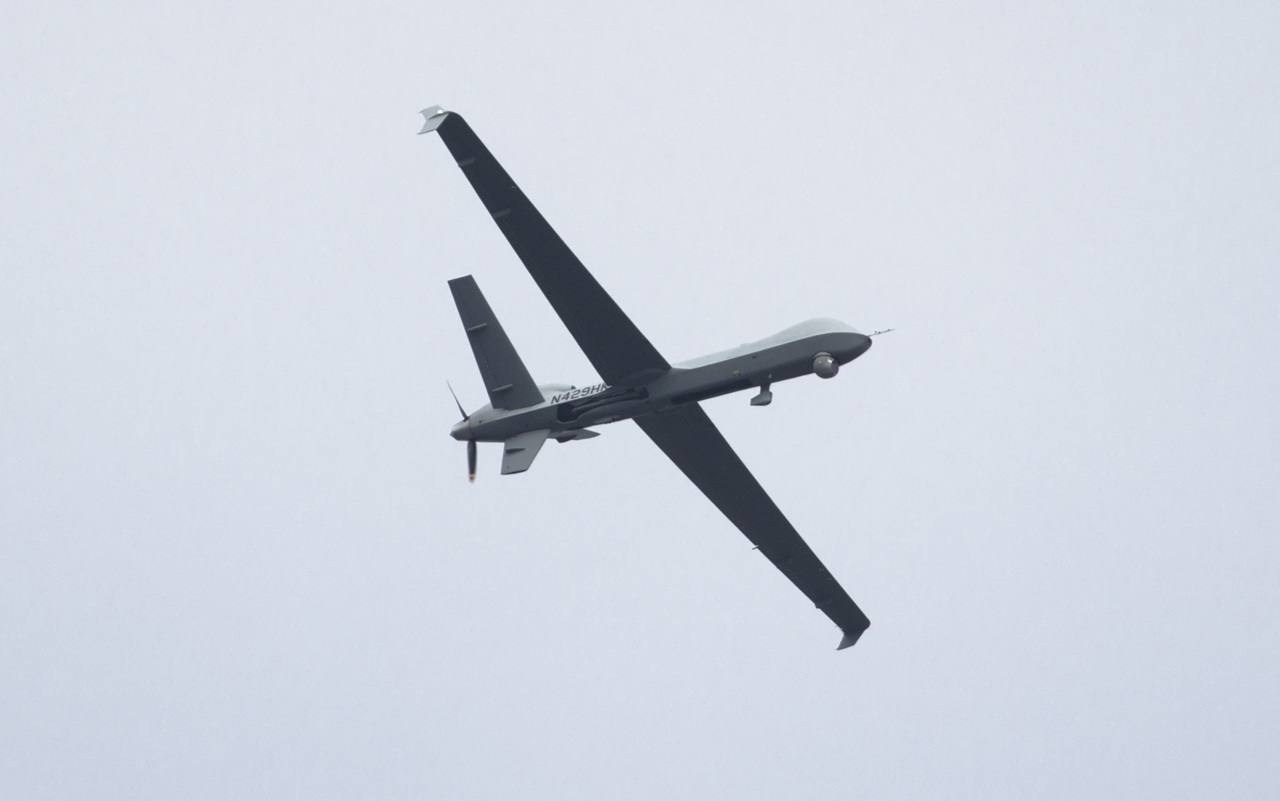
For the first time in history, the U.S. Air Force MQ-9 Reaper drone has been temporarily deployed to Amari Air Base, Estonia.
The Scramble Magazine has reported that during mid-June 2020, some 15 months after becoming Fully Operational Capable in Europe, MQ-9 Reapers from USAF’s 52nd Expeditionary Operations Group Detachment 2 at Mirosławiec Air Base (Poland) deployed to Ämari Air Base (Estonia).
The purpose of the deployment is to provide intelligence, surveillance, and reconnaissance missions within the European theater, and is made possible through the utilization of Amari AB.
“We are specifically focusing on air, maritime, and land domain,” said Brig. Gen. Jason Hinds, Deputy Director of Operations, Strategic Deterrence and Nuclear Integration and the United States Air Forces in Europe and United States Air Forces Africa Air Operations Center Director. “We are gathering requirements from the U.S. European Command and our NATO allies, and then we are going to execute those taskings in coordination with the Estonian Air Force.”
One of the aircraft was transported via cargo truck from Miroslawiec AB, where it was then offloaded and assembled in a hangar at Amari with the help of the Estonian Air Force.
“We’ve seen a drastic increase in partnership by working everyday alongside the Estonian air force whether it’s via communications, medical cooperation, operations, or launch, recovery and logistics support,” said Master Sgt. Robert DeGrasse, 52nd Expeditionary Operations Group, Detachment 2 superintendent. “Thanks to our partnership we’ve developed, the 52nd EOG was able to land the first ever MQ-9 aircraft in Estonia.”
Throughout the length of the deployment, the aircraft will be performing ISR missions in support of NATO until they return to Poland.
The Estonian Air Force has made the operation at Amari possible through offering their assets to complete the mission.
“We are the first American contingent to operate out of their hangar and operations building,” said Lt. Col. Clayton Sanders, 52 Operations Group Detachment 2 commander. “The Estonians have done everything they can to help us work out the kinks to operate out of both buildings, and that is where we have seen the increase in partnership.”