

Pentagon’s No.1 weapons supplier Lockheed Martin Corp has announced that the U.S. Space Force’s new missile defense satellite successfully completed simulated space environmental testing.
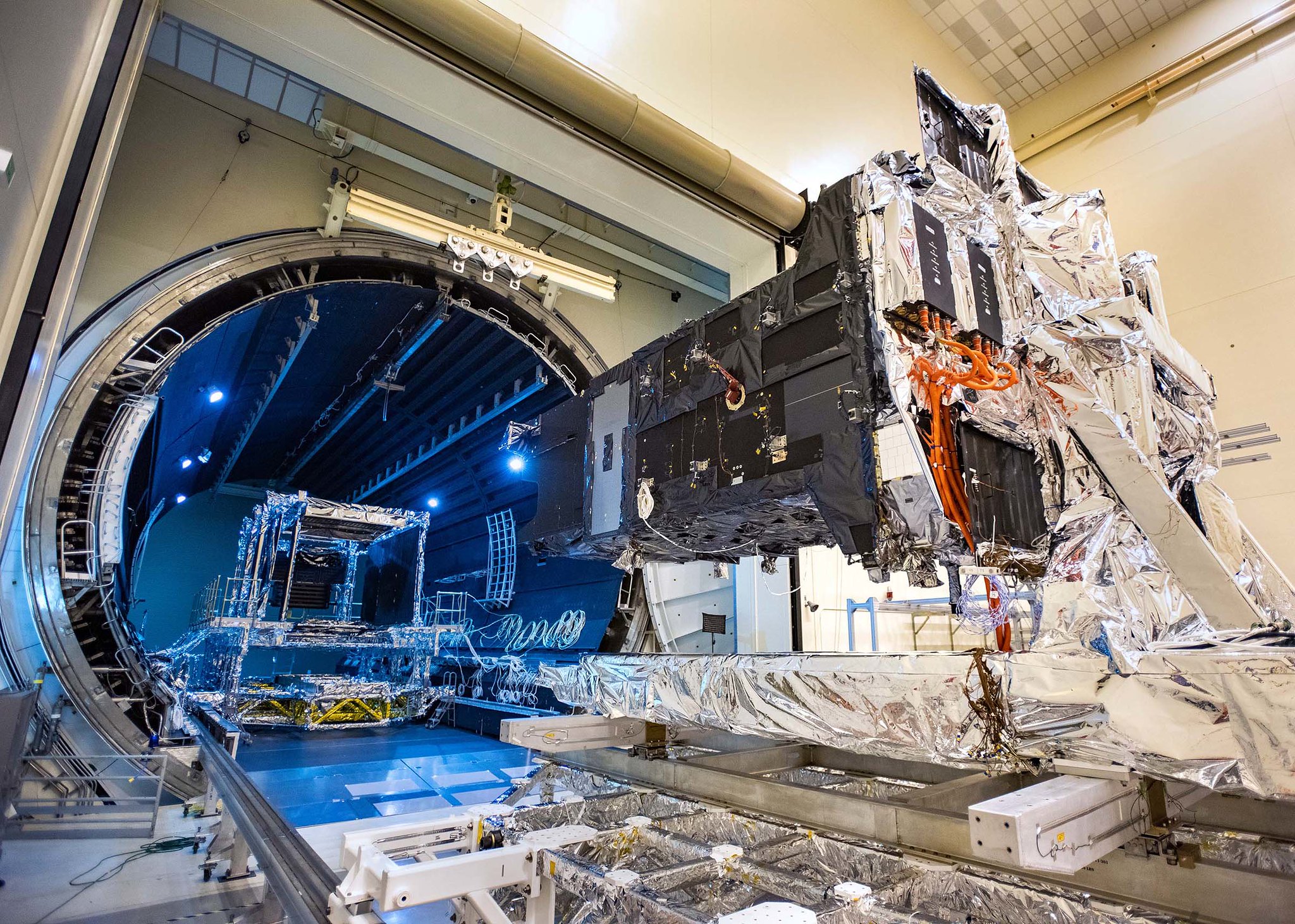
On June 9, the world’s most advanced missile defense satellite, called the Space Based Infrared System Geosynchronous Earth Orbit satellite (SBIRS GEO-5), successfully completed Thermal Vacuum (TVAC) testing at Lockheed Martin (NYSE: LMT)’s Sunnyvale, California satellite manufacturing facility.
Completing TVAC was a significant milestone for the first military space satellite to be built on one of Lockheed Martin’s modernized LM 2100™ satellite buses. During TVAC testing, the satellite – with its sophisticated electronics performing full operations – faced waves of heat and cold in a depressurized atmosphere similar to the drastic environmental changes experienced in space.
“The completion of TVAC can be attributed to a tremendous effort from the Air Force, Lockheed Martin, Aerospace Corporation, and supporting contractor teams,” said Tucker White, SBIRS GEO-5 Assembly, Test, and Launch Operations Lead from the Government Program Office. “The teams worked around the clock and finished on schedule to their original projection. This test phase is vital to any space vehicle test regime and takes GEO-5 one step closer to providing enhanced missile detection to our warfighters.”
SBIRS GEO-5 will join the Space Force’s constellation of missile warning satellites equipped, with powerful scanning and staring infrared surveillance sensors, which protect our nation 24-7. These sensors collect data that allow the U.S. military to detect missile launches, support ballistic missile defense, expand technical intelligence gathering and bolster situational awareness on the battlefield.
“In SBIRS GEO-5, and our next satellite GEO-6, we’re introducing game-changing enhancements to address the needs of our nation’s space warfighting force going forward,” said Tom McCormick, Vice President for Overhead Persistent Infrared (OPIR) Missions at Lockheed Martin Space. “The threat posed by ballistic missile technology continues to spread exponentially around the world. In 2019, SBIRS detected nearly a thousand missile launches globally, which is about a two-fold increase in two years.”