

Pentagon’s No.1 weapons supplier Lockheed Martin Corp. revealed details of its new radar technology.
Lockheed Martin has a long history of developing weapon systems and the company’s contributions to radar technology are redefining the future of radars and radar manufacturing.
“You can’t stop what you can’t see, and we are the eyes of our customers,” said Dr. Rob Smith, Vice President and General Manager, Lockheed Martin Radar and Sensor Systems. “The radar products we deliver are going to ensure that they are able to prevail against next generation threats.”
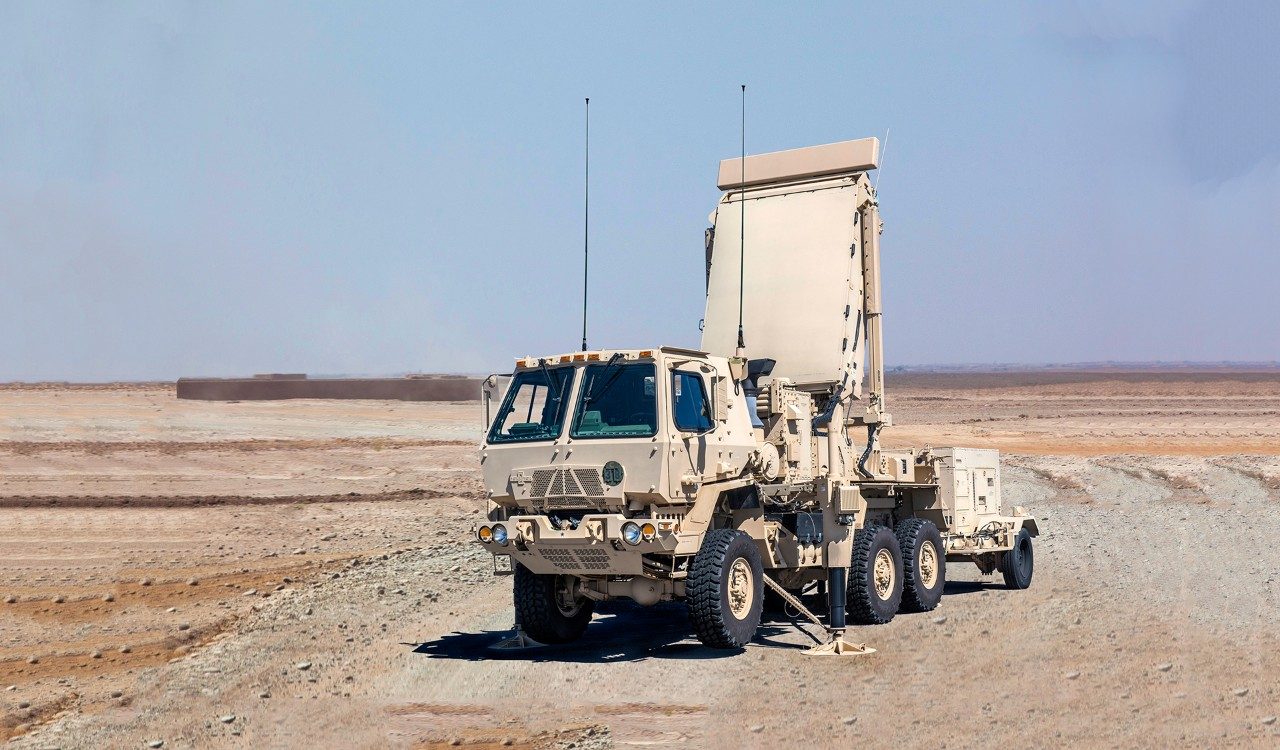
“We had a U.S. Army colonel at one of our sites recently who thanked us profusely for the work we had done to get the Q-53 out into the field,” said Smith. “In deployment, his unit was constantly on the defense, ducking and covering and suffering tremendous loss of life, but after acquiring the Q-53, it absolutely cleared the battlefield. This radar is saving lives every day.”
The Q-53 detects, classifies, tracks and determines the location of enemy fire in either 360- or 90-degree modes. The system provides enhanced performance, including greater mobility, increased reliability and supportability, lower life-cycle cost and reduced crew size.
According to the company, the development of the next generation of radars is being driven by a rapidly changing battlefield.
Lockheed Martin’s innovative radar work includes developing radar systems with open, scalable architecture, exploring sensor convergence and developing and delivering the next generation of radar products.
Lockheed Martin’s focus on developing radar systems with open, scalable architecture allows our engineers to deliver radars more quickly, our systems to grow as new ones emerge and our customers to keep pace with current and future threats while their radar continues to function in the field.
Similarly, our work on sensor convergence is driven by a commitment to support our customers’ need to navigate a rapidly changing threat environment. Multifunctional sensors add flexibility and capability and can be widely distributed throughout platforms.
Lastly, Lockheed Martin is actively developing and delivering the next generation of radar products such as Space Fence and our Long Range Discrimination Radar (LRDR).
“Space Fence is the most advanced radar in the world, and when it is deployed, LRDR will be even more advanced,” said Smith. “Both are designed for complex threats, and both are critical for protecting our people.”
Lockheed Martin’s next generation radar products also include:
- Development of radars utilizing reusable components as their foundation, coupled with technology to communicate at different radar frequency bands (X, S, L, etc.), to help us match the necessary radar product to the customer mission/need
- Development of advanced systems in sensor convergence that allow for multiple missions on one aperture
- Development and delivering the next generation of radar products such as Sentinel A4, Space Fence and our Long Range Discrimination Radar (LRDR)
All of Lockheed Martin’s work in radar technology is grounded in a commitment to our customer and an understanding of how significant radars are to our warfighters.
“As a company, we are fortunate to hold such a strong position in the radar market,” said Smith “We have excellent technology, a solid team and a strong commitment to delivering the next generation of radar.”