

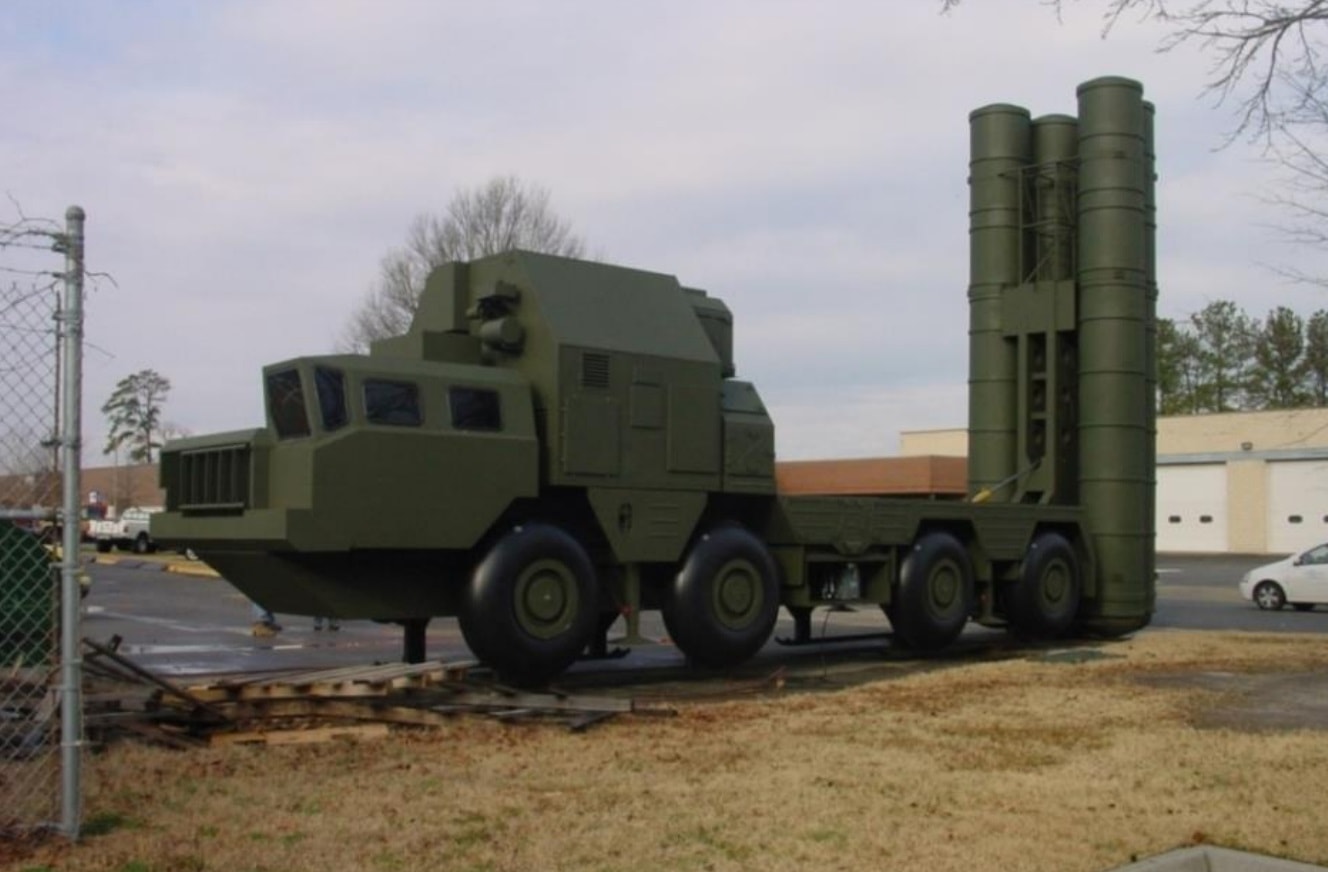
The U.S. Air Force is seeking responses for its requirement to acquire full size mock-ups of the Russian S-300PMU air defense system – NATO codename SA-20 Gargoyle.
The Air Force’s plan was first reported by The Drive.
In a notice posted on the U.S. government’s main contracting website last month, the Air Force Materiel Command announced the Air Force Sustainment Center Operating Location Ogden of Hill AFB is conducting market research to determine the availability, interest, and capability of potential business sources qualified and able to compete for a contract to provide two realistic launcher mock up of Russian-built S-300PMU systems.
“Headquarters, Utah Test and Training Range requires a vendor to manufacture two high-fidelity SA-20 Transport/Erector/Launcher (TEL) surrogatess for use on the Utah Test and Training Range (UTTR),” an Air Force Materiel Command notice states.
To assist in the Air Combat Command (ACC) request to “replicate the physical threat representative multi-spectral (Electro-Optical, Infrared, and Radar Cross Section [RCS]) signatures located in close proximity to the radar signal emitter,” threat surrogates must be present. While threat radars are available on United States test ranges for sensor and weapons testing, they are expensive to maintain, operate, and replace.
The development of high-fidelity surrogatess is an effort to provide a less expensive, signature representative target that can represent the actual radars.
High-fidelity surrogatess are necessary to provide training of cognitive skills to live air crews. New advancements in technology require these surrogatess to be signature accurate to assist in training.
Without knowing the capabilities of the latest aircraft sensors and radar systems, one must compromise between signature fidelity, related costs, and training effectiveness to develop a surrogates.
An initial analysis of the training environment suggests that a surrogates with these capabilities will provide adequate training.
Currently, the S-300PMU air defense systems are operated by Russia, Iran, Syria, China, and other countries.