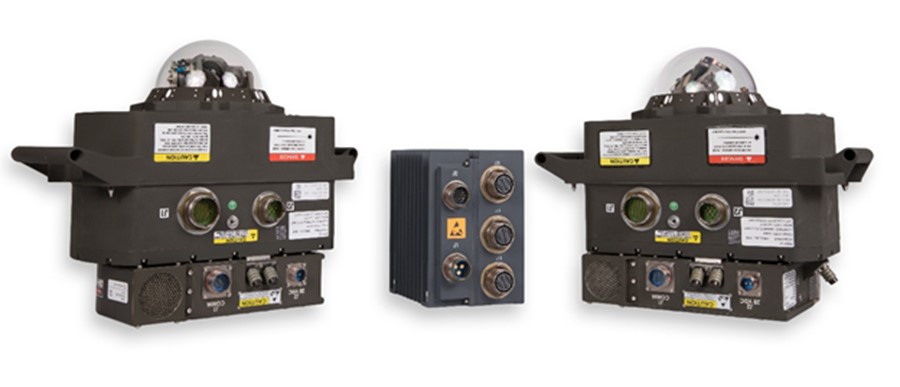
U.S. aerospace giant Northrop Grumman has announced that its compact, lightweight, fifth-generation infrared countermeasure self-protection system for the U.S. Army has entered Initial Operational Test and Evaluation (IOT&E).
The Common Infrared Countermeasure (CIRCM) system represents the next generation of lightweight, low-cost countermeasure systems designed to work in conjunction with missile warning systems throughout the armed services.
“Exercising our production systems in operational testing will further validate CIRCM’s advanced performance, and is a key enabler on the path to full-rate production and wide deployment of this life-saving system to our warfighters,” said Bob Gough, vice president, land and avionics C4ISR, Northrop Grumman.
Early, the company reported that the new system has undergone thousands of hours of laboratory, flight and free flight missile testing to verify its performance in a range of realistic combat scenarios. Throughout the process, CIRCM demonstrated its ability to protect aircrews by countering threats.
The CIRCM system completes Northrop Grumman’s full suite of electronic warfare protection systems, to include advanced missile warning, hostile fire indication, radar warning, radio frequency jamming, laser warning, IRCM jamming capabilities, and cockpit digitization. The modular open systems architecture approach to this family of systems provides the ability to seamlessly integrate these technologies together, as well as quickly upgrade the system to stay ahead of the evolving threat.
Northrop Grumman’s infrared countermeasures systems have been installed on more than 1,500 aircraft, representing more than 80 different aircraft types, including large and small fixed-wing, rotary wing and tilt-rotor platforms.