

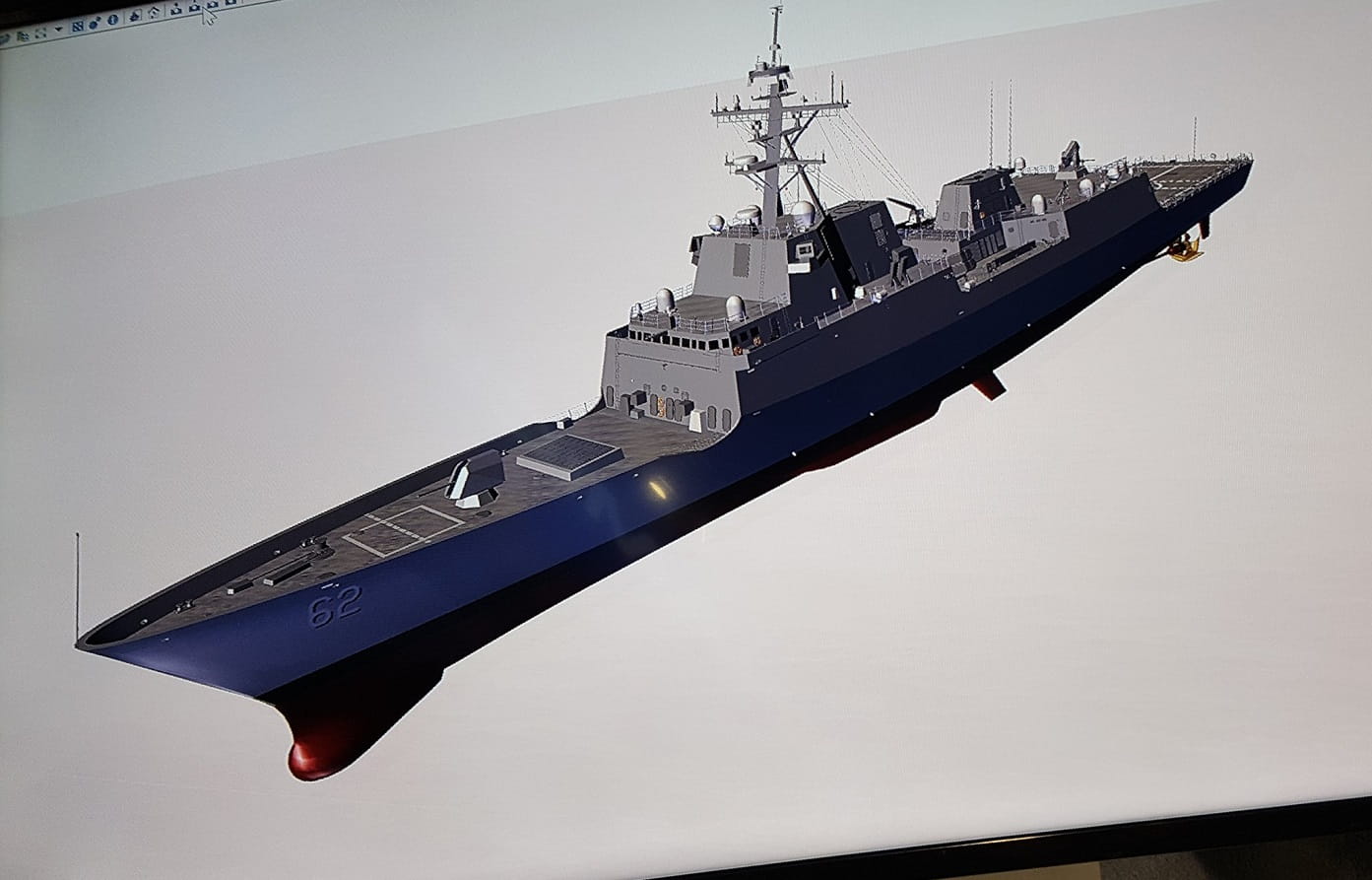
Lockheed Martin Corp. snagged a big contract to the overall integration of the combat system elements into the U.S. Navy’s future guided missile frigate or FFG(X).
The U.S. Navy selected Lockheed Martin (NYSE: LMT) as the Combat System Ship Integration & Test agent for the Navy’s future Guided Missile Frigate (FFG(X)) ship program.
The Combat System Ship Integration & Test contract will ensure the overall integration of the combat system elements into the Frigate ship design and validate the installation through the completion of waterfront testing. The 10-year contract will consist of one base year and nine option years’ worth up to $125 million.
“The U.S. Navy will experience substantial efficiency by utilizing the existing processes, tools, and experience of the Lockheed Martin ship integration and test team,” said Chris Minster, Program Director, Lockheed Martin Surface Navy Integration Systems. “While minimizing ship impact and cost, our Ship Integration & Test team will enable the successful integration of the combat system elements into the future frigate ship design.”
As the warfighter’s needs change, Lockheed Martin has continuously evolved to quickly provide innovative and affordable capabilities to the fleet. Lockheed Martin has over 40 years of ship integration and test experience including Aegis Ticonderoga class guided missile cruisers and Arleigh Burke class guided missile destroyers.
As the Navy’s trusted Combat System Engineering Agent (CSEA), Lockheed Martin has successfully delivered and integrated Aegis and Aegis-based products on 126 platforms in eight nations, with an additional 23 under construction or planned. Aegis and Aegis-derived systems are in service in U.S. Navy cruisers, destroyers, Littoral Combat Ships, Coast Guard National Security Cutters and Aegis Ashore sites. The navies of Japan, Spain, Norway, the Republic of Korea, and Australia have also chosen Aegis to protect their nations.
As part of the Navy’s Distributed Maritime Operations Concept, the FFG(X) small surface combatant will expand blue force sensor and weapon influence to enhance the overall fleet tactical picture while challenging adversary intelligence, surveillance, reconnaissance, and tracking efforts.
FFG(X) will also contribute to the Navy the Nation Needs by relieving large surface combatants from the stress of routine duties during operations other than war. The Navy expects to build a total of twenty (20) FFG(X) ships as per the fiscal year 2019 Report to Congress on the Annual Long-Range Plan for Construction of Naval Vessels.