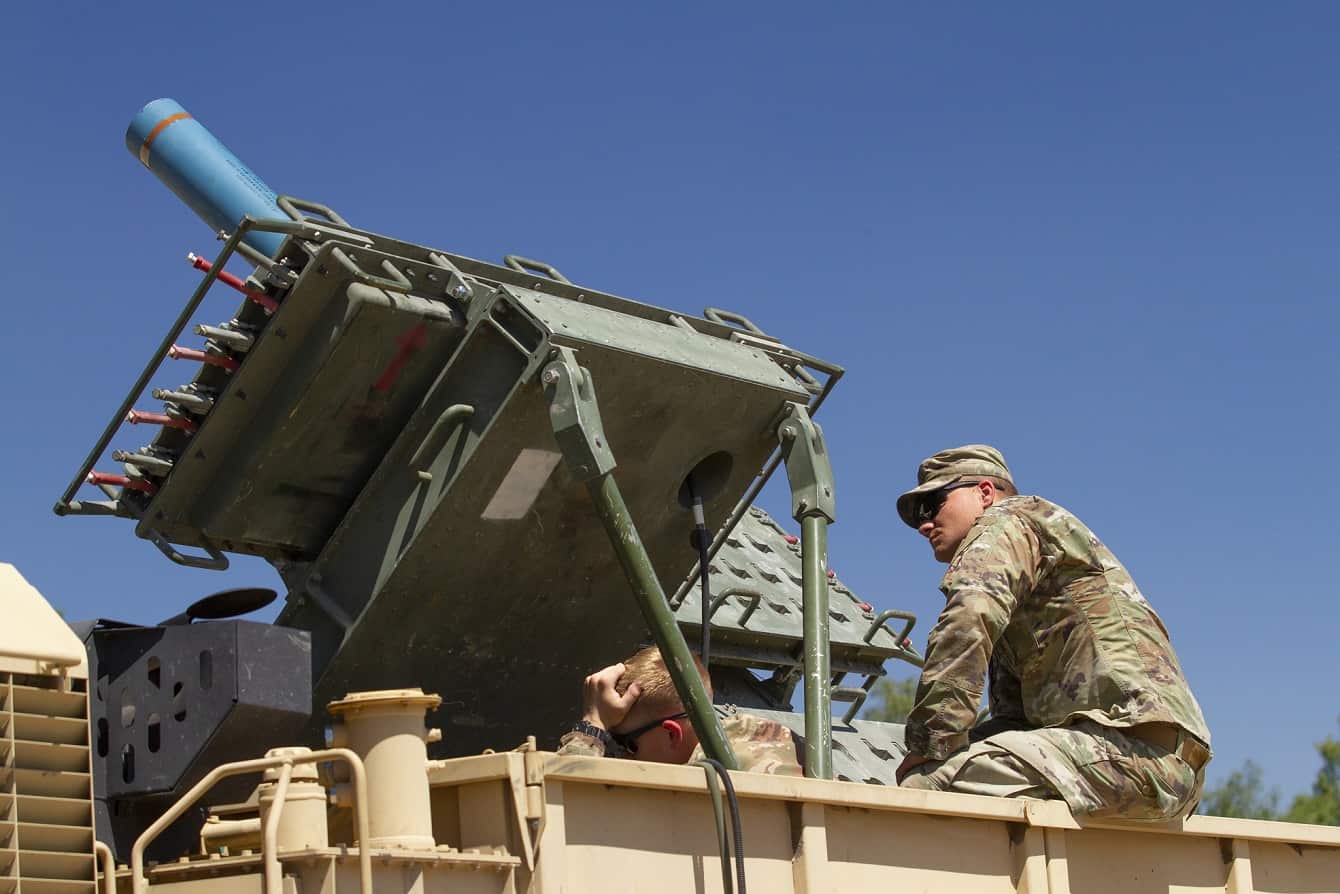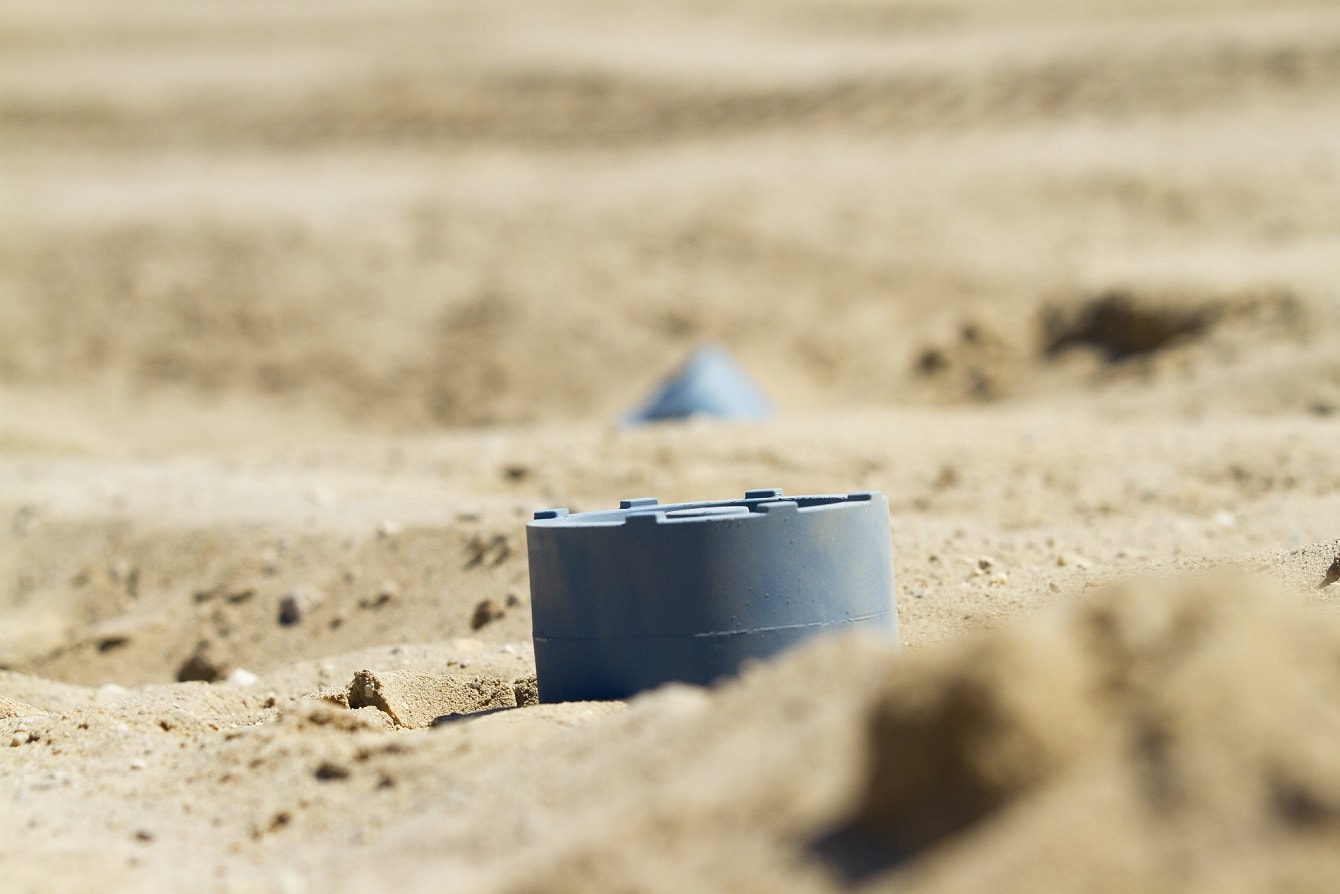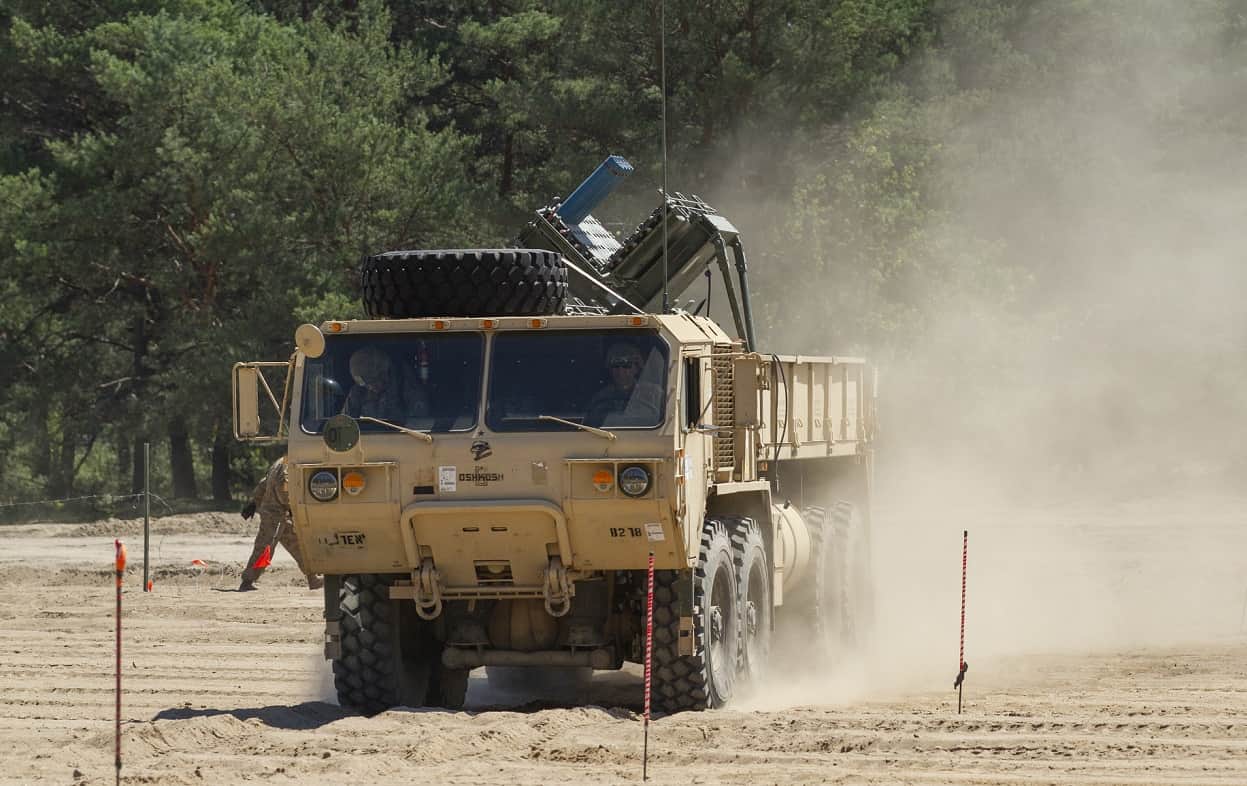
The U.S. Army conducted a demonstration of its high-speed mine dispensing system, designation as the Volcano, during exercises in Poland.
According to a statement released by the 358th Public Affairs Detachment, Engineers from Bravo company, 1st Engineer Battalion, 1st Armored Brigade Combat Team, 1st Infantry Division have demonstrated American mine dispensing capabilities for the Polish army using the M139 Volcano mine dispensing system at camp Karliki.
The Volcano system provides U.S. forces with the capability to employ minefields rapidly under varied conditions. The Volcano can be used to emplace tactical minefields; reinforce existing obstacles; close lanes, gaps, and defiles; protect flanks. Volcano minefields are ideal for flank protection of advancing forces and for operating in concert with air and ground cavalry units on flank-guard or screen missions.
A high-speed mine dispensing system can use onto helicopter or truck platforms.
According to GlobalSecurity.org, the M139 dispenser consists of an electronic DCU and four launcher racks; each rack holds 40 M87-series mine canisters. The racks provide the structural strength and the mechanical support required for launch and provide the electrical interface between the mine canisters and the DCU.
The operator uses the DCU to electrically control the dispensing operation from within the aircraft. The DCU provides controls for the arming sequence and the delivery speed selection, and it sets mine SD times. The DCU allows the operator to start and stop mine dispensing at anytime.
A Soldier-selectable, self-destruct mechanism destroys the mine at the end of its active lifecycle – 4 hours to 15 days – depending on the time selected. Using a ground vehicle, a 1,000-meter minefield can be laid in 4 to 12 minutes based on terrain and vehicle speed. A helicopter can complete the mission in 20 seconds. Advantages of this system include faster response, increased lethality, greater efficiency and enhanced safety.