

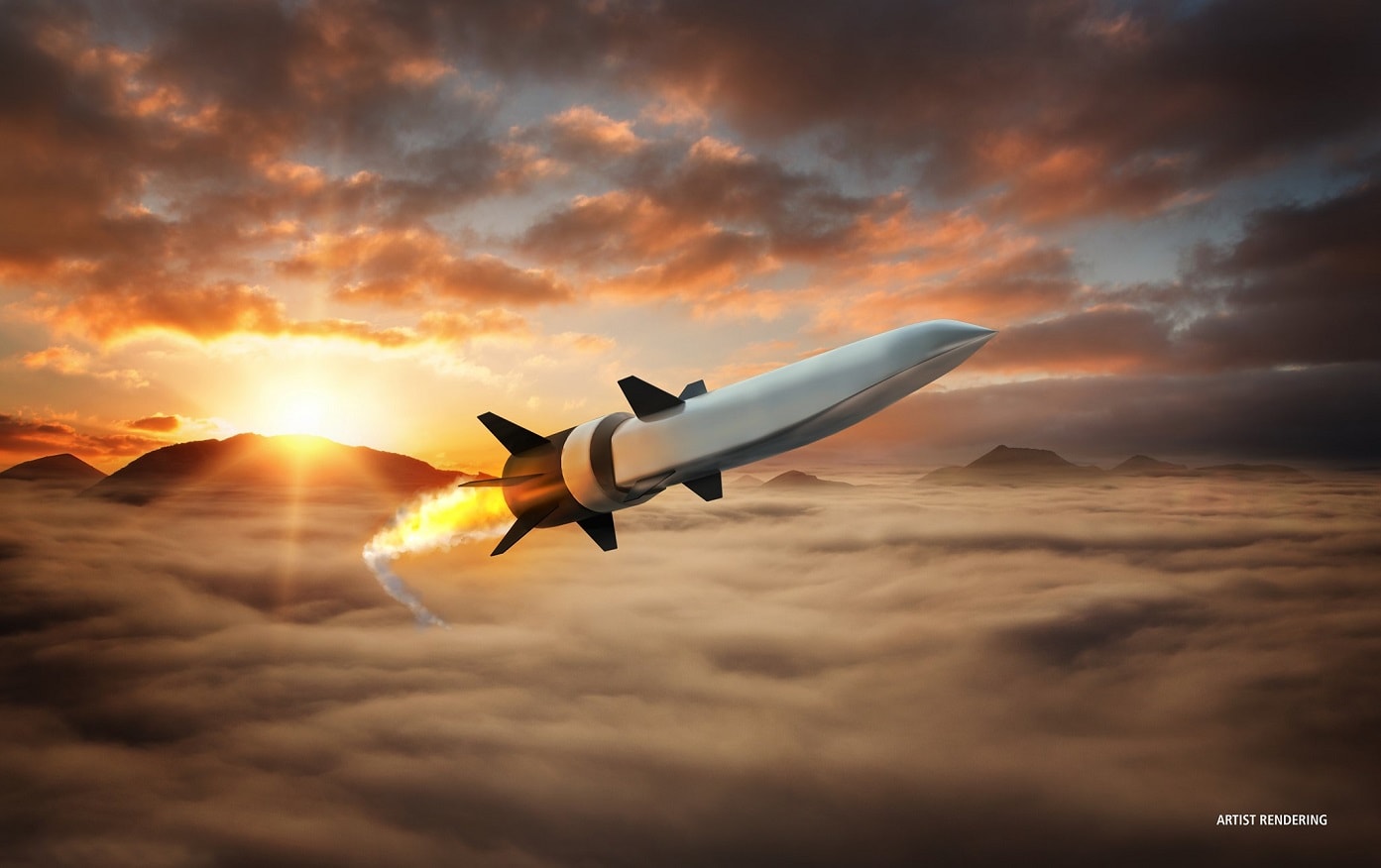
Raytheon Company and Northrop Grumman Corporation announced on Tuesday an agreement to develop scramjet-powered tactical missile systems.
The teaming agreement uses the combined capabilities of both companies to accelerate development and demonstrate readiness to produce the next generation of tactical missile systems.
Scramjet engines use high vehicle speed to forcibly compress incoming air before combustion to enable sustained flight at hypersonic speeds. Such speeds reduce flight times and increase weapon survivability, effectiveness and flexibility.
“The Raytheon/Northrop Grumman team is quickly developing air-breathing hypersonic weapons to keep our nation ahead of the threat,” said Dr. Thomas Bussing, Raytheon Advanced Missile Systems vice president. “This agreement combines Raytheon’s decades of tactical missile expertise with Northrop Grumman’s extensive scramjet engine development experience to produce the best possible weapons.”
Northrop Grumman and Raytheon are working under a $200 million Hypersonic Air-breathing Weapon Concept, or HAWC, program contract to deliver an affordable, effective and producible cruise missile for DARPA and the U.S. Air Force.
“This teaming agreement extends our strong partnership with Raytheon on this critical technology capability. Our deep heritage in propulsion, fuzes and warheads will help accelerate readiness of tomorrow’s missiles to meet range, survivability, safety and lethality requirements,” said Mike Kahn, vice president and general manager of Northrop Grumman’s Defense Systems. “Together with Raytheon, we intend to make great strides toward improving our nation’s high-speed weapon systems, which are critical to enhancing our warfighters’ capabilities for greater standoff and quicker time to target.”
Under the agreement, Raytheon and Northrop Grumman will continue to collaborate on HAWC and future air-breathing hypersonic missiles. Both companies are investing in hypersonic technologies and programs to ensure the military has a robust portfolio.