

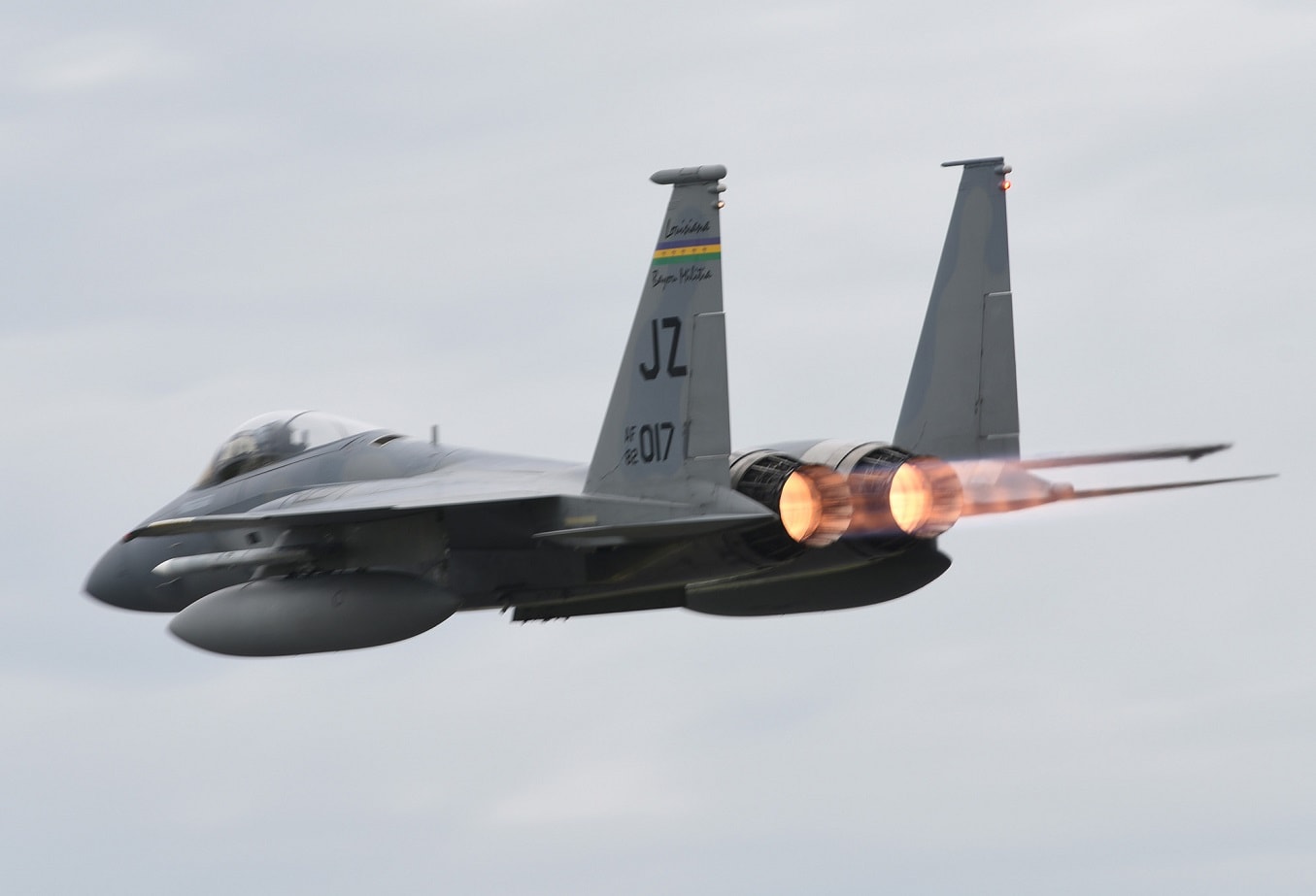
The Pacific Air Forces announced that U.S. airmen in partnership with their Australian counterparts have conducted bilateral flying operations during “phenomenal” Diamond Storm exercise.
The California Air National Guard’s 194th Expeditionary Fighter Squadron, Fresno, California, teamed up with the several units from the Royal Australian Air Force (RAAF) to conduct bilateral training during Exercise Diamond Storm May 6-26, 2019.
Diamond Storm is an Australian Air Warfare Center-led exercise designed to enhance interoperability amongst allies and facilitate the introduction of fifth-generation capabilities into the Australian Defense Force.
“It’s incredibly important to continue collaborating with one of our most trusted allies and show support in this part of the world,” said U.S. Air Force Lt. Col. David Allamandola, 194th EFS program manager. “The Australians have created a phenomenal exercise that has increased both our levels of aptitude. Utilizing their unique airspace has highlighted different tactical problems we don’t get to see on a regular basis. It’s definitely a great opportunity to be with them, that we are privileged to participate in.”
This exercise, the last of a three-part series, also benefits as being a certifying criteria of the Air Warfare Instructor Course for the Australians.
“This is one of the most intense courses the [Australian Defense Force] offers to its candidates,” said RAAF Wing Commander Scott Woodland, 2 Operational Conversion Unit commanding officer. “We are taking highly skilled F-18 pilots and taking them to the next level. It’s been very challenging and very demanding with long hours, but ultimately, it gives great rewards.”
The U.S. Air Force and RAAF want to continue to build on the benefits of this exercise through the Enhanced Air Cooperation initiative and conduct more frequent training together.
“Being able to integrate as a force, understanding each other’s capabilities and limitations, and where we can utilize maximum effects with those capabilities is important,” said Woodland. “Having the expertise that U.S. [Air Force] units bring to the fold also help develop our candidates as well.”
The aim for the increase of training opportunities between the U.S. Air Force and RAAF is to aid in future integration efforts.