

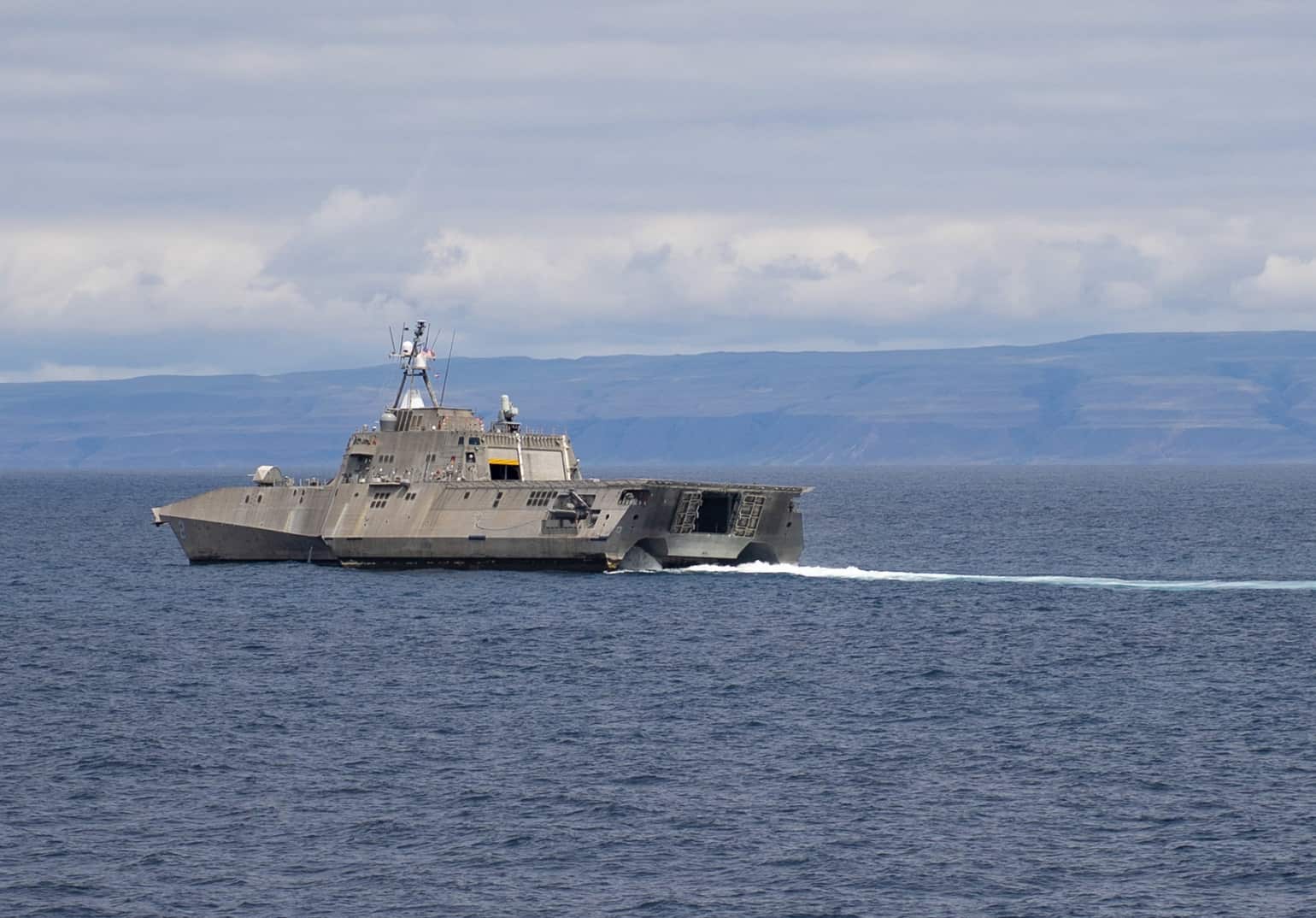
The U.S. Navy has announced on 29 April that for the first time in the littoral combat ship’s class history, Naval Surface and Mine Warfighting Development Center (SMWDC) conducted Surface Warfare Advanced Tactical Training in the U.S. 3rd Fleet area or operation (AOR).
The training, which concluded April 22, provided the crew of the Independence-class USS Montgomery (LCS 8) advanced level training to increase their tactical proficiency, lethality, and interoperability.
“SWATT is the culmination of a phased training approach which prepares our ships and our Sailors to win the fight,” said Capt. Matthew McGonigle, commander, Littoral Combat Ship Squadron ONE. “The Montgomery crew demonstrated that they are ready, capable and committed to meet the mission the Navy and our nation requires of them.”
Montgomery conducted several training exercises during the multi-day training event, including anti-submarine, surface, and air warfare. Complex live-fire events included torpedo countermeasure exercises and gunnery exercises.
“The Montgomery Blue team honed their skills during the complex exercise and without a doubt, their watchstander proficiency was enhanced,” said Cmdr. Edward A. Rosso, Montgomery’s commanding officer. “The SWMDC Warfare Tactics Instructors provided excellent training, and we are more ready than ever to answer our nation’s call.”
SMWDC-based mentors, warfare tactics instructors (WTIs), and technical community experts planned the events, briefed shipboard teams, and embarked to train and mentor watch teams throughout the duration of the advanced tactical training. Training evolutions used a formalized plan, brief, execute, debrief (PBED) process.
LCS vessels are high-speed, agile, shallow draft, mission-focused surface combatants designed for operations in the littoral environment, yet fully capable of open ocean operations. As part of the surface fleet, LCS has the ability to counter and outpace evolving threats independently or within a network of surface combatants. Paired with advanced sonar and mine hunting capabilities, LCS provides a major contribution, as well as a more diverse set of options to commanders, across the spectrum of operations.


