

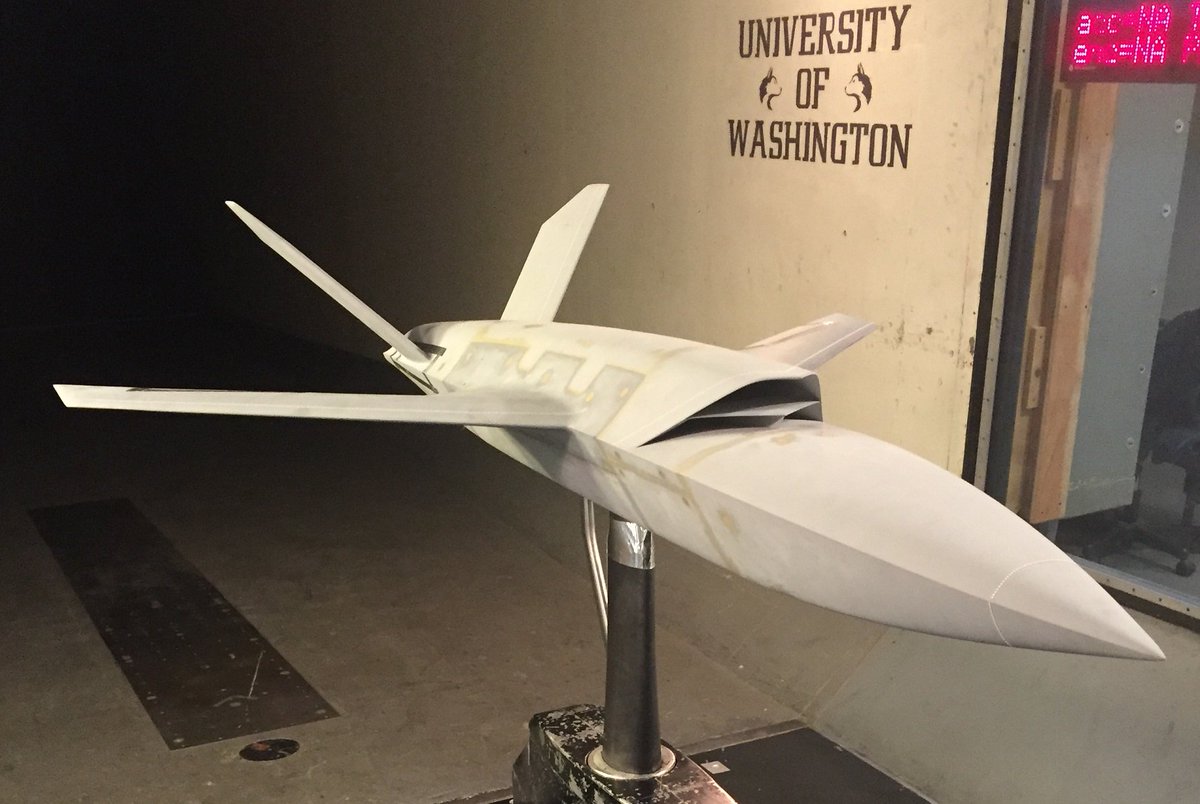
On 10 July, during an event hosted by the Air Force Association, Air Force Research Laboratory (AFRL) chief Major General William Cooley has officially announced that next-generation tactical drone, called the XQ-58A Valkyrie, will make its maiden flight this autumn.
It had previously been scheduled to make Valkyrie’s first flight in Spring 2018 but it is unclear why it was delayed. The company in early January has announced that Kratos is scheduled to deliver its next-generation tactical drone in 2018.
The XQ-58A Valkyrie is an ‘attritable’ unmanned aerial vehicle (UAV), developing by the Kratos Defense & Security Solutions, Inc., measuring in at roughly 9.14 m in length. The newly UAV will have an impressive range of more than 4,800 kilometers. It also can carry a payload of 272 kg, including small-diameter bombs and missiles.
Attritable doesn’t quite mean disposable, but expendable if necessary. Hence the drones might be used to shield the manned aircraft nominally controlling the swarm, and take risks that manned planes and very expensive Unmanned Systems cannot.
William Cooley noted that the idea of the XQ-58A is making a capable combat-type aircraft for very low cost using modern manufacturing techniques.
“The basic idea is can we make a capable combat aircraft very low cost by using modern manufacturing techniques and drive the cost as low as possible,” Cooley says.
Kratos is a very large defense company headquartered in San Diego, California with expertise in satellite communications, cyber security and cyber warfare, microwave electronics, missile defense and combat systems, but the most visible product from the company has been it’s target drones.
“The … Valkyrie represent an entirely new category of UAVs,” said Eric Demarco, Kratos CEO. “Thanks to our target drone expertise and our in-house research and development team, we have been able to combine high performance with low cost in fully functioning aircraft. And we did it in less than two years, not decades.”