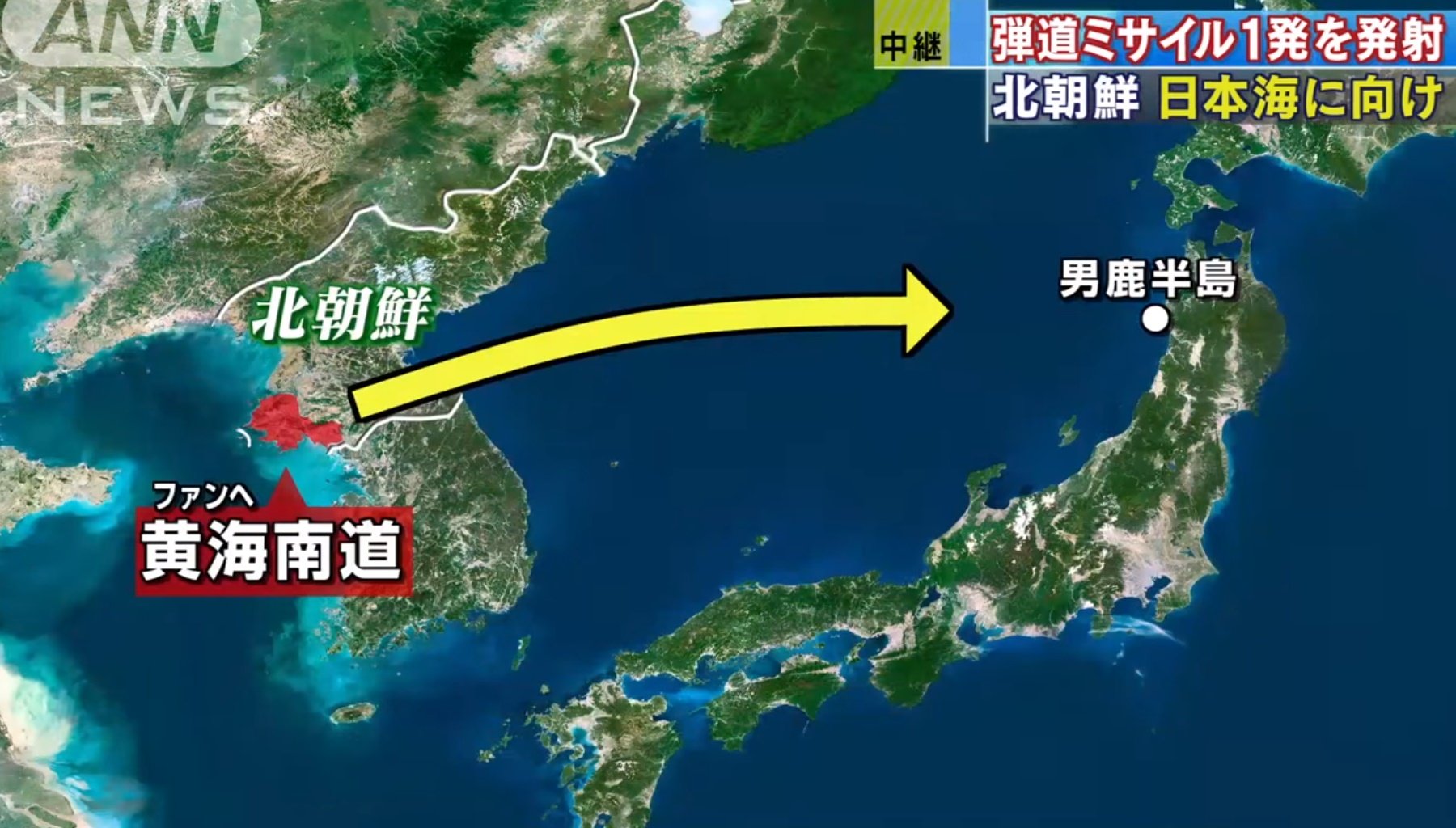
North Korea fired two ballistic missiles Wednesday morning local time, U.S. and South Korean authorities said. That reported by cnn.com.
The US military said it detected the simultaneous launch of two North Korean intermediate range ballistic missiles. US Strategic Command said in a statement that one missile exploded immediately after launch while the second one “was tracked over North Korea and into the Sea of Japan”.
The No-Dong-A (also named No-Dong 1 or Rodong 1) is a medium range ballistic missile based on the technology of the Russian-made ballistic missile Scud-D. This system was developed by the North Korean defence industry. A prototype was detected on a launch pad in May 1990. Test flights did not begin until May 29-30, 1993, with an apparently successful launch 500 km into the Sea of Japan. technology has been exported. Variants are believed to be the basis for Iran’s Shahab-3 and Pakistan’s Ghauri missiles. The first production model was started in 1997. It was estimated in the summer of 2006 by the South Korean, National Intelligence Service that North Korea had deployed or produced at least 450 No-dong-A’s.
The missile was launched from a region in South Hwanghae province to the southwest of Pyongyang and it flew for 1,000km.
The statement added that the Norad early warning command determined the launches did not pose a threat to North America.
On 19 July North Korea fired three ballistic missiles that flew 300-360 miles (500-600km) into the sea off its east coast.
The North later said the launches were part of an exercise simulating preemptive strikes against South Korean ports and airfields used by the US military.
The launches follow the agreement in July between South Korea and the United States to deploy an advanced missile defence system known as Thaad in the South. North Korea had threatened a “physical response” against the deployment decision.