

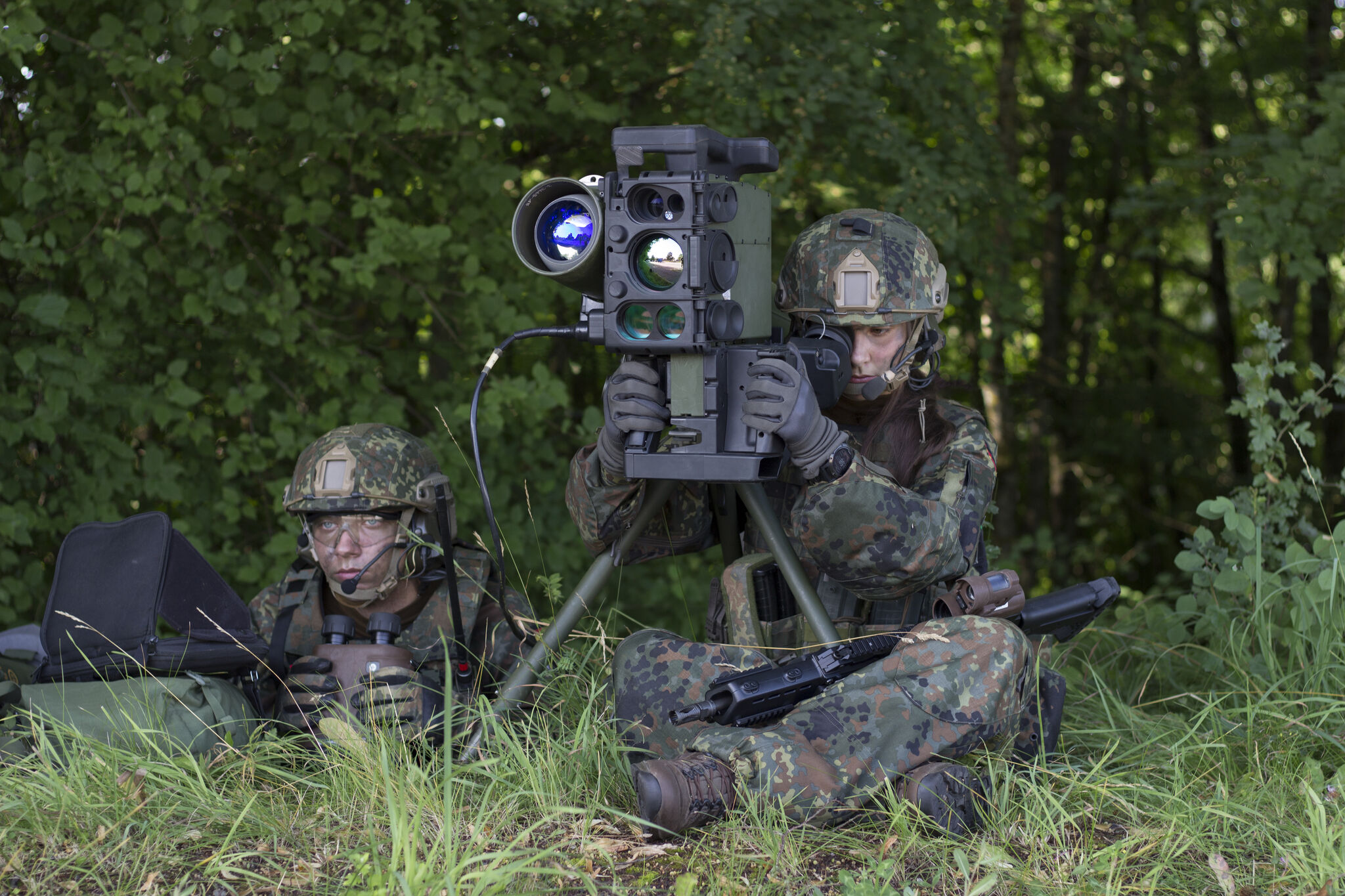
The U.S. Army has entered into a new Cooperative Research and Development Agreement (CRADA) with Israel’s Rafael Advanced Defense Systems, marking a step toward expanding the capabilities of the SPIKE missile family to meet evolving battlefield demands.
The announcement was made at the AUSA Global Force Symposium & Exposition in Huntsville, Alabama, where Rafael’s U.S.-based subsidiary, Rafael Systems Global Sustainment (RSGS), signed the agreement with the Army’s Combat Capabilities Development Command (DEVCOM) Aviation & Missile Center.
According to a release from Rafael, the collaboration will focus on evaluating and adapting the SPIKE missile system—including tactical variants like the SPIKE LR2, SR, ER2, and the Firefly loitering munition—for potential U.S. Army applications.
“The defense landscape continues to evolve,” said LTG (Ret.) Joe Anderson, CEO of RSGS. “Partnerships like this CRADA agreement between Rafael and DEVCOM play a crucial role in driving innovation and ensuring the readiness of the U.S. Army.”
The SPIKE system, developed by Rafael, is widely used by U.S. allies, including 20 NATO countries. The missile is known for its multi-platform flexibility and precision strike capabilities across short-, medium-, and long-range variants. The partnership aims to align these systems more closely with the Army’s current and future operational requirements.
As noted by Rafael, the effort will support further development of tactical missile systems that can integrate with a broad range of platforms and missions, offering enhanced lethality, mobility, and survivability.
The agreement signals growing U.S. interest in field-proven foreign technologies that can be adapted quickly for domestic use. It also reflects a broader defense industry trend of international collaboration to meet increasingly complex security challenges.
Work under the CRADA will begin with technical assessments and platform integration studies, although no timeline for testing or acquisition has yet been disclosed.