


- The Japan Maritime Self-Defense Force monitored a Chinese Dongdiao-class intelligence vessel transiting the Miyako Strait on November 4.
- Defense Minister Shinjiro Koizumi said the transit follows similar Chinese vessel movements around Japan’s surrounding waters in recent months.
Japan’s Ministry of Defense says a Chinese Dongdiao-class electronic intelligence ship transited the Miyako Strait into the Pacific on November 4, prompting a monitoring response from the Japan Maritime Self-Defense Force.
Defense Minister Shinjiro Koizumi, who has led the ministry since October 2025, confirmed the movement and the nationwide surveillance posture in place as Chinese naval intelligence operations continue around Japan’s maritime approaches.
In a statement, Koizumi explained that the Dongdiao-class ship moved west to east from the East China Sea toward open waters of the western Pacific. The vessel was tracked by the Maritime Self-Defense Force destroyer Genga, along with supporting surveillance assets. He stated that the ministry directed units to maintain continuous situational awareness during the transit.
Koizumi said the vessel is believed to conduct electronic and signals intelligence collection. “This vessel is equipped to carry out wide-area electronic information gathering using radar and other sensors,” he said. The intelligence ship is also fitted with aviation facilities and has the ability to embark a helicopter.
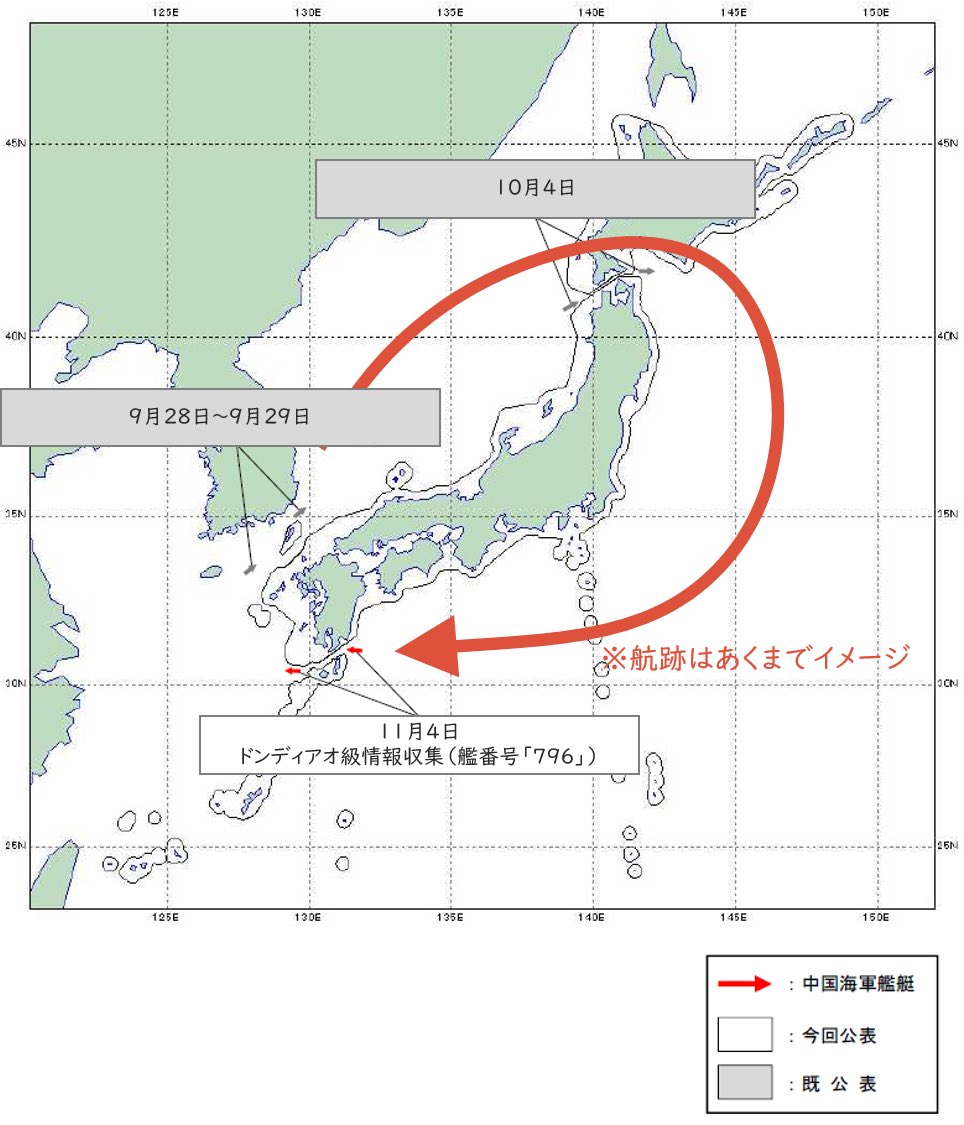
Maps released alongside the statement show this transit as part of a recurring pattern. Koizumi noted that a vessel of the same class moved northeast near the Tsushima Strait in September and transited eastward near the Tsugaru Strait in October. He stated that the activity reflects ongoing intelligence reconnaissance around Japan’s surrounding waters, including areas close to major sea lanes.
“The Self-Defense Forces are responding continuously on a 24-hour basis,” Koizumi said. He emphasized that the response included coordination across regional commands. According to the ministry, units from Sasebo, Kure, Yokosuka and Misawa were involved in situational tracking, including maritime patrol aircraft and surface destroyers.
The Dongdiao-class ships are designed to collect and analyze radar signatures, communication emissions, and electronic patterns from naval exercises, air patrols and maritime traffic. Their role is not direct combat engagement, but systematic mapping of the electromagnetic environment. Such information can later be used to refine targeting systems, electronic warfare planning, and long-range strike coordination.
Japan conducts routine monitoring of Chinese naval movements passing through international straits that separate the Japanese home islands. The Miyako Strait, in particular, is a primary access corridor for the People’s Liberation Army Navy when operating into the Philippine Sea and beyond the first island chain.
Koizumi stated that the Self-Defense Forces will continue to respond in a measured and sustained manner. He thanked personnel involved in the monitoring response, saying, “I appreciate the professionalism demonstrated in the field. We will continue to secure the sea and airspace around Japan.”
China’s intelligence ships routinely gather data on allied force movements, radar systems, and maritime patrol patterns. Japan’s monitoring posture provides early awareness of activity near its territory and supports broader allied maritime situational understanding.