

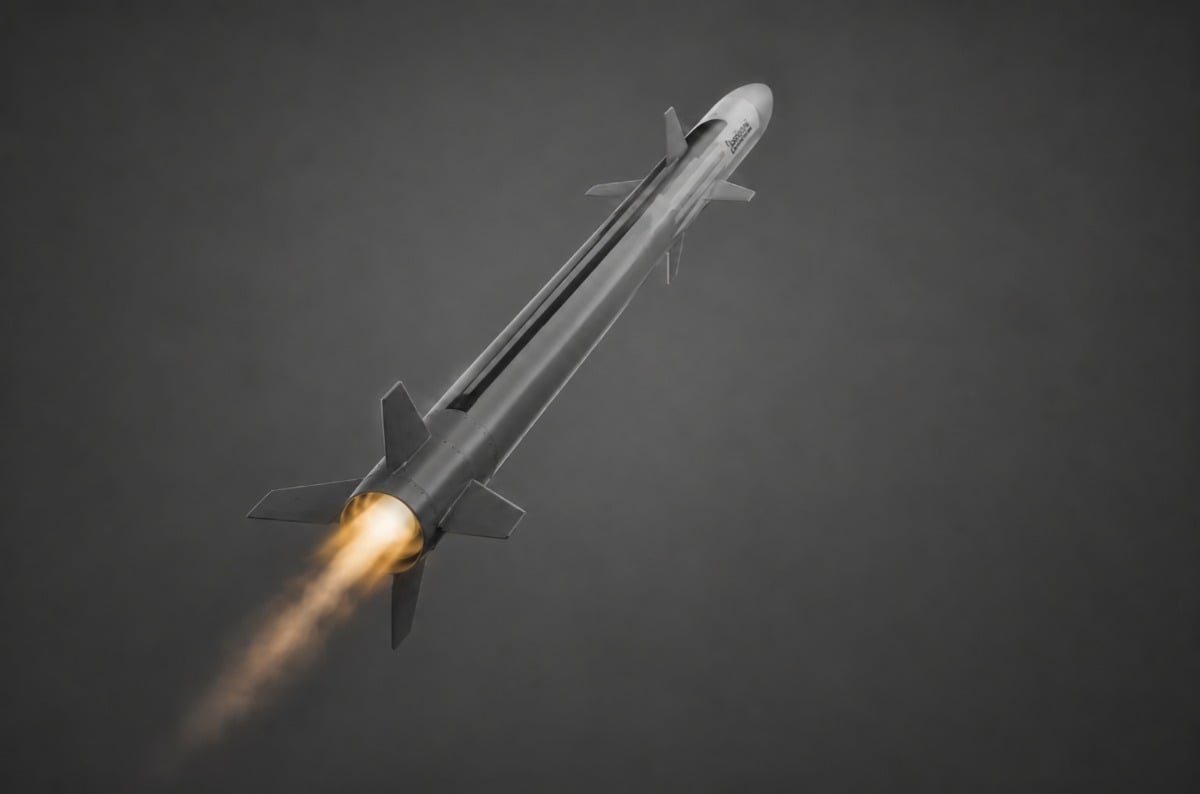
- Destinus previewed Vorexon, a concept-stage point-defense interceptor against artillery rockets and shells, at Farnborough on July 20, 2026.
- The system targets a top speed above Mach 2 and engagement range beyond 20 km, with a development milestone planned for 2027.
An artillery rocket costs a fraction of what it takes to shoot one down, and that math has quietly become one of the grinding problems of the current wars and conflicts.
European defense company Destinus previewed a possible answer at the Farnborough International Airshow, unveiling Vorexon, a concept-stage ground-based interceptor built to protect specific high-value military and infrastructure sites from artillery rockets and select artillery shells, rather than trying to shield an entire battlefield the way traditional air defense systems attempt to do.
The problem Vorexon is meant to solve has played out in brutal detail over nearly four years of war in Ukraine. Russian forces have fired artillery at rates estimated as high as 10,000 to 20,000 rounds per day during peak periods of the war, according to open-source tracking of the conflict, a volume so overwhelming that no realistic air defense network can intercept every incoming round without bankrupting itself in the process. That’s the core math problem defense planners call the cost exchange: firing an interceptor missile that costs hundreds of thousands of dollars to shoot down an artillery rocket that costs a small fraction of that price is a losing trade if it has to happen thousands of times a day, since the attacker can simply keep firing cheap rounds faster than the defender can afford to intercept them. Destinus is betting that the answer isn’t trying to stop everything, but instead building a system smart enough to calculate which incoming rounds actually threaten something worth protecting, then engaging only that narrow subset.
Vorexon is designed to sit around exactly those kinds of priority targets, including command posts, air defense radars and missile batteries, ammunition depots, bridges and logistics hubs, sites whose loss could disrupt an entire military operation far beyond the immediate damage of a single impact. The system would work as one piece of a larger sensor and fire-control network rather than operating on its own. External radars would detect incoming rockets and shells, calculate where each one is actually headed, and flag only the ones on a trajectory toward a protected site, at which point Vorexon’s interceptor would launch, receive updated targeting information mid-flight, and then use what the company describes as a planned active radar seeker to lock onto and destroy the threat in its final seconds of flight, with a human operator still required to authorize the actual engagement decision.
Because a rocket can close the distance to a protected site in well under a minute, Destinus says the entire system depends as much on how fast it can detect, track and decide as it does on how fast the interceptor itself flies. The current concept targets a top speed above Mach 2, roughly 1,535 mph (2,470 km/h), and a maximum engagement range beyond 20 km (12 miles), though Destinus has been explicit that both figures remain development targets that still need to survive engineering validation and real-world testing rather than confirmed specifications. The company is also designing Vorexon around multi-round canister launchers that can be either mobile or fixed in place, allowing multiple interceptors to sit ready to fire at once and giving commanders the option to distribute protection across several vulnerable sites rather than concentrating everything around a single location.
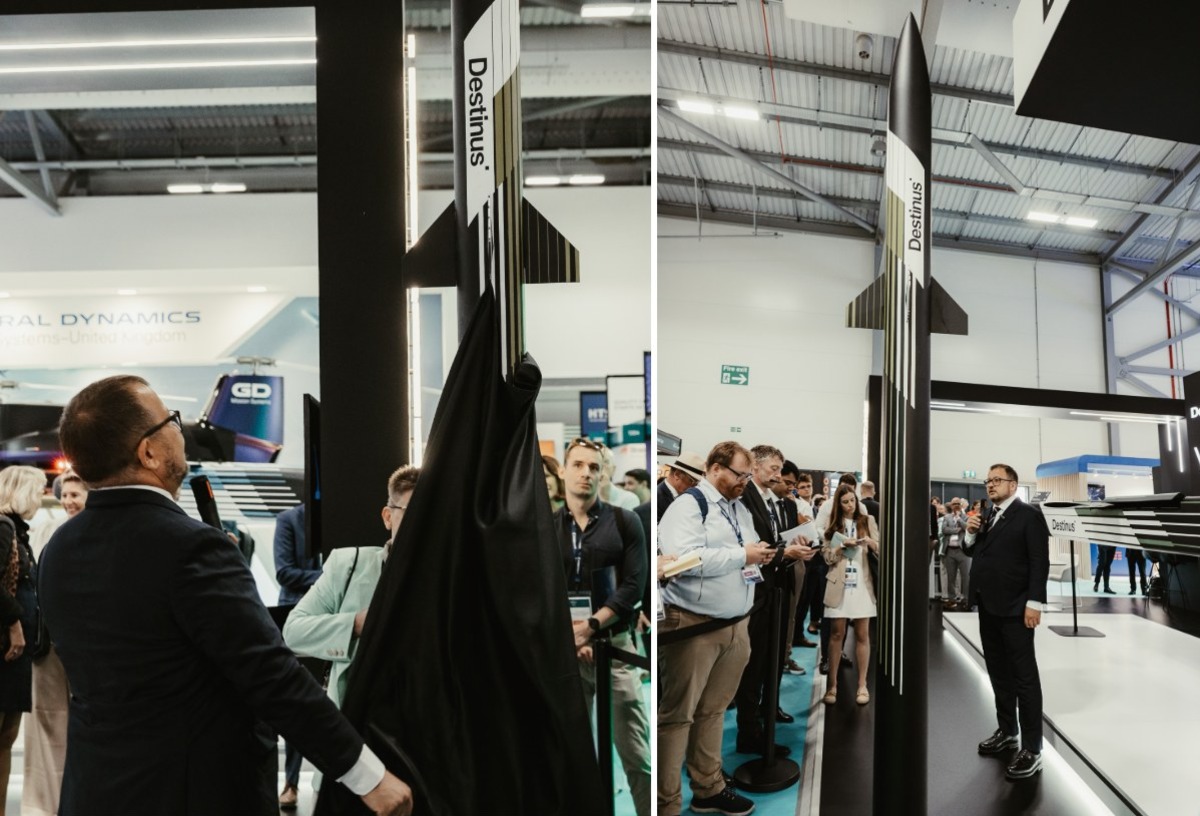
Mikhail Kokorich, CEO of Destinus, tied the entire concept directly to lessons from Ukraine’s ongoing war with Russia.
“Ukraine has shown that the objective cannot be to intercept every artillery round. It must be to identify the small subset projected to strike critical assets and defeat those projectiles,” Kokorich said, adding that: “Vorexon is being designed for that mission: a fast, scalable European point-defence layer against artillery rockets and selected shells, protecting the radars, command posts, ammunition stores and logistics nodes that must keep operating when seconds matter. Point defence only works if commanders can protect every critical site at a cost the adversary cannot outpace.”
The company started in 2021 as a hypersonic aviation research venture founded by Mikhail Kokorich, a Russian-born physicist who had previously built and lost a series of space and satellite companies in Russia and the United States before relocating to Europe, and who renounced his Russian citizenship in January 2024 in protest of the invasion of Ukraine. Destinus shifted its focus toward defense manufacturing shortly after Russia’s 2022 invasion, and the company now employs roughly 750 engineers and specialists across production facilities in the Netherlands, Germany, Spain and Ukraine, manufacturing more than 2,000 cruise missile systems annually under its Ruta product line, a weapon that has been operationally deployed by Ukrainian forces since 2023. That existing manufacturing infrastructure and battlefield feedback loop, built through years of directly supplying a country at war, is part of what Destinus is now leaning on as it moves into the interceptor market with Vorexon.
The comparison point for Vorexon’s ambitions is Ukraine’s own homegrown answer to a nearly identical cost-exchange problem, but aimed at a different threat. Facing waves of Iranian-designed Shahed drones that can cost tens of thousands of dollars each, Ukraine built a fleet of domestically produced interceptor drones costing as little as a few thousand dollars apiece, deploying more than 1,500 of them daily by early this year and achieving an interception rate approaching 80% against drone attacks on Kyiv, according to Ukraine’s own defense ministry figures, all while preserving far more expensive surface-to-air missiles for threats that actually require them. Vorexon is chasing the same underlying logic against a harder target set, since artillery rockets and shells move faster and offer far less warning time than a Shahed drone does, and Destinus has set no date for when the concept might mature into a fielded system beyond a stated development milestone the company is targeting for 2027.