

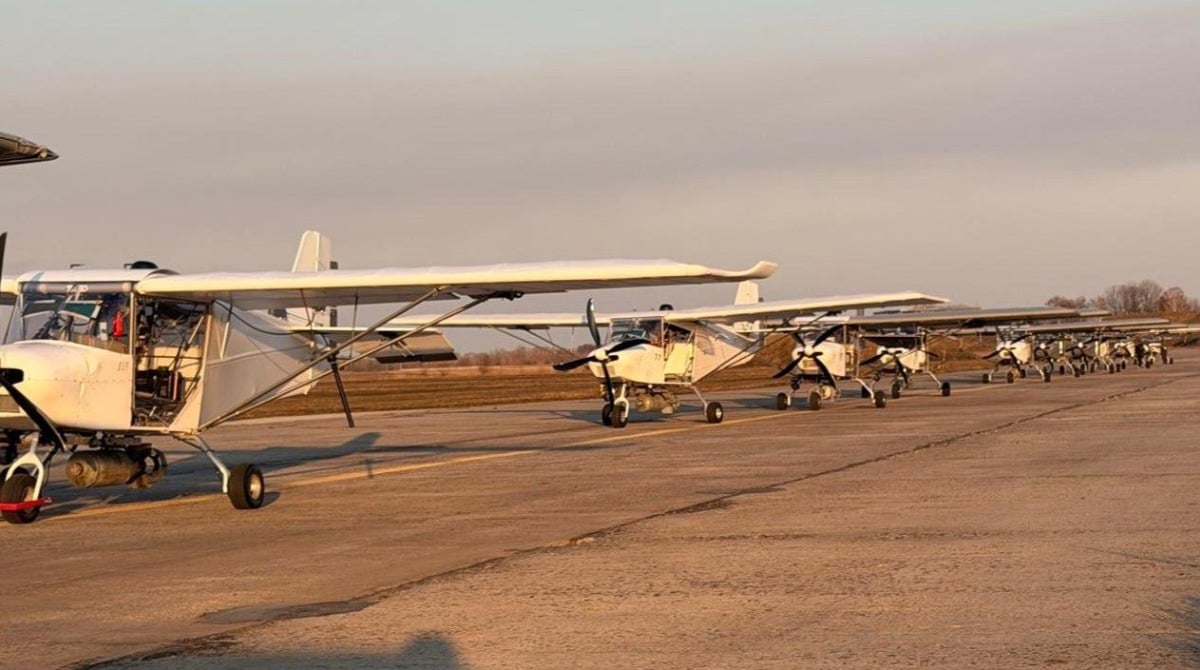
- Ukrainian defense adviser Serhii Sternenko published photos on July 13 showing at least ten converted light aircraft armed with bombs.
- Sternenko said the aircraft struck an underground logistics hub in Armyansk, in Russian-occupied Crimea, overnight.
Ukraine’s military appears to have carried out its first mass simultaneous strike using converted light aircraft that function as reusable, remotely piloted bombers, with Serhii Sternenko, an adviser to Ukraine’s Defense Minister, publishing photos showing at least ten of the modified planes armed with Soviet-designed high-explosive bombs and describing the image as one worth calling historic.
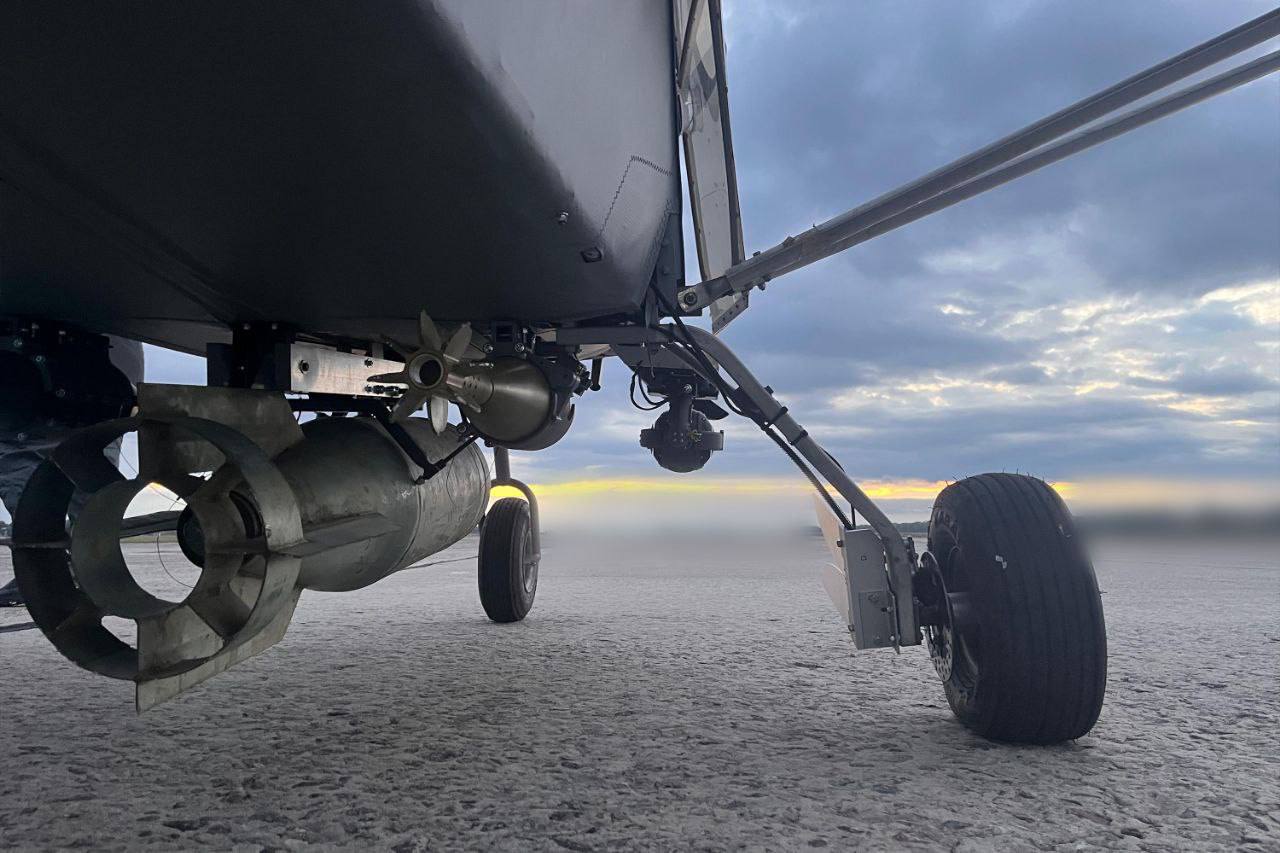
Sternenko posted the photos showing the aircraft, built on the airframes of the Skyranger Swift and Nynja ultralight planes, models that Ukrainian and foreign builders assemble from commercial kits originally intended for recreational and hobbyist pilots rather than warfare. Each aircraft in the photos had been stripped of its cockpit controls and fitted instead with a camera system and remote-control electronics, allowing an operator on the ground to fly the plane the same way a much smaller consumer drone would be piloted, except this platform is large enough to carry a full-sized aerial bomb slung beneath its fuselage.
“Tonight the planes flew and bombed an underground logistics hub in Armyansk, that is, Crimea,” Sternenko said.
Armyansk sits at the narrow neck of the Crimean peninsula near the Perekop isthmus, the primary land route Russian forces use to move troops, fuel, and equipment between mainland Russian-controlled territory and Crimea, a chokepoint that has taken on outsized importance as Ukrainian strikes have repeatedly damaged or disabled the Kerch Bridge and other crossings that once offered Russia an alternative route. An underground logistics hub in that location would function as a hardened storage and distribution point, the kind of facility Russian forces build below ground specifically because it is harder for aerial reconnaissance to detect and harder for conventional bombs to destroy, which makes the choice of target as significant as the choice of weapon used to hit it.
“The photo deserves to be called historic,” Sternenko said.
Ukraine has quietly relied on this category of converted light aircraft for strikes deep inside Russian-held and Russian territory since at least April 2024, when the first confirmed images of a downed Skyranger-based drone surfaced after Russian military bloggers shared photos of a crashed aircraft armed with an OFAB-100-120 bomb, a Soviet-era weapon originally designed for jets like the Su-17, Su-25, and MiG-29 that weighs roughly 100 kilograms (220 pounds) in total and packs about 42 kilograms (93 pounds) of high explosive. The Defence Blog previously reported on how Ukrainian units have expanded the program since then, with one unit’s commander describing to the Ukrainian outlet Babel how the aircraft can carry a combination of aerial bombs and mortar shells across multiple hardpoints before either returning to base or, on longer missions, diving into a final target in a one-way kamikaze strike once its bombs are expended.

Every previously confirmed sighting of a Skyranger-based bomber drone, whether from a crash site inside Russia or footage of an actual strike, has shown a single aircraft operating on its own, consistent with a program built around small numbers of expensive, hand-converted planes rather than a fleet capable of massed strikes. Ten aircraft photographed together and apparently flown on the same mission suggests Ukraine has scaled production or assembly of these conversions significantly since the program’s earlier, more limited days, treating what began as a scrappy workaround using off-the-shelf ultralight kits as something closer to a small, purpose-built bomber squadron.
The Skyranger family, including both the Swift and Nynja variants, are typically powered by Rotax 912 engines producing 80 or 100 horsepower and can carry payloads approaching 330 kilograms (730 pounds) depending on configuration, while newer models with larger fuel tanks can fly for roughly three hours at speeds approaching 160 kilometers per hour (100 mph). That combination of range, payload, and low cost, with complete kits running in the tens of thousands of dollars rather than the millions a purpose-built military drone might cost, has made the platform an appealing option for a country trying to sustain a long-range strike campaign against a much larger adversary without draining its budget on expensive precision munitions for every mission.
None of Ukraine’s military or defense ministry leadership has publicly confirmed the specifics Sternenko described, including the exact number of aircraft involved, the precise target within Armyansk, or the extent of any damage caused, and no independent battle damage assessment has emerged from open sources as of this writing.
Still, the underlying capability on display, a squadron-sized formation of converted civilian aircraft functioning as disposable or reusable bombers, marks a meaningful evolution from where this program stood just two years ago, and it points to a broader pattern in Ukraine’s approach to deep-strike warfare: rather than waiting for expensive, purpose-built weapons systems, Ukrainian engineers keep finding ways to turn cheap, commercially available hardware into tools capable of reaching targets that would otherwise require far more sophisticated and costly munitions to hit.