

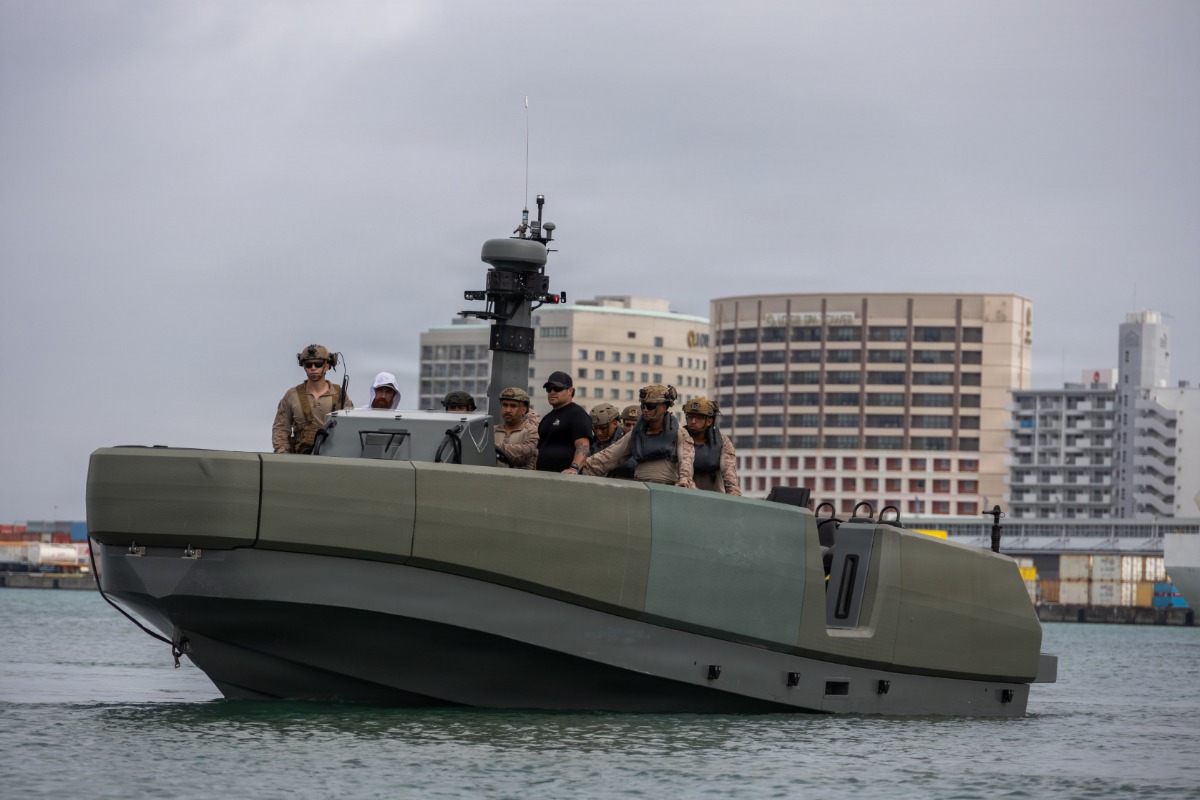
- Marines with 3rd Reconnaissance Battalion trained on the Multi-Mission Reconnaissance Craft Bravo at Naha Military Port, Okinawa, on June 5, 2026.
- The 11-meter Whiskey Bravo boat is built by Australia's The Whiskey Project Group under a program that began with a $20.5 million 2024 contract.
U.S. Marines with 3rd Reconnaissance Battalion spent early June learning to handle a boat the Marine Corps has bet will let small reconnaissance teams operate across the scattered islands of the Western Pacific without waiting for a ship to carry them there.
The unit, part of 3rd Marine Division, conducted familiarization training with the Multi-Mission Reconnaissance Craft Bravo (MMRC-B), known informally as the Whiskey Bravo, at Naha Military Port on Okinawa on June 5, bringing operators and leaders from across the division together to refine how they launch, recover, and fight from the vessel.
The Whiskey Bravo is an 11-meter (36-foot) tactical watercraft built by The Whiskey Project Group, an Australian manufacturer founded by former Royal Australian Navy Clearance Divers, the country’s rough equivalent of Navy SEALs, who set out to design the boat they wished they had during their own special operations careers. The Marine Corps first took delivery of two Whiskey Bravo craft at Camp Pendleton in April 2024 under a $20.5 million contract that also covered the smaller, 8-meter (26-foot) Whiskey Alpha variant, and the acquisition ran through an early industry initiative under AUKUS Pillar II, the technology-sharing framework linking the United States, Australia, and the United Kingdom. Nearly 50 American and Australian equipment manufacturers contributed sensors, communications gear, and mission systems to the design, and the hull itself incorporates slam-reduction technology that the manufacturer says cuts shock loading on personnel and sensitive equipment by up to 40 percent, a meaningful figure for a boat expected to carry reconnaissance teams and their gear across open water at speed.
“Several of the Marines out here came from 4th Assault Amphibian Battalion and are amphibious trackers by trade,” said U.S. Marine Corps Capt. Michael Marty, a company commander with 3rd Reconnaissance Battalion.
Marty’s point about the Marines’ backgrounds matters because it shows how the Corps is building this new capability on top of existing amphibious expertise rather than starting from scratch, pulling in operators who already understand small-boat handling and adapting that experience to a purpose-built reconnaissance platform. The Marines training on Okinawa had already worked with the smaller Whiskey Alpha variant, and the division said that prior experience, combined with this session, gives operators the foundation to employ the Bravo effectively across the Pacific theater. The training itself split between classroom instruction covering engineering, preparatory and follow-on operations, emergency contingencies, trailering, and launch recovery, and hands-on work in both shallow and deep water that included man-overboard and casualty drills meant to build operational readiness while keeping safety protocols intact.
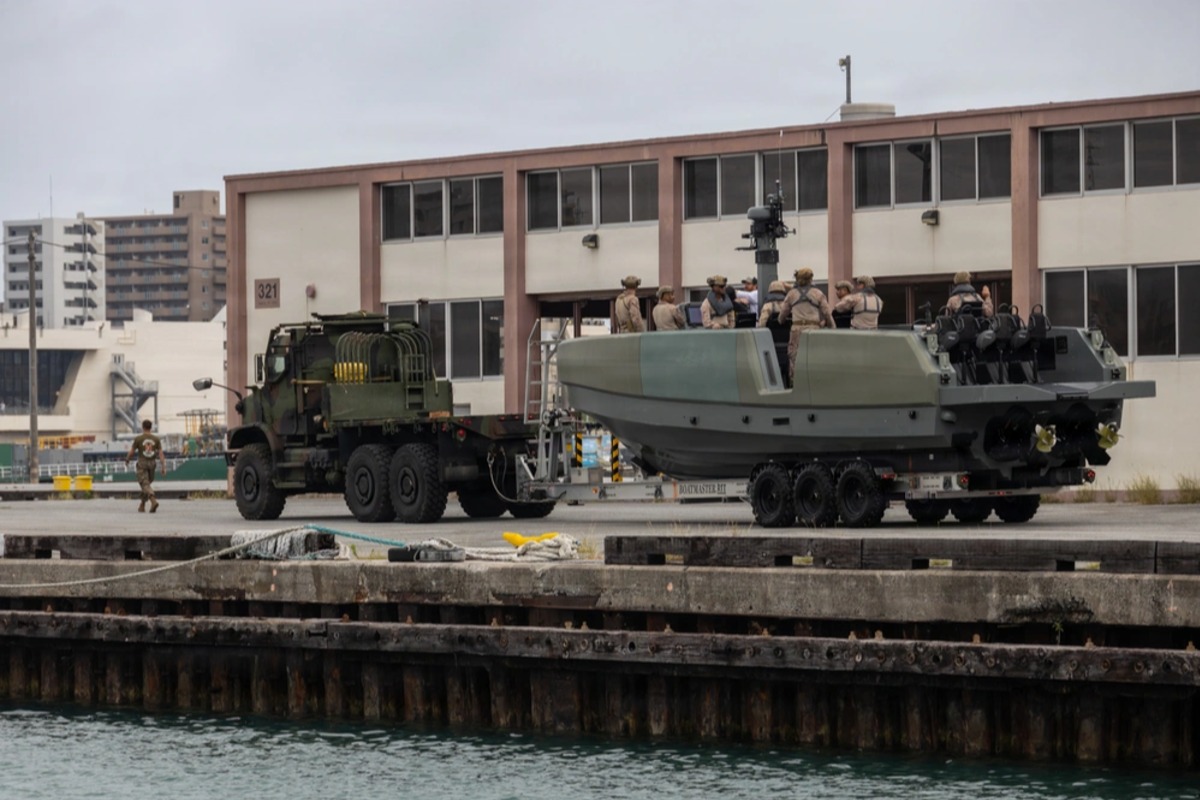
“This training will provide these Marines the necessary baseline to actually go out into the maritime domain and conduct long-range transits or sensor operations in support of 3rd Marine Division,” Marty said.
The Whiskey Bravo can carry eight passengers plus a combat rubber raiding craft, giving a reconnaissance team the ability to move between islands or along contested coastlines and then launch a smaller boat for the final approach to a target area, all while the vessel’s low-observable design and modular sensor package let it gather intelligence or extend a commander’s situational awareness without immediately revealing its presence to hostile forces. That capability sits at the center of what the Marine Corps calls its maritime reconnaissance company concept, a formation built specifically to pair vessels like the Whiskey Bravo with long-range unmanned surface vessels so that reconnaissance Marines can maintain identification and tracking of high-value ships, disrupt an adversary’s freedom of movement in the littorals, and collect information that feeds into a broader picture of what is happening across a contested maritime environment.
“Taking these vessels and employing reconnaissance teams from them enables us to conduct a multitude of operations across the first island chain,” Marty said.
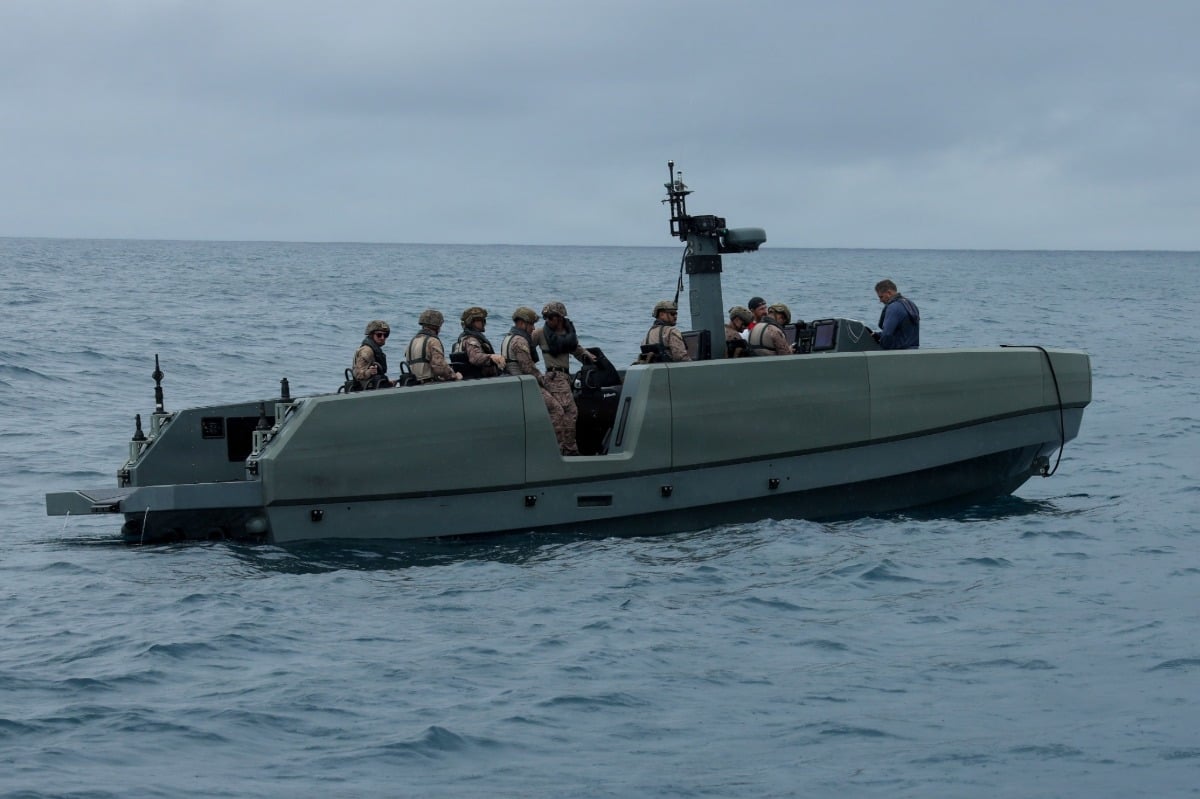
It refers to the string of islands running from Japan through Taiwan and the Philippines that Pentagon planners have long treated as the geographic front line of any potential conflict with China, and 3rd Marine Division has explicitly organized itself around operating as what the Corps calls a Stand-in Force inside that chain rather than falling back to safer ground further east. Okinawa sits well within that zone, and the island’s position gives units like 3rd Reconnaissance Battalion a starting point close enough to contested waters that a capability like the Whiskey Bravo can meaningfully extend how far and how persistently Marines can watch, and if necessary interdict, activity around narrow straits and vulnerable sea lanes near Taiwan and the Ryukyu Islands.
The Whiskey Project Group’s U.S. subsidiary a $17.5 million contract earlier this year for six additional Multi-Mission Reconnaissance Craft (MMRC), with options that could push the total value to $36 million and deliveries running through September 2029. That follow-on order came after the Marine Corps Warfighting Lab spent roughly two years testing the original Whiskey Bravo boats against mission payloads and operational requirements, validating a performance record strong enough that the Navy is now buying the design as something closer to a program of record rather than an experimental platform confined to a single testing unit.