

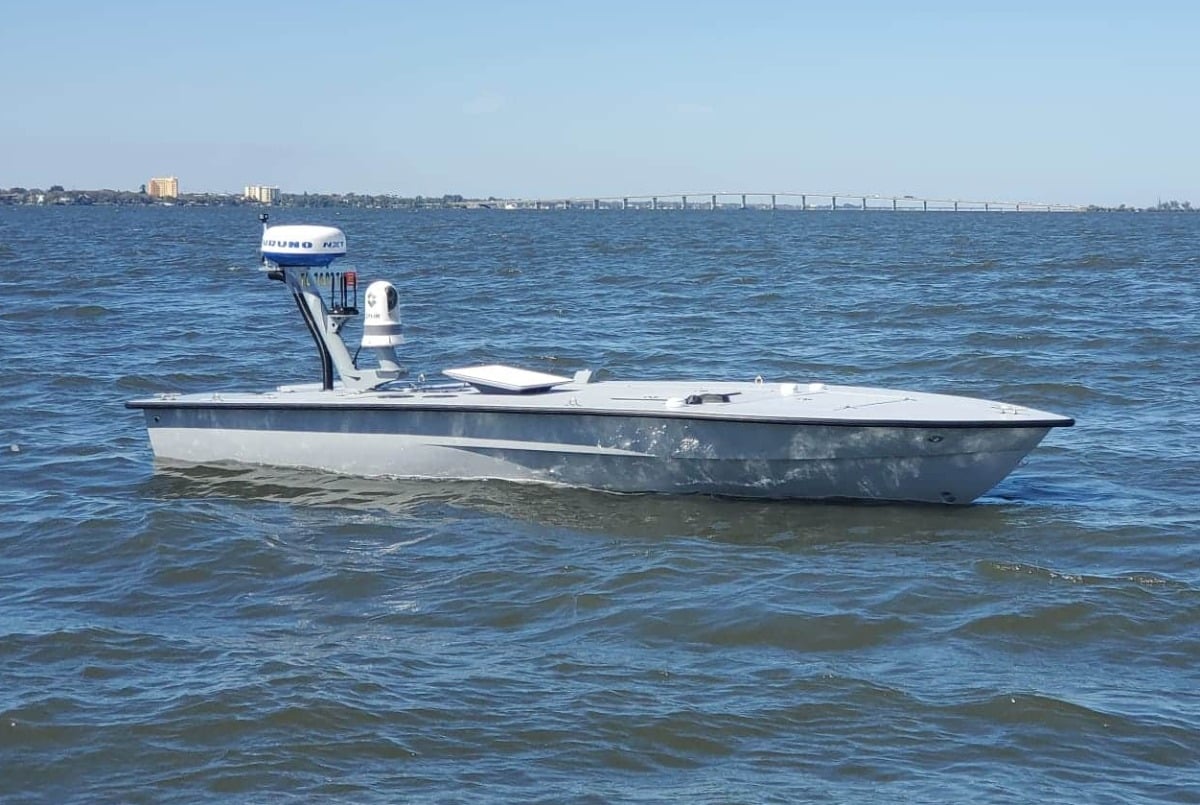
- CENTCOM struck Iranian air-defense, radar, missile, and drone sites on July 13 using one-way attack sea drones for the first time.
- Iran's Revolutionary Guard retaliated with strikes on U.S.-linked bases in Kuwait, Bahrain, Jordan, Oman, and Qatar, killing one person in Iran.
U.S. Central Command struck dozens of targets across Iran on Sunday using one-way attack sea drones for the first time in the conflict, a new addition to a strike package that already included fighter aircraft, naval vessels, and one-way attack aerial drones, marking the fourth round of American strikes against Iran since Tehran resumed attacks on commercial shipping in the Strait of Hormuz on July 7.
CENTCOM said its forces hit Iranian military air-defense systems, coastal radar sites, missile and drone capabilities, and small boats, framing the operation as a continued effort to strip Iran of the tools it has used to threaten tankers and cargo ships passing through the strait. The command did not disclose the type, manufacturer, or number of sea drones involved, keeping key operational details classified even as it announced the capability’s debut, a pattern that has held across the broader campaign despite CENTCOM’s willingness to publicize strike totals and target categories in near real time.
“The Strait of Hormuz is a vital maritime corridor for global trade,” CENTCOM said.
One-way attack sea drones, sometimes called kamikaze boats or attritable unmanned surface vessels, are unmanned watercraft packed with explosives and designed to be sacrificed in a single strike rather than recovered, a concept Ukraine popularized against Russia’s Black Sea Fleet using cheap, fast surface drones that sank or damaged warships worth many times more than the drones themselves. The U.S. Navy has spent roughly two years accelerating its own version of that capability, driven partly by those Ukrainian successes and partly by concern over China’s naval buildup.
The Defence Blog has learned that the Pentagon has evaluated one-way attack sea drone designs from six manufacturers as part of this push: Saronic Technologies, MARTAC, Blue Ops, Sierra Nevada, and UFORCE, alongside additional undisclosed candidates. Saronic secured a $392 million Navy production deal to move its Corsair unmanned vessel from prototype to fielded status in under a year, while MARTAC’s MUSKIE M18 was explicitly built, in the company’s own words, for one-way missions, capable of burst speeds above 93 kilometers per hour (58 mph), a payload of up to 453 kilograms (1,000 pounds), and an open-ocean range of roughly 926 kilometers (500 nautical miles). Whether any of these companies’ hardware appeared in Sunday’s strikes remains unclear, since CENTCOM’s statement gave no identifying details.
The sea drone debut follows the earlier introduction of American one-way attack aerial drones in this same conflict, a system CENTCOM has identified as the Low-cost Unmanned Combat Attack System, or LUCAS, a design explicitly modeled on Iran’s own Shahed-136 loitering munition, the same drone Russia has used by the thousands against Ukrainian cities and infrastructure. CENTCOM leaned into that irony directly in an earlier social media post about the aerial version.
“These low-cost drones, modeled after Iran’s Shahed drones, are now delivering American-made retribution,” CENTCOM said.
Sunday’s strikes came after President Donald Trump directed the operation, with CENTCOM stating the goal was to continue degrading Iran’s ability to attack civilian mariners and commercial ships transiting the strait, language nearly identical to what the command used to justify the previous round of strikes on July 11, when it reported hitting roughly 140 targets. Iran responded within hours, with its Islamic Revolutionary Guard Corps launching strikes against American military installations across the Gulf, hitting or threatening bases in Kuwait, Bahrain, Jordan, Oman, and Qatar. The IRGC said its forces struck facilities at Sheikh Isa Air Base in Bahrain, including helicopter maintenance buildings, a hangar housing a P-8 patrol aircraft, and a drone command-and-control center, according to a statement carried by Al Jazeera, though the claim could not be independently verified against U.S. sources at the time of writing.
Financial markets registered the escalation immediately, with Brent crude, the international oil price benchmark, rising 3.92 percent to $78.99 a barrel on Sunday as traders weighed renewed uncertainty over the Strait of Hormuz, a waterway that typically carries around 20 percent of the world’s oil traffic and remains the only sea route out of the Persian Gulf for most regional exporters. The United States and Iran continued offering contradictory accounts of the strait’s actual status, with Trump insisting in a CNN interview that it remains open while Iranian officials maintained they have effectively closed it, and available ship-tracking data showed commercial traffic through the passage had slowed to a trickle by Sunday, a gap between rhetoric and reality that has defined much of the reporting on this conflict since strikes resumed.