

- Kongsberg reported second-quarter 2026 revenue of NOK 10,389 million, up 31 percent, with order backlog reaching NOK 157,540 million by June 30.
- Canada became the sixth nation to select Kongsberg's Joint Strike Missile on July 8, and Kongsberg completed its acquisition of Zone 5 Technologies on June 9.
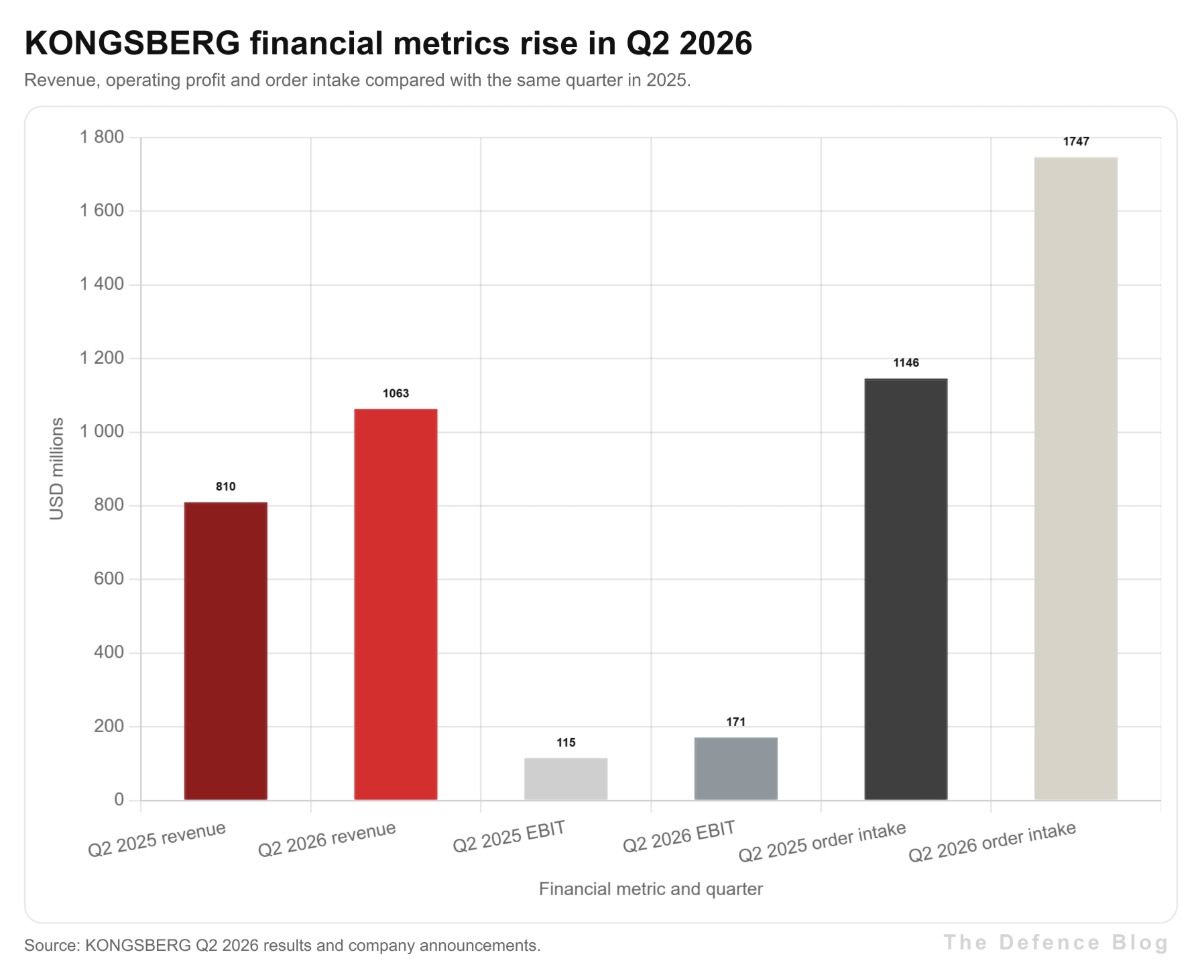
Norwegian defense and technology group Kongsberg posted a second quarter that outpaced its own recent growth trajectory by a wide margin, with revenue climbing 31 percent to NOK 10,389 million (roughly $1.06 billion) and operating profit jumping nearly 50 percent to NOK 1,669 million (about $171 million), as demand for its missile systems and layered air defense technology kept outstripping the company’s ability to describe it as anything other than sustained.
“Strong demand for KONGSBERG’s technology and solutions, combined with good progress in key projects, contributed to a strong second quarter. Revenues increased by more than 30 per cent, while operating profit grew by nearly 50 per cent to NOK 1.7 billion,” said Eirik Lie, President and CEO of KONGSBERG.
Order intake told an even sharper story than revenue did, rising to NOK 17,067 million (about $1.75 billion) from NOK 11,188 million (roughly $1.15 billion) a year earlier, pushing Kongsberg’s total order backlog to NOK 157,540 million (approximately $16.13 billion) by the end of June. That backlog, built from contracts signed but not yet delivered, gives Kongsberg years of visibility into future production and reflects a broader pattern across European defense manufacturers this year, where sustained government spending increases have translated into order books that stretch further out than manufacturers have typically planned around.
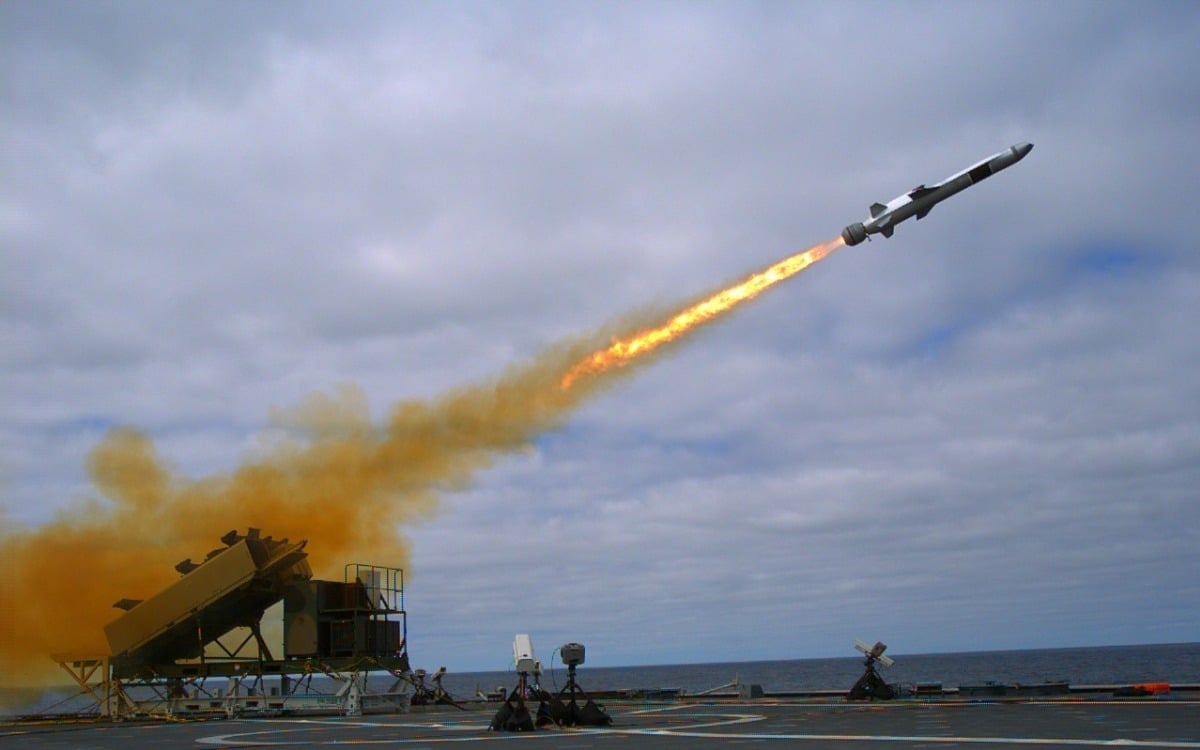
Most of that order growth traced back to a single weapon system: the Joint Strike Missile, an air-launched cruise missile that Kongsberg developed from its Naval Strike Missile and adapted specifically to fit inside the F-35’s internal weapons bay, preserving the fighter’s stealth profile in a way that larger American-made standoff weapons like JASSM and LRASM cannot match since those require external carriage. Three separate JSM contracts closed during the quarter, and Canada’s July 8 decision to buy the missile for its future F-35A fleet, a deal worth roughly CAD 800 million (about $564 million), made it the sixth nation to select the weapon, joining Norway, Japan, Australia, the United States, and Germany. The missile weighs approximately 416 kilograms (917 pounds), carries a 118-kilogram (260-pound) warhead, and reaches targets up to 350 kilometers (217 miles) away using an imaging infrared seeker and terrain-reference navigation that let it operate without GPS, a combination that has made it increasingly attractive to air forces looking to extend a stealth fighter’s reach without sacrificing its low observability.
“The quarter saw several significant contract awards, as well as increased sales to the United States and Germany, while Canada became the sixth nation to select the missile,” Lie said.
Canada’s interest in Kongsberg extended beyond missiles into submarines, with Ottawa announcing it would enter negotiations with Norway and Germany over acquiring 212CD-class submarines, a program in which Kongsberg supplies the onboard combat system and holds a position the company describes as central to the effort. Alongside the missile and submarine business, Kongsberg’s NASAMS air defense system, developed jointly with Raytheon, kept expanding its customer base as Belgium signed a cooperation agreement with the Netherlands in early July to acquire ten NASAMS units, partly intended for Luxembourg, and Kuwait signed a separate $400 million deal through the U.S. Foreign Military Sales program after facing missile and drone strikes tied to the broader Iran conflict earlier this summer. NASAMS combines Raytheon’s Sentinel radar, capable of detecting targets out to about 120 kilometers (75 miles), with Kongsberg’s fire distribution centers and missile launchers, and can engage aircraft, drones, and cruise missiles at ranges up to roughly 60 kilometers (37 miles) and altitudes near 21,000 meters (69,000 feet), giving it a defensive envelope that sits between short-range point defenses and long-range systems like Patriot.
Kongsberg also pointed to a newer and less publicized growth area, the protection of undersea infrastructure, telling investors it signed a contract during the quarter with an undisclosed international customer for monitoring and protecting critical subsea assets. That business line has taken on added significance following a string of suspected sabotage incidents against undersea cables and pipelines in European waters over the past several years, incidents that pushed subsea security from a niche engineering concern into a mainstream defense procurement priority.
“We are experiencing growing interest in security both below the sea surface and in space, areas where KONGSBERG is well positioned. During the quarter, we signed a contract with an undisclosed international customer for the monitoring and protection of critical subsea infrastructure,” Lie said.
Kongsberg’s push into the American market took a concrete step on June 9, when the company completed its previously announced acquisition of Zone 5 Technologies, a California-based missile maker known for the Rusty Dagger long-range strike missile and the White Spike air defense interceptor. Kongsberg holds a 90 percent stake in the roughly 250-employee company, which reported more than $100 million in revenue in 2025 and has been selected for U.S. Air Force programs including the Extended Range Attack Munition and the Family of Affordable Mass Missiles, giving Kongsberg direct access to the kind of low-cost, mass-producible munitions production that recent conflicts have shown matter as much as any single high-end weapon system.
With all of that activity feeding into the backlog, Kongsberg laid out revenue targets of NOK 100 billion (about $10.24 billion) by 2029 and NOK 150 billion (roughly $15.36 billion) by 2033, ambitions the company says its current order book and this quarter’s momentum put within reach.
“KONGSBERG has an ambition to increase revenues to NOK 100 billion by 2029 and NOK 150 billion by 2033. The order backlog and market developments we have seen in the second quarter, position us well to realise these ambitions. KONGSBERG continues to deliver critical products and systems that strengthen national security and help safeguard sovereignty in a world that remains characterised by uncertainty and rapid change,” Lie said.