

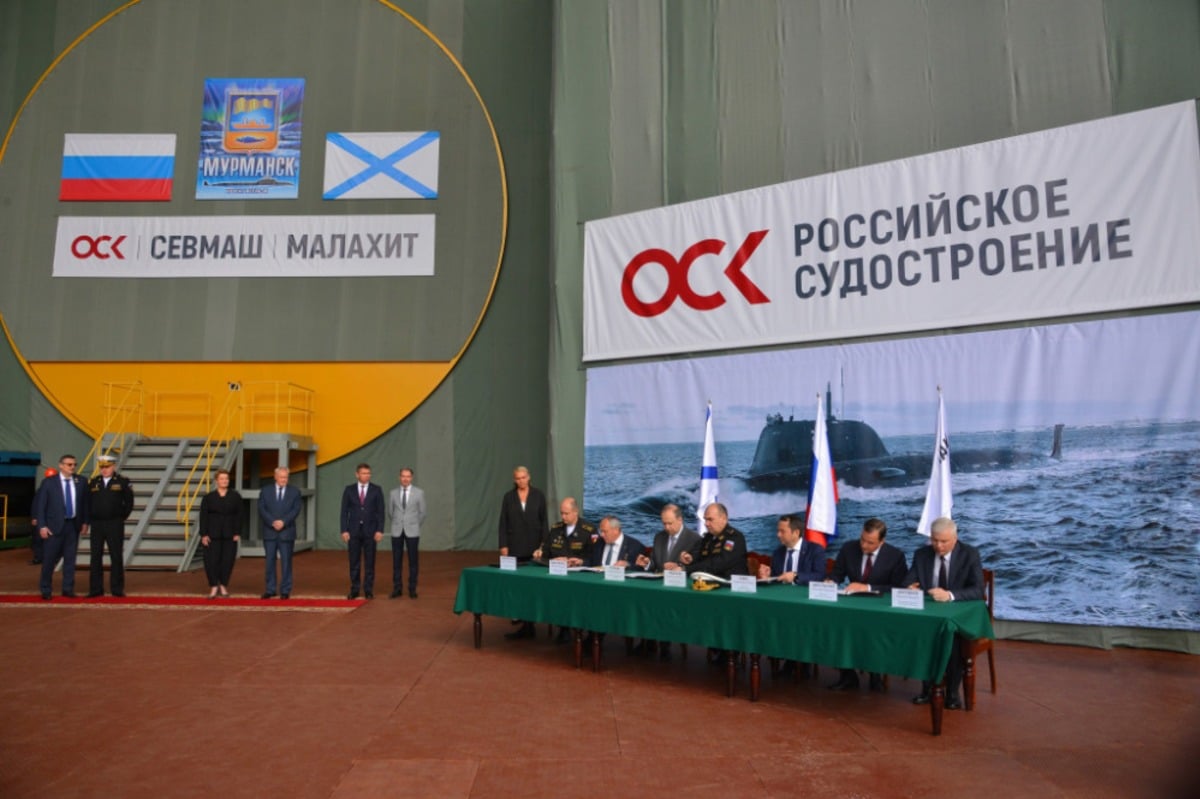
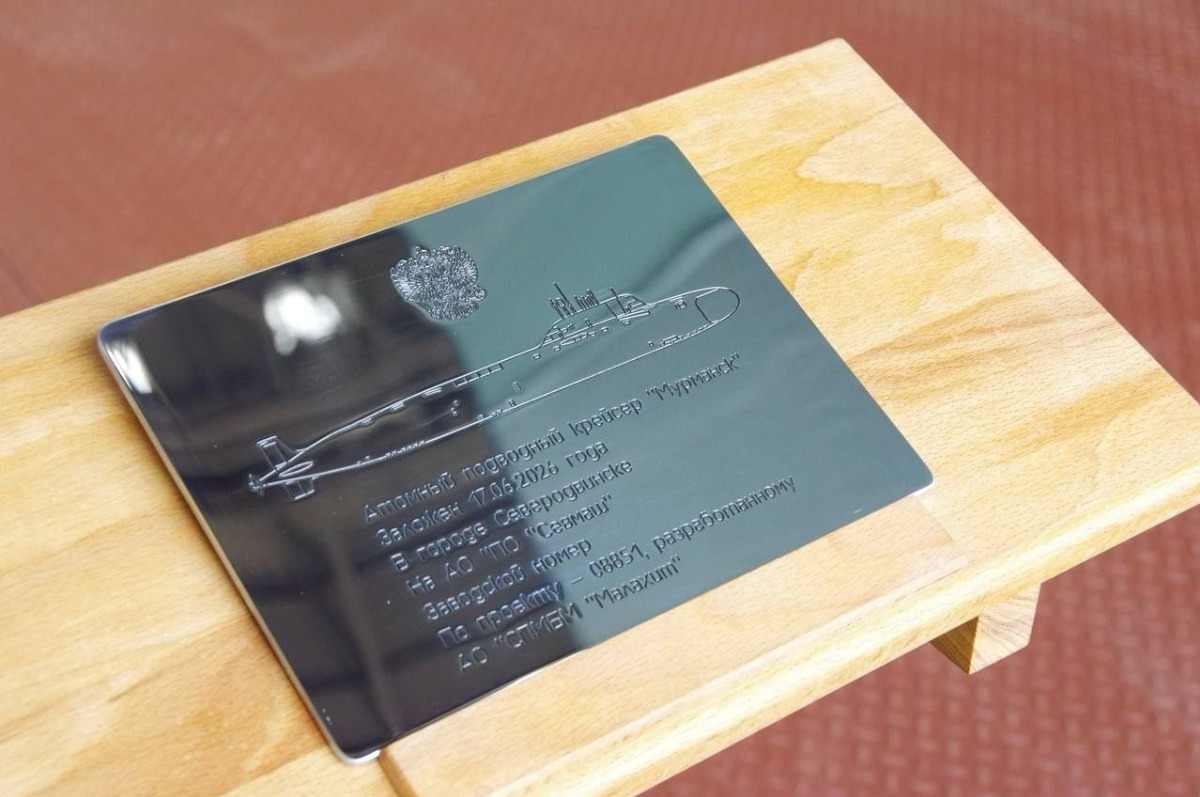
- Russia laid the keel of nuclear submarine Murmansk, the ninth Project 885M Yasen-M boat, at Severodvinsk on June 17, 2026, the first in six years.
- The ceremony was attended by Russian Navy Commander-in-Chief Admiral Alexander Moiseyev and United Shipbuilding Corporation Director General Andrei Puchkov.
Russia laid the keel of a new nuclear-powered attack submarine on June 17, 2026, the first vessel of its class to enter construction in six years and a signal that Moscow is pressing ahead with its most capable undersea weapons program despite the enormous financial and industrial strain of the war in Ukraine.
The ceremony took place at Sevmash, formally known as the Severnoye Mashinostroyitelnoye Predpriyatiye production association in Severodvinsk, the Arctic shipyard city on the White Sea that serves as Russia’s primary nuclear submarine construction facility and one of the most strategically significant industrial sites in the country.
The new vessel, named Murmansk and assigned factory number 169, is the ninth submarine of the Project 885M class, known by its Russian designation Yasen-M, and the first to be laid down under a new contract following a gap that stretches back to 2020. The ceremony was attended by Admiral of the Fleet Alexander Moiseyev, Commander-in-Chief of the Russian Navy, along with Andrei Puchkov, Director General of the United Shipbuilding Corporation, and Mikhail Budnichenko, Director General of Sevmash.
The Yasen-M, NATO reporting name Severodvinsk after the lead vessel of the original Project 885 series, represents Russia’s most advanced operational nuclear attack submarine design and one of the most capable undersea platforms in service anywhere in the world. The class carries a formidable weapons load centered on the Kalibr land-attack cruise missile, which has a stated range of approximately 2,500 kilometers (1,553 miles) in its naval variant and has been used extensively against Ukrainian targets since 2022, along with the P-800 Oniks anti-ship missile and, in the most recent boats, the Zircon (sometimes written as Tsirkon) hypersonic cruise missile. The submarines are designed to hunt enemy surface ships and submarines, conduct long-range strikes against land targets, and gather intelligence, making them genuine multi-mission platforms rather than single-role weapons.
The Yasen-M program has a construction history that reflects both the ambition and the chronic industrial difficulties of Russia’s post-Soviet defense sector. The lead boat of the original Project 885 series, K-560 Severodvinsk, was laid down at Sevmash on December 21, 1993, at a moment when Russia’s defense industry was collapsing under the economic catastrophe of the Soviet Union’s dissolution, and did not enter Russian Navy service until June 17, 2014, a construction period of more than twenty years that became a symbol of how far Russian naval shipbuilding had fallen. The improved Project 885M variant addressed many of the original design’s shortcomings and the first Yasen-M, K-561 Kazan, was laid down in July 2009 and commissioned in May 2021, a significantly compressed timeline that reflected both the maturity of the design and improvements in Sevmash’s production processes.
The subsequent boats in the series have entered service in a pattern that reflects continued improvement in construction pace, though still far slower than comparable programs at American or British yards. K-573 Novosibirsk, the first production Yasen-M under a 2011 contract covering five vessels, was commissioned in December 2021 and transferred to Russia’s Pacific Fleet, arriving at its permanent base in Kamchatka in September 2022. K-571 Krasnoyarsk followed, commissioned in December 2023 and transferred to Kamchatka in September 2024. K-562 Arkhangelsk joined the Northern Fleet in December 2024 after beginning sea trials in June of that year. K-572 Perm, the fourth production boat under the 2011 contract, was rolled out of the Sevmash building hall in March 2025, with Russian President Vladimir Putin stating via video conference at that ceremony that Perm is the first multi-purpose submarine armed with Zircon hypersonic cruise missiles, and the boat was reported to be undergoing trials as of the Murmansk keel-laying ceremony, with its destination reportedly the Pacific Fleet.
The fifth boat under the 2011 contract, Ulyanovsk with factory number 166, remains under construction at Sevmash. Two additional Yasen-M submarines, Voronezh and Vladivostok with factory numbers 167 and 168, were laid down in July 2020 under a contract signed in June 2019, with contractual delivery dates of 2027 and 2028 respectively, though Russian naval construction programs have historically run significantly behind their stated timelines.
The Murmansk represents the first Yasen-M laid down under a new contract, separate from both the 2011 and 2019 agreements, and its keel-laying after a six-year gap since Voronezh and Vladivostok were started in 2020 carries significance for what it says about Russia’s submarine construction planning horizon. Even accounting for generous estimates of construction time based on previous boats in the series, Murmansk will not enter service for years, meaning Russia is making long-term commitments to its nuclear submarine fleet at a moment when its conventional military forces are absorbing staggering losses in Ukraine and its defense industrial base is operating under intense pressure to prioritize near-term consumption of ammunition, drones, and ground vehicles.
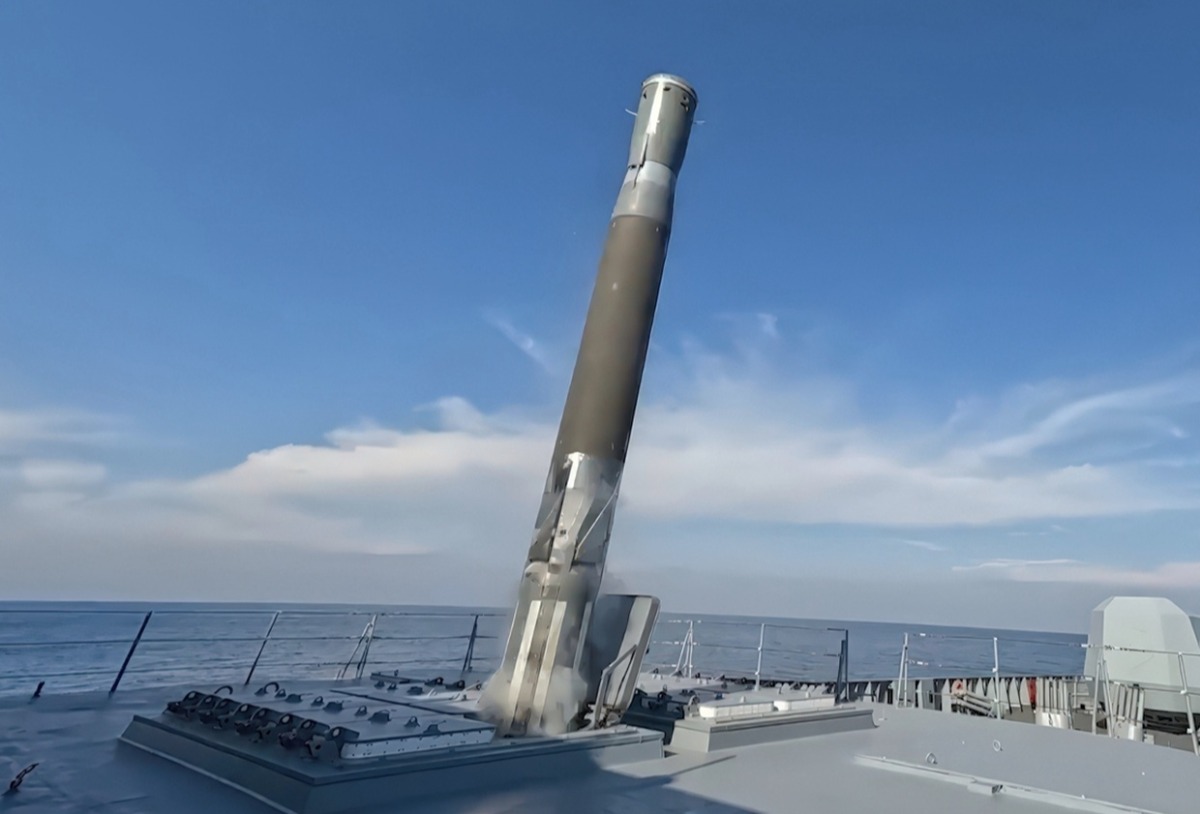
The Zircon hypersonic missile that Perm reportedly carries deserves particular attention as a capability milestone for the Yasen-M program more broadly. Zircon is a sea-launched hypersonic cruise missile with a claimed speed of approximately Mach 9, roughly 11,000 kilometers per hour (6,835 miles per hour), and a stated range of approximately 1,000 kilometers (621 miles), designed to defeat existing naval missile defense systems by combining extreme speed with a low-altitude flight profile that limits the warning time available to defending ships. If Murmansk and subsequent boats incorporate Tsirkon as a standard weapons fit, the class’s already formidable anti-ship capability will become significantly more difficult for NATO surface forces to counter.
Nine nuclear attack submarines of the same advanced class, built across three decades at a single Arctic shipyard, with the most recent just beginning a construction cycle that will extend well into the next decade: Russia is investing in undersea power for a future that it intends to contest regardless of how the war in Ukraine ends.