

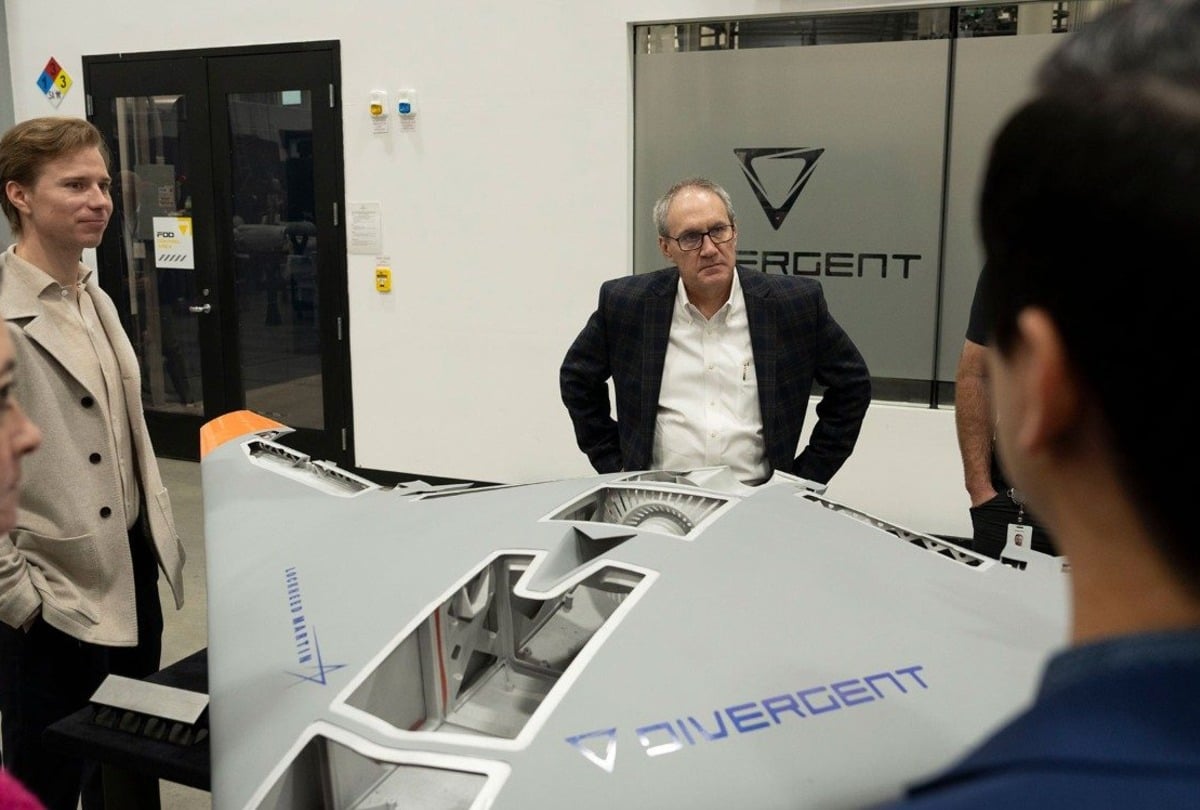
- Lockheed Martin Skunk Works and Divergent Technologies built a 2.7-meter wingspan drone prototype called Replicator from concept to first article in under one year using Divergent's DAPS manufacturing platform.
- Lockheed Martin made a $25 million strategic investment in Divergent in 2024; Secretary of War Pete Hegseth viewed the Replicator during his Arsenal of Freedom tour.
Lockheed Martin’s secretive Skunk Works division has built a drone from scratch in under a year using 3D-printing technology, demonstrating a manufacturing approach that the company says could fundamentally change how quickly the U.S. defense industry can develop and field new unmanned aircraft.
The drone, called Replicator, was developed through a collaboration between Lockheed Martin Skunk Works and Divergent Technologies, a California-based company that specializes in digitally integrated advanced manufacturing.
The aircraft has a 2.7-meter (9-foot) wingspan and went from initial concept to first physical article in less than twelve months, a timeline that stands in sharp contrast to the years-long development cycles that characterize most military aircraft programs. Lockheed Martin made a $25 million strategic investment in Divergent in 2024 to support exploration of applications across multiple mission areas including advanced munitions and the Replicator vehicle concept.
Secretary of War Pete Hegseth viewed the Replicator during a visit to Divergent as part of his nationwide “Arsenal of Freedom” tour, a series of stops at American defense manufacturing facilities that the Secretary has been conducting to assess the health and capacity of the U.S. defense industrial base. Lockheed Martin Chief Operating Officer Frank St. John also visited the Divergent facility in California earlier this year, describing the collaboration in a LinkedIn post as an example of how digital design-to-production models can accelerate capability delivery.
The enabling technology behind the Replicator’s rapid development is Divergent’s Adaptive Production System, known as DAPS, a manufacturing platform that integrates design, structural analysis, production assembly, and quality control into a unified digital environment. Rather than following the traditional sequence in which an aircraft is designed by one team, analyzed by another, manufactured by a third, and assembled by a fourth, each with its own software tools and hand-off delays, DAPS treats all of those steps as a single continuous digital workflow. When a designer changes a dimension or a material specification, the change propagates immediately through the analysis and manufacturing planning without requiring manual reentry or format translation between separate systems.
The additive manufacturing element, which refers to 3D printing of structural components layer by layer from digital files rather than cutting them from raw material, allows the team to produce physical parts directly from the digital design without the weeks or months that machining or casting traditional components requires. For complex structural geometries that would be impossible or prohibitively expensive to machine conventionally, additive manufacturing enables shapes that optimize weight, strength, and aerodynamic performance in ways that traditional manufacturing cannot achieve. The ability to iterate rapidly, print a part, test it, revise the design, and print the next version within days rather than months is what compressed the Replicator’s development timeline to under a year.
Lockheed Martin’s Skunk Works has been the company’s advanced development organization since Kelly Johnson established it in 1943 to develop the P-80 Shooting Star jet fighter. It has since produced some of the most consequential aircraft in American military history, including the U-2 reconnaissance aircraft, the SR-71 Blackbird, the F-117 stealth attack aircraft, and the F-22 Raptor, each developed under conditions of tight secrecy and with unusual freedom from standard corporate development processes. The Skunk Works model, small teams working fast with minimal bureaucracy, was designed precisely to compress development timelines in ways that mainstream defense procurement cannot. Applying that organizational approach to a manufacturing technology purpose-built for digital-speed iteration produces a combination that the Replicator program is designed to demonstrate.
St. John described the significance of the approach in direct terms in his LinkedIn post. “That kind of speed matters. It’s how we strengthen the resilience of the American defense industrial base by combining digital engineering, additive manufacturing and commercial processes to deliver critical capability faster,” he wrote.
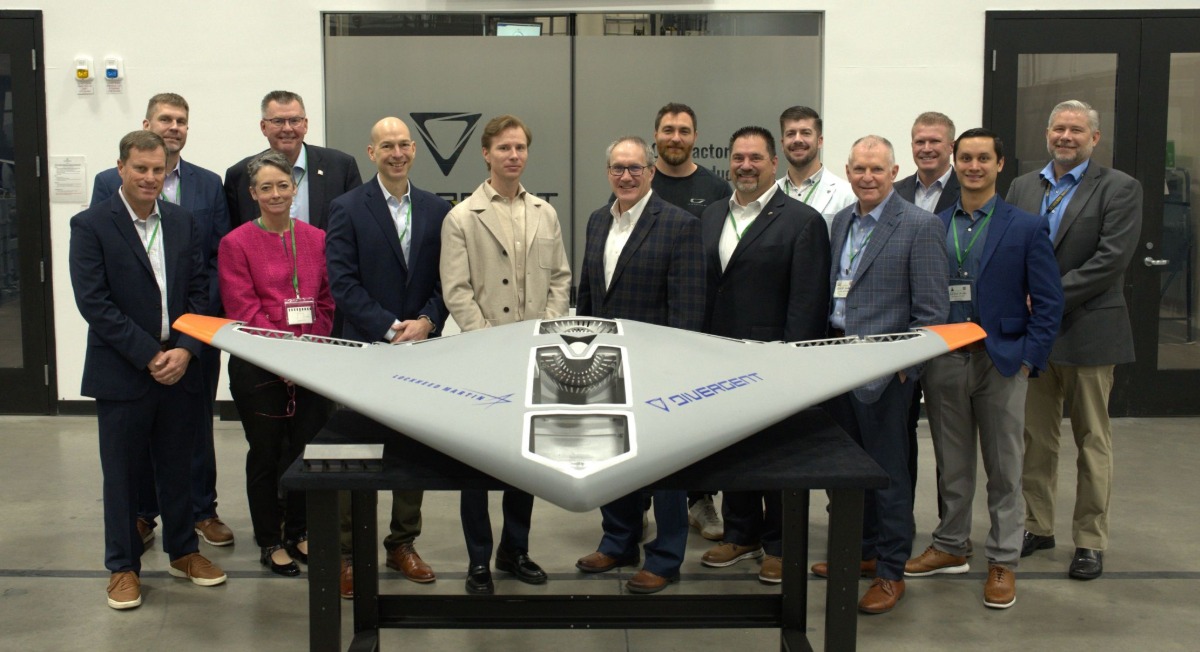
Lockheed Martin has been clear that the Replicator and related Divergent collaboration concepts remain in early stages, and that not every concept becomes a formal program that enters production and fielding. The company describes the work as informing how future systems could be developed and scaled rather than confirming a specific production commitment. What the program does demonstrate is the combination of speed and flexibility that Divergent’s model introduces, including the potential to reduce reliance on traditional supply chains, since components produced through DAPS do not require the machining shops, casting facilities, and specialized tooling that conventional manufacturing depends on and that can become bottlenecks when production needs to scale quickly.
The company has also made strategic investments in Saildrone, the autonomous surface vessel developer whose unmanned boats have been used by the U.S. Navy for maritime surveillance, and Fortem Technologies, a counter-drone systems company. Together, these investments reflect a deliberate strategy of pairing Lockheed’s integration and scaling capabilities with startups that have developed specific advanced technologies faster than a large prime contractor’s internal development process typically allows.