

- The U.S. Army standardized the Mortars App for all M32A2 mortar units in March 2026, replacing the 2003 MFCS and 2004 LHMBC legacy software systems.
- Developed at Picatinny Arsenal's DEVCOM Armaments Center, the app runs on Android phones and tablets, with version 4.0 completing formal testing in January 2024.
The U.S. Army has standardized a new smartphone-based fire control application for all mortar units, replacing two decades-old software systems with a single app that runs on an Android phone and took the 82nd Airborne Division almost no time to learn.
The Mortars App achieved full release and clearance to become the standard fire control software for M32A2 mortar fire control across all Army mortar units in March 2026, developed by engineers at the U.S. Army Combat Capabilities Development Command Armaments Center at Picatinny Arsenal in New Jersey. The app replaces the Mortar Fire Control Software, known as MFCS, which dated to 2003 and was used by heavy and mounted mortar crews, and its parallel system the Lightweight Handheld Mortar Ballistics Computer, the LHMBC, which was released in 2004 for light and dismounted users. Both systems served the Army for more than two decades, but by the time serious modernization work began, they were carrying the accumulated weight of aging code, departed institutional knowledge, and hardware that soldiers no longer wanted to carry into the field.
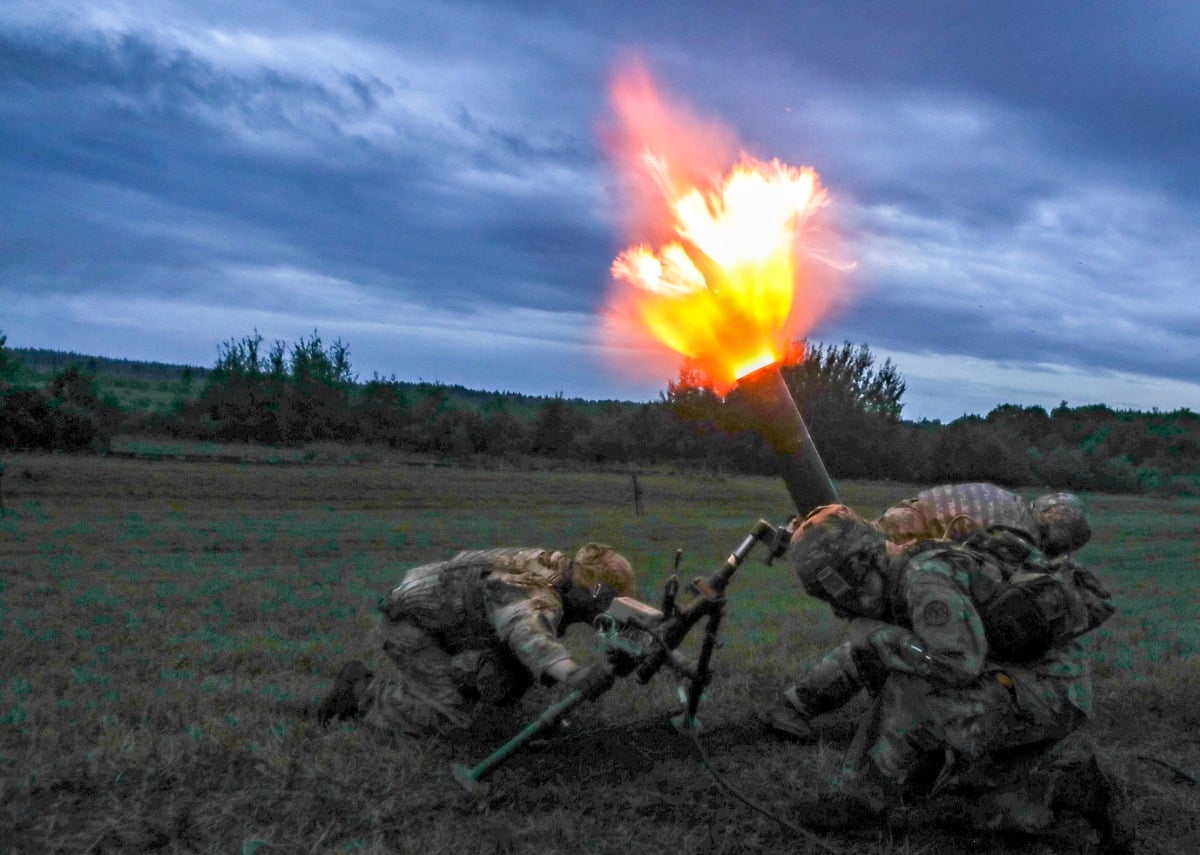
Mortars are one of the most tactically significant organic fire support weapons available to infantry units. The M120 120 mm (4.7 in) mortar, the heaviest in the Army’s dismounted inventory, can deliver a 13.6 kg (30 lb) round to a range of approximately 7.2 km (4.5 miles), providing company and battalion commanders with indirect fire support that does not depend on artillery assets being available or in range. Accurate mortar fire requires precise fire control calculations that account for range, azimuth, charge, ammunition type, meteorological conditions, and the specific ballistic characteristics of each round variant. Getting those calculations wrong costs lives, either by missing the target or by dropping rounds short onto friendly forces. The software that performs those calculations is not a convenience feature — it is a safety-critical system.
The MFCS and LHMBC did that job reliably for years, but they accumulated serious liabilities over time. Departing developers took institutional knowledge of the code with them, leaving maintenance teams working with systems they did not fully understand from the inside. The two programs ran on separate code bases, meaning updates and fixes had to be applied twice to different architectures. The software was also tightly coupled to specific hardware platforms, so moving it to a new device required starting the entire software development process from scratch rather than porting the application. By the mid-2010s, the systems were functional but increasingly difficult to sustain, and soldiers were carrying laptop-sized hardware in an era when the phones in their pockets were more powerful than the computers those laptops contained.
The pivot toward a modern replacement began in 2015, when the U.S. Marine Corps requested an Android-based version of the LHMBC. An attempt to build that app on top of the legacy architecture produced results that were not up to standard, which led the Weapons and Software Engineering Center to take a more fundamental approach: rather than patch the old architecture, build a new one from scratch. The result was the Common Fire Control Framework, a modular, device-agnostic software blueprint designed to support not just the Mortars App but future fire control applications built on the same foundation. Active planning for the app itself began in 2020 and finished ahead of schedule in 2023, the same year the LHMBC received its final update. The initial version, labeled 3.0, was immediately available for soldiers to download and was already substantially more capable than the legacy architecture app that had fallen short years earlier. The current 4.0 version completed formal testing in January 2024, and the MFCS received its own last update later that year before the Mortars App superseded it entirely.
Where the LHMBC required a dedicated handheld computer and the MFCS ran on a laptop-class device, the Mortars App runs on a Samsung phone or tablet using the Android operating system, hardware that is far lighter, far cheaper to replace, and far easier to integrate into existing digital soldier systems. The app also consolidates what were two separate software packages into one, eliminating the training and logistics burden of maintaining parallel systems for different mortar crew types. Julia Gustafson, the software project lead for the Mortars App and a computer engineer at the DEVCOM Armaments Center at Picatinny, said soldiers embraced the transition quickly. The 82nd Airborne Division, one of the Army’s most operationally experienced units with deep familiarity with the old MFCS, picked up the new app with minimal training and provided substantive feedback. Soldiers across units reached out directly to praise the application, telling the development team they had wanted something modern that still followed the intuitive workflow of the legacy software.
“We created the solution that had such an impact on the Directorate and Soldiers, and were able to provide something modern, user friendly and responsive. Paving the way for providing these solutions has been exciting,” Gustafson said. The architecture’s device-agnostic design means that if the Army needs to move away from Android at some future point, the transition does not require rebuilding the application from scratch — it can be ported to a new operating system from the same mature code base, avoiding the technical debt trap that eventually made the MFCS and LHMBC so costly to sustain.
Gustafson said her team has further software advances in development, with customers requesting updates on increasingly compressed schedules. She expressed confidence the team can meet that pace, crediting the modernized architecture for making future development faster and less resource-intensive than legacy software cycles ever allowed.
“I’m really proud of the team I work with. Everyone on my team, they’re as enthusiastic with everything on the App as I am. I’m blessed with a great team, and this wouldn’t have happened without the smart, dedicated people here,” she said.