

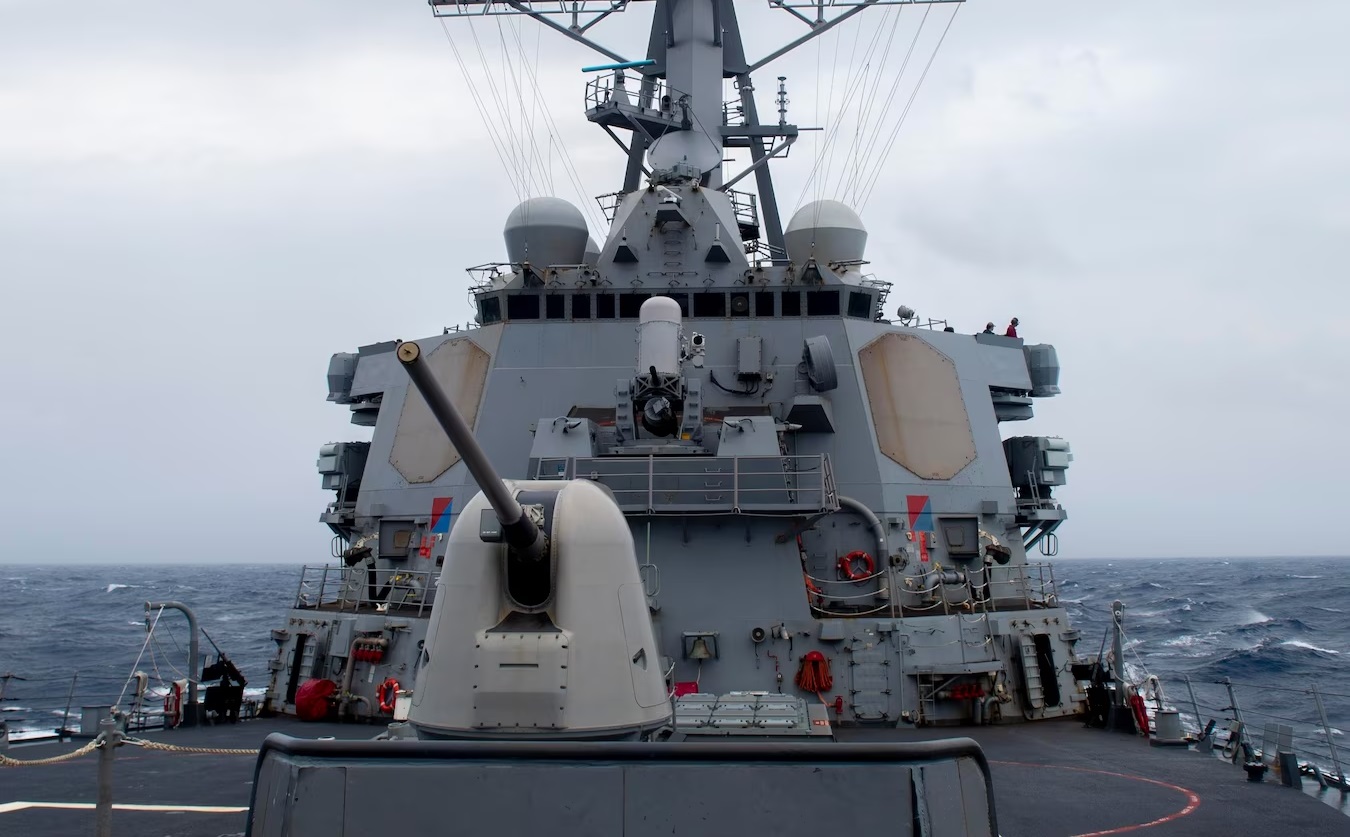
Amid escalating tensions in the South China Sea, the USS Hopper (DDG 70) undertook a decisive operation on November 25, asserting navigational rights and freedoms near the Paracel Islands—a strategic move consistent with international law.
This freedom of navigation operation (“FONOP”) sent a resolute message, challenging restrictive practices imposed by the People’s Republic of China (PRC), Taiwan, and Vietnam, thereby upholding fundamental principles of international maritime law.
The Paracel Islands are subject to sovereignty claims by the PRC, Vietnam, and Taiwan, each mandating either prior notification or permission for “innocent passage” through their territorial seas—a violation of established international norms. Under the Law of the Sea Convention, a foundational tenet of customary international law, all states retain the right of innocent passage through territorial seas, including their warships, without the imposition of unilateral authorization requirements.
By conducting innocent passage without prior notification or consent from the claimants, the United States unequivocally contested these unlawful restrictions, affirming that such impositions do not apply to innocent passage—an assertion crucial in safeguarding maritime freedoms.
The proliferation of unwarranted and expansive maritime claims in the South China Sea poses a substantial threat to vital aspects of global maritime order—freedoms of navigation and overflight, unhindered commerce, and the economic prospects of nations bordering the South China Sea.
The United States, guided by principles enshrined in international law, steadfastly challenges excessive maritime claims worldwide, regardless of the claimant’s identity. Upholding the rights, freedoms, and lawful uses of the sea outlined in the 1982 Law of the Sea Convention is integral to the international community’s duty in preserving global security, stability, and prosperity.
Emphasizing the commitment to universal freedom of navigation, the United States underscores the imperative to defend these freedoms for all nations. The stance remains resolute: no intimidation or coercion should compel any nation to forfeit its rights and liberties.
US forces’ routine operations in the South China Sea, aligning with allies and partners committed to a free and open international order, reaffirm their dedication to customary international law. These operations are conducted meticulously, emphasizing adherence to established legal frameworks.
According to the Navy’s press release, this resounding demonstration underscores the United States’ unwavering commitment to navigate, fly, and operate wherever international law permits—regardless of unfounded maritime claims or prevailing circumstances.